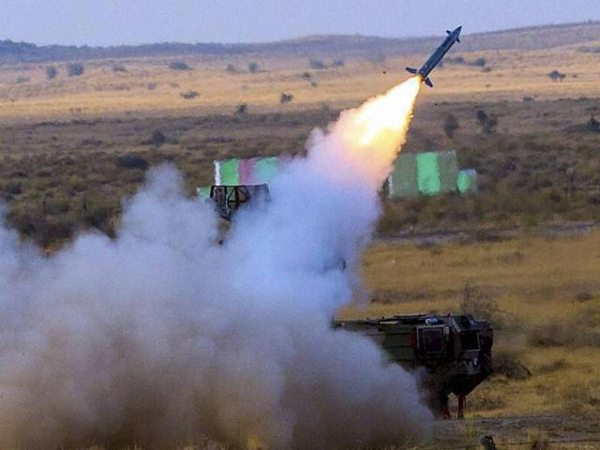
The Defence Research and Development Organisation’s proposed test facility at Junput in West Bengal’s Purba Medinipur district is back on track, nearly two years after work at the coastal site was halted amid local opposition.
West Bengal Chief Minister Suvendu Adhikari said on September 11, 2026, that his government had responded positively to DRDO regarding the project and approved its progress. The announcement revives an important defence-testing project intended to supplement DRDO’s heavily used Integrated Test Range at Chandipur in neighbouring Odisha.
The Junput facility is planned on approximately 8.73 acres of coastal land near the Bay of Bengal. DRDO had earlier said that the site meets the required safety standards and had received recommendations from both the Central and West Bengal governments as well as approval from the Ministry of Environment, Forest and Climate Change.
Land Acquisition and Initial Infrastructure Already Complete
Importantly, Junput is not merely a proposal on paper.
In an official reply to the Rajya Sabha on August 5, 2024, the Ministry of Defence confirmed that land acquisition for the DRDO test centre had already been completed after obtaining all necessary clearances.
The ministry also revealed that construction of the site’s hard-standing areas and roads had been completed before further work was suspended.
The parliamentary reply stated that work had been temporarily stopped because of local unrest, rather than because of technical or environmental rejection of the facility.
It also offered one of the clearest official indications of the site’s strategic significance, stating that Junput would be useful for testing “missiles of very high importance.” The government did not identify which specific missile programmes would use the facility.
Why DRDO Needs Junput
DRDO originally identified Junput as an additional operational area because the existing Integrated Test Range at Chandipur in Odisha has become increasingly congested with weapon-system trials.
Junput is located on the same Bay of Bengal coastline and lies roughly 70 kilometres from Chandipur, giving DRDO another coastal location from which weapon-system trials can be supported.
When the project was announced in 2024, DRDO said timely flight trials were essential for weapon development and that an additional operational area was therefore required to supplement the existing range.
The Integrated Test Range is one of DRDO’s most important test-and-evaluation establishments. Its instrumentation supports the development and validation of missiles and other airborne weapon systems, including tracking their trajectories and collecting telemetry and other flight-test data.
A second operating location at Junput could therefore reduce pressure on Chandipur and give DRDO greater flexibility in scheduling trials as India’s indigenous missile-development programmes expand.
Local Opposition Had Stalled the Project
The Junput project encountered resistance after it became public in 2024. Fishing communities and local organisations expressed concerns that temporary maritime exclusion areas during weapon trials could interfere with fishing activity and access to traditional coastal areas.
The Ministry of Defence subsequently outlined the safety arrangements planned for the range.
According to its Rajya Sabha reply, populations within a one-kilometre radius would be evacuated before testing activities when required, with compensation and safe shelter provided to affected local residents.
DRDO had separately stated that its standard procedures place the safety of people and the environment at the centre of flight-test operations and that precautions would be taken to minimise disruption to fishermen and farmers around the range.
Bengal Government Reopens the Door
The September 2026 development is important because it appears to remove one of the administrative obstacles that had prevented the project from progressing.
Adhikari said DRDO had previously written to the state government regarding the project but had not received the required response. He said his government had now responded and approved the project, adding that DRDO was proceeding with the Junput facility.
However, neither DRDO nor the Ministry of Defence has yet published a new timetable for completion or announced when the first weapon trial from Junput will take place.
It would therefore be premature to describe the range as operational.
What can be confirmed is that the land has already been acquired, necessary clearances had been obtained, basic road and hard-standing infrastructure had been completed, and the earlier suspension resulted from local unrest rather than cancellation of the programme.
A New Node in India’s Missile-Test Infrastructure
Junput could eventually become an important supplementary node in India’s growing missile-test infrastructure.
India’s expanding portfolio of surface-to-air, air-to-surface, anti-ship, cruise and other advanced missile programmes is placing increasing demands on test ranges, instrumentation and available launch windows. DRDO continues to use the Integrated Test Range at Chandipur and Dr APJ Abdul Kalam Island for major weapon trials, including recent indigenous missile programmes.
The Junput project is considerably smaller than the established Chandipur complex and should therefore not be portrayed as a replacement for ITR. Its importance lies instead in providing additional coastal testing capacity that can ease operational congestion and support selected weapon trials.
With the West Bengal government now signalling support for the project, the 8.73-acre Junput facility appears to have regained momentum after its earlier interruption.
The next major milestone will be the resumption of physical work and, eventually, confirmation from DRDO that the new coastal range is ready to support its first weapon-system trials.
You may also like
-
Solar Defence Facility Images Show Large Loitering Munition Airframe Linked to 150 Kg CSIR-NAL Programme
-
Jindal Defence Taurus T9 Machine Pistols Move Through Indian Army Integration Under 550-Weapon Order
-
Russian Navy Delegation Visits Southern Naval Command and Indian Naval Academy
-
PRAHAAR: India’s First National Counter-Terrorism Policy and Strategy
-
Takshak Heavyweight Torpedo: How India’s Indigenous Submarine Weapon Compares With the World’s Leading Torpedoes
