Economy

News on Indian Economy

India’s Factory Output Rises 4.9% as New IIP Series Captures a Changing Industrial Economy

The April print shows that industrial growth was led by manufacturing, which expanded 6.2 per cent year-on-year. This is significant because manufacturing carries the largest weight in the IIP basket and remains central to India’s ambition of becoming a larger global production hub. The general IIP index stood at 118.9 in April 2026, compared with 113.1 in April 2025, indicating a broad rise in industrial activity.

India’s GST Collections Touch ₹1.94 Lakh Crore in May, Showing Steady Revenue Momentum

The May number is important because it shows that India’s indirect tax system continues to operate at a high monthly base. A few years ago, a ₹1.5 lakh crore GST collection was treated as a strong month. Today, collections around ₹2 lakh crore have become more common, showing the widening of the tax base, greater digitisation of invoices, improved compliance systems and a larger formal economy.

UPI Becomes India’s Everyday Payment Engine as Cash Loses Ground in Retail Transactions

The larger annual picture is even more striking. In FY 2025–26, UPI processed 24,161.69 crore transactions worth about ₹314 lakh crore. Transaction volume grew 30 per cent year-on-year, while transaction value rose 20.59 per cent. This means Indians are using UPI more frequently and for a wider range of purchases. The platform has become the default choice for high-frequency, low-value payments, while also supporting larger person-to-person transfers and business-linked payments.

India–Oman CEPA Opens a New Trade Gateway Between South Asia, the Gulf and East Africa

The agreement gives duty-free access to 99.38 per cent of India’s exports to Oman by value, covering 98.08 per cent of Oman’s tariff lines. This is one of India’s most comprehensive market access outcomes in the Gulf region. Earlier, only 15.33 per cent of Indian exports entered Oman duty-free under the Most Favoured Nation regime. With CEPA, Indian exporters gain a major price advantage in Oman’s nearly 28-billion-dollar import market.

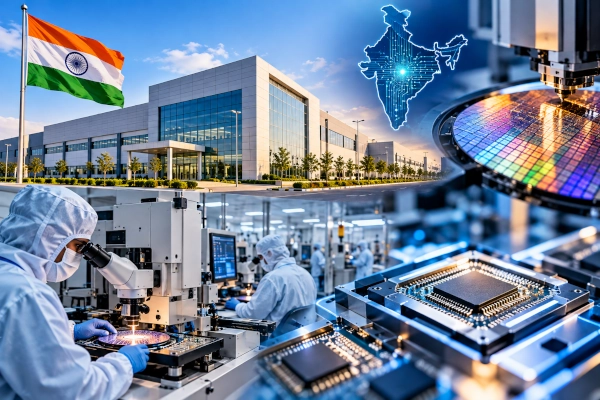
India’s Electronics Push Moves from Mobile Assembly to Deep Component Manufacturing

Union Minister for Electronics and Information Technology Ashwini Vaishnaw has said that India is on its way to becoming self-reliant in mobile manufacturing, with complete domestic production of mobile phone components expected within two years. His statement reflects a broader shift in India’s electronics strategy: the focus is now moving from assembling finished devices to manufacturing the critical parts that give real depth to the industry.

India’s Codex Boom Shows How AI Is Moving from Coding Tool to Everyday Work Engine

This is a striking number because India already has one of the world’s largest technology talent pools. The country has millions of software engineers, a huge start-up base, deep IT services capacity, a fast-growing SaaS sector and a young population comfortable with digital tools. When a coding-focused AI system sees such rapid adoption in India, it reflects more than curiosity. It shows that developers and digital workers are beginning to treat AI as a practical execution layer.

India’s Next Wealth Wave: Why the Country Could Add Over $2 Trillion by 2030

BCG’s 2026 Global Wealth Report describes this as part of a wider “reordering” of global wealth. Emerging markets are expected to generate roughly 10% of global financial wealth growth by 2030, adding about US$12 trillion in financial wealth and more than one million new dollar millionaires. India alone is expected to contribute more than US$2 trillion to this expansion, making it one of the standout markets in the emerging-world wealth cycle.

PM SVANidhi Pushes Street Vendors Into India’s Formal Credit and Digital Economy

PM SVANidhi is a Central Sector Scheme jointly implemented by the Ministry of Housing and Urban Affairs and the Department of Financial Services. The scheme provides collateral-free working capital loans to street vendors, helping them restart, stabilise and expand their small businesses. The government has now approved restructuring and extension of the scheme, with the lending period extended up to March 2030.

India’s Biodiversity Economy Gains Momentum as NBA Realises ₹21.26 Crore Through ABS Mechanism

This development shows how India’s biological wealth is gradually being integrated into a structured conservation-linked economic model. The ABS mechanism ensures that industries using biological resources and associated traditional knowledge contribute back to the communities, farmers, Biodiversity Management Committees and knowledge holders connected to those resources.