Warcraft

Technology-Driven Warfare and India’s Future Security Architecture

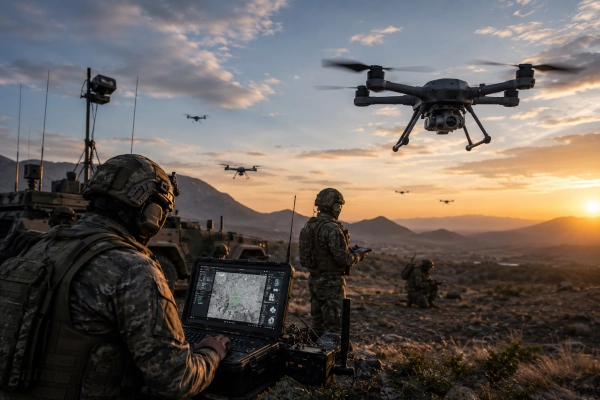
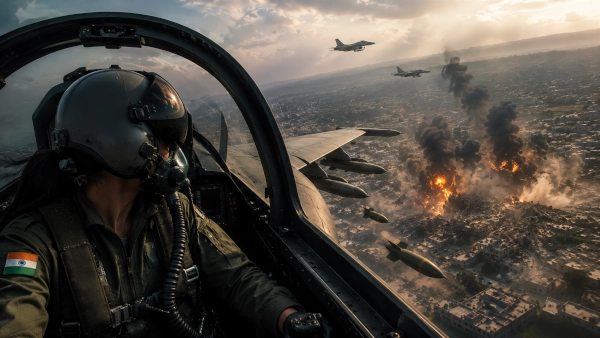
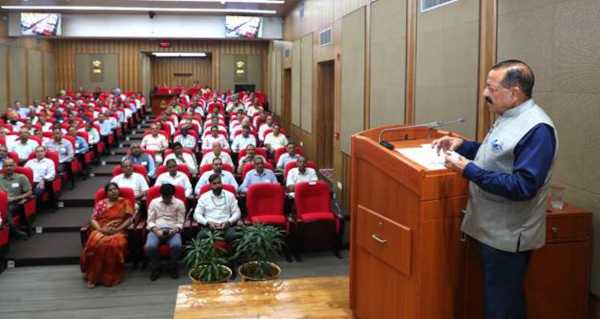
Speaking on the theme “Future Trajectory of Science & Technology and its Impact on National Security”, Dr Singh said modern security can no longer be viewed only through the traditional lens of armies, weapons and borders. The character of conflict is changing rapidly, with technology now influencing surveillance, communications, strategic decision-making, precision engagement, cyber defence and operational resilience. In this emerging environment, scientific innovation has become a core pillar of national preparedness.

Ethical Warfare in the Ramayana: How Rama Turned Moral Legitimacy into Strategic Power

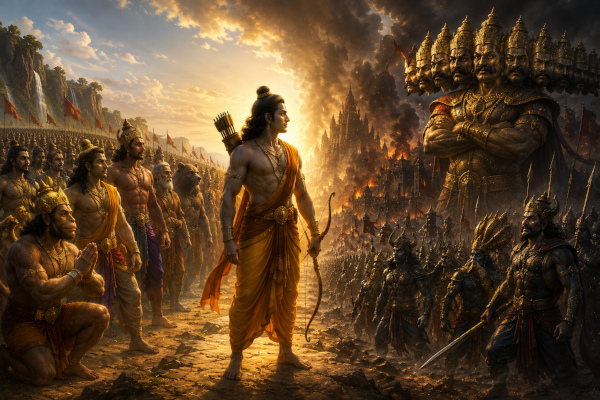
Ethical warfare means that a campaign carries a rightful cause, a disciplined method and a constructive end state. Rama’s war against Lanka follows this structure. The cause is clear. Sita has been abducted and held against her will. Ravana has violated dharma, honour and royal conduct. Rama’s response is built around justice. His purpose is focused. His army marches for rescue and restoration. This clarity gives the campaign moral force.

Symbolic Warfare in the Ramayana: How Rama Won the Moral Battlefield Before the Final Battle

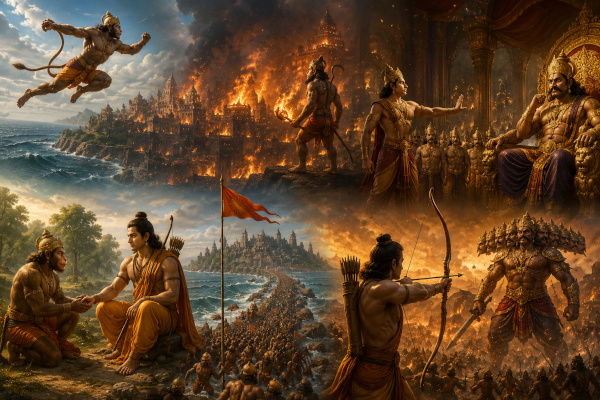
The destruction of Ashoka Vatika turns reconnaissance into psychological warfare. Hanuman damages Ravana’s prized garden, defeats elite warriors and forces the enemy court to respond. This action is military, psychological and symbolic at the same time. The garden represents royal luxury and imperial pride. Its destruction tells Lanka that Ravana’s private world is vulnerable. The enemy is forced to witness the strength of a single warrior from Rama’s side. The message is direct: if one envoy can do this, the full army can do far more.

Morale Management in the Ramayana: The Battlefield Weapon That Kept Rama’s Army Fighting

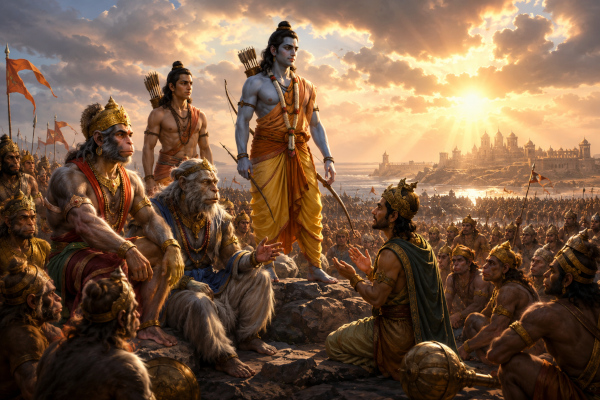
Rama’s greatest strength as a commander is emotional steadiness. He carries grief, duty and anger, yet his presence gives direction to others. When the army looks toward him, it sees purpose. Rama does not lead through loud display. He leads through clarity, restraint and dharmic conviction. His cause gives the army moral power. The soldiers know they are fighting to rescue Sita, punish adharma and restore rightful order. This transforms the war from a campaign of revenge into a campaign of justice. A morally convinced army stands longer under pressure because it believes the battle has meaning.

Battlefield Medicine and Casualty Recovery: Hanuman’s Sanjivani Mission and the Military Logic of Saving Combat Power

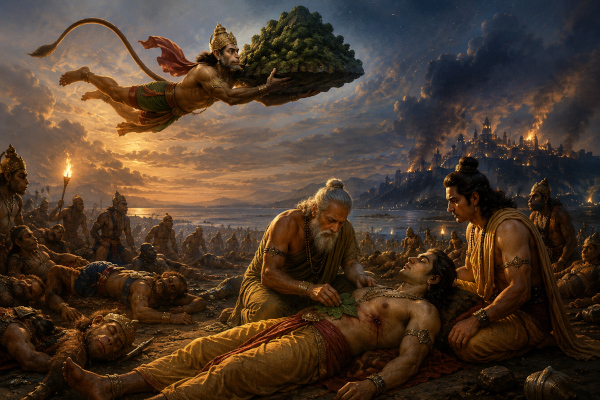
The episode of Hanuman bringing the healing herbs is usually remembered as an act of devotion. It is that, but it is also much more. It is a battlefield rescue mission under extreme pressure. It shows a wounded army, a medical requirement, a time-sensitive operation, a special responder, and the restoration of combat power. In simple military terms, the Sanjivani mission is a casualty recovery operation that saves key commanders and revives the army’s morale at the same time.

Special Weapons and Astras in the Ramayana: The Ancient Doctrine of Decisive Battlefield Systems

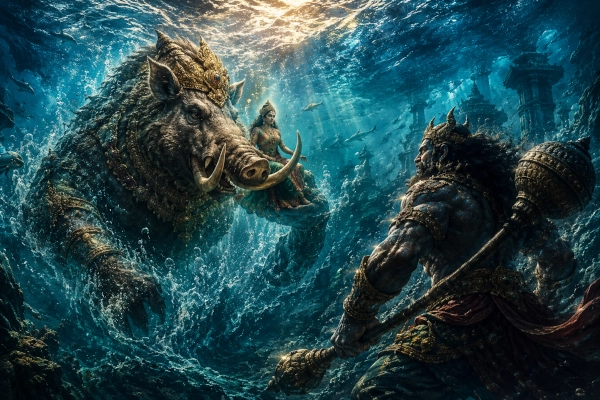
Ordinary weapons fill the daily rhythm of war. Bows, arrows, maces, swords, spears and stones create close combat pressure. Astras change the character of the battle. They bring fire, serpents, wind, water, darkness, shock, paralysis and overwhelming destruction into the field. A warrior who commands an astra controls an effect greater than his physical strength. The weapon becomes a system. It carries range, payload, guidance, psychological power and escalation value. Its deployment signals that the battle has moved from personal combat to specialised warfare.

Illusion and Deception Warfare in the Ramayana: Indrajit’s Maya-Yuddha and the Battle for the Mind

Indrajit is a warrior of intelligence, timing and deception. He enters battle with the skill of a master tactician who understands that fear can wound before a weapon lands. His attacks create uncertainty among the Vanaras because the source of danger remains hidden. Arrows arrive from unseen directions. Weapons strike before the enemy can locate him. The battlefield becomes a place of doubt, where courage must fight through confusion before it can reach the opponent.

Night Warfare in the Ramayana: Fighting Through Darkness, Fear and Confusion

Command and control become critical at night. A commander must know where his troops are, where the enemy is moving and where the objective lies. In darkness, a small error in direction can break formation. A delayed message can isolate a unit. A loud rumour can spread fear. Rama’s campaign shows the importance of leadership that keeps the army focused even when the battlefield becomes unclear. Night rewards armies that move with purpose and punish armies that fight as scattered individuals.