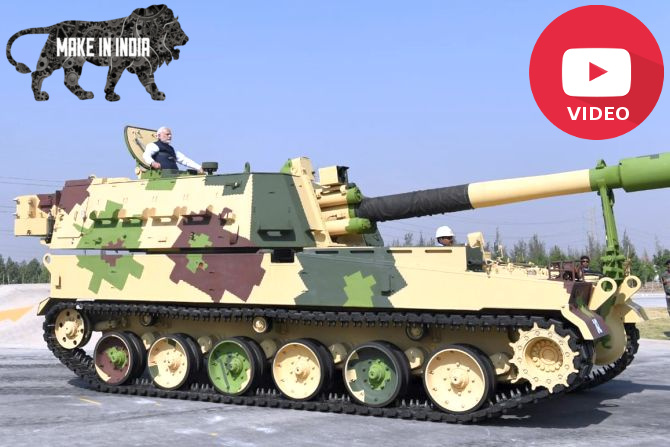
New Delhi, October 27, 2026: India’s efforts to modernise its artillery capabilities have received a significant boost following the Defence Acquisition Council’s approval of a proposal to procure Self-Propelled Tracked Gun Systems for the Indian Army. The development forms part of a larger package of defence acquisition proposals worth approximately ₹2.12 lakh crore approved on October 26, 2026, to strengthen the operational capabilities of India’s armed forces.
The Defence Acquisition Council (DAC), chaired by Defence Minister Rajnath Singh, granted Acceptance of Necessity (AoN) for several major procurement proposals covering artillery, military vehicles, helicopters, air-defence systems, unmanned aerial platforms and other military equipment.
The proposed acquisition of self-propelled tracked artillery systems is particularly relevant to India’s expanding domestic defence manufacturing industry, which includes established producers such as Larsen & Toubro (L&T).
The company has substantial experience in manufacturing tracked artillery platforms, including the K9 Vajra-T 155 mm/52-calibre self-propelled howitzer currently serving with the Indian Army.
Although the latest procurement proposal could create opportunities for domestic artillery manufacturers, the Ministry of Defence has not yet announced a contract award or identified the manufacturer for the proposed systems.
Defence Acquisition Council Approves Tracked Artillery Procurement
The Defence Acquisition Council approved capital acquisition proposals valued at approximately ₹2,12,000 crore during its meeting on October 26, 2026.
The approvals cover equipment intended to strengthen the Indian Army, Indian Navy and Indian Air Force across multiple operational domains.
For the Indian Army, the approved proposals include Self-Propelled Tracked Gun Systems, High Mobility Vehicles, Gun Shot Response Systems, Light Multi-Role Helicopters, Very Short-Range Air Defence Systems and several categories of unmanned aerial and counter-drone systems.
According to the Ministry of Defence, the proposed tracked artillery systems are intended to provide mobility and firepower compatible with the requirements of mechanised military formations.
The ability to move artillery platforms alongside armoured and mechanised units is important in operations where forces must rapidly change positions while maintaining fire support.
Self-propelled artillery systems combine a heavy gun with an armoured vehicle platform, allowing them to move independently across suitable terrain without requiring separate towing vehicles.
These characteristics make them particularly valuable for military formations that depend on speed, coordination and the ability to deliver sustained firepower.
The latest approval indicates the Indian Army’s continuing emphasis on modernising its artillery capabilities and strengthening the mobility of its fire-support systems.
Larsen & Toubro’s Experience in Tracked Artillery Manufacturing
Larsen & Toubro is among India’s established private-sector defence manufacturers with experience in producing complex land-based military systems.
The company’s Precision Engineering and Systems business manufactures equipment for artillery, armoured platforms, naval applications and other defence requirements.
One of its most important artillery programmes is the K9 Vajra-T, a 155 mm/52-calibre tracked self-propelled howitzer developed through cooperation with South Korea’s Hanwha Aerospace.
The K9 Vajra-T is an adaptation of the K9 Thunder artillery system, modified to meet the Indian Army’s operational requirements.
The platform combines a large-calibre artillery gun with a tracked armoured chassis, enabling it to provide fire support while accompanying mechanised formations.
L&T secured its initial contract for 100 K9 Vajra-T systems in 2017 following a competitive procurement process and field evaluations.
The company completed deliveries of the first 100 systems in February 2021, demonstrating its ability to manufacture and integrate complex tracked artillery platforms in India.
The programme contributed to the development of domestic expertise in armoured vehicle manufacturing, artillery integration, precision engineering and associated defence technologies.
L&T’s experience with the K9 Vajra-T provides an established industrial background for evaluating future opportunities involving tracked artillery systems.
However, the latest Defence Acquisition Council approval does not establish whether the proposed requirement will involve additional K9 Vajra-T platforms or a different artillery system.
Indian Army Awarded ₹7,629 Crore K9 Vajra-T Contract in December 2024
India’s indigenous tracked artillery manufacturing capabilities received another boost in December 2024 when the Ministry of Defence signed a contract worth ₹7,628.70 crore with Larsen & Toubro for additional K9 Vajra-T artillery systems.
The agreement, signed on December 20, 2024, was placed under the Buy (Indian) procurement category.
The Ministry of Defence stated that the acquisition would strengthen the Indian Army’s artillery modernisation programme and enhance its operational preparedness across different terrains.
The K9 Vajra-T is designed to deliver long-range artillery fire while providing the mobility required for operations involving mechanised formations.
The platform is also equipped for rapid repositioning after firing, improving its ability to operate in demanding battlefield environments.
According to the Ministry of Defence, the artillery system incorporates technologies intended to support operations in varied terrain, including high-altitude environments experiencing sub-zero temperatures.
The December 2024 contract was also expected to generate more than nine lakh man-days of employment over four years while supporting the participation of Indian industries, including Micro, Small and Medium Enterprises.
The contract demonstrated the role of private-sector manufacturing capabilities in meeting India’s requirements for advanced artillery equipment.
It also reinforced the importance of collaboration between major defence manufacturers and domestic component suppliers.
The 2024 K9 Vajra-T agreement remains a separately confirmed procurement contract and should not be confused with the new Acceptance of Necessity granted in October 2026.
Self-Propelled Artillery Supports Mechanised Warfare
Modern mechanised military operations require artillery systems capable of providing effective fire support while maintaining mobility alongside armoured formations.
Traditional towed artillery systems depend on separate vehicles for transportation and require preparation when moving between firing positions.
Self-propelled artillery platforms integrate mobility and firepower into a single vehicle, allowing the gun system to relocate more efficiently.
Tracked artillery platforms are particularly suited to operating across terrain where mobility and the ability to accompany mechanised forces are important considerations.
These systems can provide fire support for armoured units, engage designated targets and reposition in response to changing operational requirements.
Their effectiveness also depends on supporting capabilities such as target acquisition, communications, ammunition supply, fire-control systems and maintenance infrastructure.
The Indian Army’s proposed acquisition reflects the continued importance of artillery firepower in modern land warfare.
The integration of mobile artillery with surveillance systems, unmanned aerial platforms and digital command networks is also becoming increasingly relevant to military operations.
India’s defence modernisation programmes are therefore addressing not only individual weapon systems but also the broader operational capabilities required to support coordinated land operations.
Indigenous Defence Manufacturing Gains Importance
The October 2026 acquisition approvals reflect India’s continuing efforts to expand domestic defence production and reduce dependence on imported military equipment.
The Ministry of Defence has stated that approximately 82% of the estimated procurement value covered by the latest proposals is intended to be sourced from Indian industry.
This provides an indication of the government’s emphasis on indigenous manufacturing across major military procurement programmes.
The domestic defence manufacturing ecosystem includes public-sector enterprises, large private manufacturers, specialised engineering companies and numerous smaller suppliers.
For complex platforms such as self-propelled artillery systems, production requires a broad range of industrial capabilities involving metallurgy, vehicle manufacturing, mechanical systems, electronics and precision engineering.
Domestic manufacturing programmes can therefore support employment, technical expertise and the development of specialised industrial supply chains.
Companies such as Larsen & Toubro have contributed to this ecosystem through manufacturing activities involving artillery systems, naval equipment and other defence technologies.
The K9 Vajra-T programme illustrates how international technology partnerships can be combined with manufacturing capabilities developed within India.
However, the extent of indigenous content in any future artillery procurement will depend on the system selected, its manufacturing arrangements and the applicable acquisition requirements.
Private Defence Companies Play an Expanding Role
India’s defence manufacturing sector has undergone significant changes as private companies have expanded their involvement in developing and producing military equipment.
Private-sector participation now extends across artillery systems, armoured vehicles, aerospace components, naval platforms, surveillance technologies and defence electronics.
Larsen & Toubro is one of the companies that has established capabilities across several of these areas.
Its defence portfolio includes artillery platforms, naval engineering systems, missile-related equipment and specialised military technologies.
The company’s experience in manufacturing complex systems provides opportunities to participate in future procurement programmes where its capabilities match the requirements of the armed forces.
Other Indian defence manufacturers and their industrial partners may also seek opportunities arising from the latest procurement proposals.
Competition between qualified manufacturers can contribute to technological development, improvements in production methods and the growth of specialised domestic capabilities.
However, participation in future procurement programmes will depend on the technical specifications, eligibility conditions, evaluation processes and commercial requirements established by the Ministry of Defence.
The October 26 approval should therefore be regarded as the beginning of a procurement process rather than the announcement of a manufacturing contract.
Acceptance of Necessity Marks Initial Procurement Approval
An important distinction in the latest announcement concerns the stage reached by the proposed artillery acquisition.
The Defence Acquisition Council has granted Acceptance of Necessity, which represents an in-principle administrative approval for proceeding with a defence procurement proposal.
This approval establishes the basis for subsequent acquisition activities but does not, by itself, result in the award of a supply contract.
Depending on the applicable procurement procedure, further stages may include the formulation of detailed requirements, solicitation of proposals, technical evaluations, trials, commercial negotiations and final approval.
Only after the necessary processes are completed can a contract be formally awarded to a selected manufacturer or supplier.
Consequently, the approval of Self-Propelled Tracked Gun Systems does not confirm that Larsen & Toubro, or any other company, has secured an additional artillery order.
The specific platform, procurement quantity, contract value and delivery arrangements associated with the proposed acquisition have not been established in the October 26 announcement.
These details will become clearer as the procurement process advances.
New Procurement Plans Could Strengthen India’s Artillery Industrial Base
The latest Defence Acquisition Council approval highlights the Indian Army’s continuing requirement for modern mobile artillery systems capable of supporting mechanised operations.
For the Indian defence industry, the proposal represents a potential opportunity to expand manufacturing capabilities and strengthen specialised engineering expertise.
India’s existing experience with the K9 Vajra-T demonstrates that domestic industry has developed the capacity to manufacture and integrate sophisticated tracked artillery platforms.
Future procurement programmes could provide further opportunities for industrial development, depending on the equipment selected and the manufacturing arrangements adopted.
For Larsen & Toubro, the company’s established experience in tracked artillery manufacturing makes the development relevant to its defence business.
Nevertheless, no new L&T artillery contract has been announced under the October 2026 approval.
The Defence Acquisition Council’s decision represents another stage in India’s wider military modernisation efforts, combining the operational requirements of the armed forces with an emphasis on domestic industrial participation.
As India continues to strengthen its indigenous defence manufacturing ecosystem, the proposed acquisition of self-propelled tracked artillery systems could contribute to the development of a more capable, technologically advanced and self-reliant artillery industrial base.
References
- Ministry of Defence, Government of India. “DAC Clears Capital Acquisition Proposals Worth Rs 2.12 Lakh Crore for Defence Forces.” Press Information Bureau, 26 October 2026.
https://www.pib.gov.in/PressReleseDetailm.aspx?PRID=2328486 - Ministry of Defence, Government of India. “Aatmanirbhar Bharat: MoD Inks Rs 7,629 Crore Contract with L&T for K9 VAJRA-T Self-Propelled Tracked Artillery Guns for Indian Army.” Press Information Bureau, 20 December 2024.
https://www.pib.gov.in/PressReleasePage.aspx?PRID=2086514 - Larsen & Toubro Limited. “L&T Precision Engineering & Systems Wins Major Order for K9 Vajra-T Artillery Platforms.” Corporate Press Release, 23 December 2024.
https://www.larsentoubro.com/pressreleases/2024-12-23-lt-precision-engineering-systems-wins-major-order-for-k9-vajra-t-artillery-platforms - Larsen & Toubro Precision Engineering and Systems. “Artillery Systems — K9 Vajra-T and Trajan Towed Gun System.” Official Product Information.
https://www.lntpes.com/our-offerings/land-platforms-equipment-and-systems/land-platforms/artillery-systems - Larsen & Toubro Limited. “L&T-Made 100th K9 Vajra Flagged Off by India’s Chief of Army Staff, Marking Completion of All Deliveries Ahead of Schedule.” Corporate Press Release, 18 February 2021.
https://www.larsentoubro.com/pressreleases/2021/2021-02-18-lt-made-100th-k9-vajra-flagged-off-by-india-s-coas-marks-completion-of-all-deliveries-ahead-of-schedule
You may also like
-
DAC Approves ₹20,000 Crore Procurement of 200 Light Multi-Role Helicopters for Indian Army and Air Force
-
HAL Demonstrates Maximum-Weight Autorotation Landing Capability of Indigenous Light Utility Helicopter
-
Indian Navy’s First Training Squadron Arrives in Colombo to Strengthen Maritime Cooperation
-
Indian Navy Launches First Indigenous Sullage Barge, Begins Construction of Two More Vessels in Thane
-
Indian Navy’s Next Generation Offshore Patrol Vessel Srishti Launched at Goa Shipyard
