Research

News on Science, Technology and Research in India

National Institute of Technology Rourkela Develops Patented Bio-Ink for Bone and Cartilage Repair

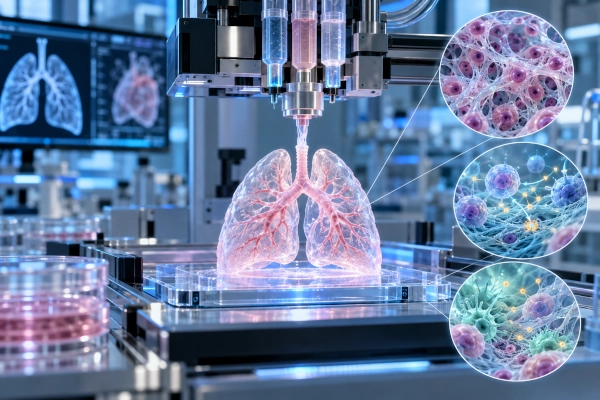
The research was led by Devendra Verma, along with research scholars Shreya Chrungoo and Tanmay Bharadwaj. The team has secured a patent for their invention, described as a high shape-fidelity protein-polysaccharide composite bio-ink. Their work addresses a key global challenge in bioprinting: the lack of materials that can combine structural strength, printability, and biological compatibility in a single system.

IIIT Hyderabad Professor Develops AI Chip Architecture Aimed at Lowering Power and Compute Burden

Shukla’s work has received a Prime Minister Early Career Research Grant from the Anusandhan National Research Foundation, a competitive programme under which researchers can receive support of up to Rs 60 lakh plus overheads for three years. IIIT Hyderabad said he was selected among roughly 700 researchers from more than 6,000 proposals, giving the project both national visibility and a funding path for early-stage development.

Karnataka Unveils India’s First Quantum Ecosystem Map, Launches Phase-1 Quantum Roadmap

A quantum ecosystem is the full network that allows quantum science to grow into an industry. It includes universities doing advanced research, startups building hardware and software, large companies investing in use-cases, government funding and policy support, skilled talent pipelines, testing and fabrication infrastructure, and real-world sectors such as defence, healthcare, finance and communications that can use quantum technologies.

ANRF Unveils AI Outreach Push, Mission-Mode Programmes to Translate Research into Public Impact

According to the Ministry of Science and Technology, SARAL AI is being designed to convert technical research into podcasts, short videos, posters, business briefs, presentations and social media content in 18 Indian languages. The idea is to bridge the gap between laboratories and the public by presenting scientific outcomes in simpler formats that citizens can understand and use.