Governance

Government policies, leadership stories and much more

India Launches IP Catalyst Platform to Turn Patents into Market-Ready Electronics and IT Products

The IP Catalyst initiative is being implemented by CDAC Pune with support from MeitY. Its purpose is to create a comprehensive digital ecosystem that supports the complete innovation lifecycle — from research and IP creation to technology transfer, commercialisation and market deployment. According to the official release, the initiative is designed to bridge the gap between publicly funded R&D and industry adoption by improving collaboration among MeitY organisations, startups, MSMEs, academia and industry.

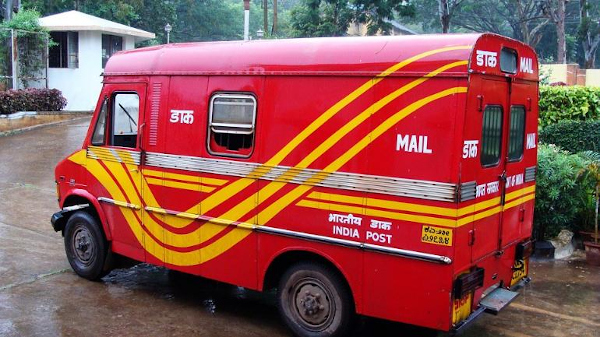
India Post’s APT 2.0 Pushes Branch Offices Toward Real-Time, AI-Led Governance

APT 2.0 is aimed at changing how postal branches function on the ground. Instead of depending only on manual reporting and delayed administrative feedback, branch offices can now use digital insights to study local demand, track service performance and respond more quickly to customer needs. This gives India Post a more data-driven operating model, especially in rural and semi-urban areas where postal services remain a critical public interface.

India Launches AI-Enabled Weather Forecasting Systems to Deliver Hyper-Local Monsoon and Rainfall Alerts

The newly introduced products include an AI-enabled “Forecast of Monsoon Advance over Different Parts of the Country” and a “High Spatial Resolution Rainfall Forecast for Uttar Pradesh” as a pilot service. These systems have been jointly developed by the India Meteorological Department, the Indian Institute of Tropical Meteorology, Pune, and the National Centre for Medium Range Weather Forecasting.

India’s Labour Market Remains Stable as Rural Wage Jobs Rise and Urban Unemployment Eases in PLFS January–March 2026

According to the survey, the overall Labour Force Participation Rate for persons aged 15 years and above stood at 55.5 percent in January–March 2026, compared with 55.8 percent in the previous quarter. Rural LFPR was recorded at 58.2 percent, while urban LFPR stood at 50.2 percent. The figures suggest that participation in the labour market remained largely steady across both rural and urban India despite minor quarter-on-quarter movements.

Centre Notifies New VB-G RAM G Rural Employment Law, MGNREGA to Be Replaced from July 1, 2026

The new Act enhances the statutory employment guarantee from 100 days to 125 days in every financial year for every rural household whose adult members volunteer to undertake unskilled manual work. The government has positioned the law as a shift from a standalone wage-support programme to a broader rural development framework that combines employment generation, durable asset creation, livelihood security, climate resilience and technology-enabled governance.

Jan Suraksha Schemes Complete 11 Years, Expanding India’s Low-Cost Insurance and Pension Net

According to the Ministry of Finance, cumulative enrolments under Pradhan Mantri Jeevan Jyoti Bima Yojana have crossed 27.43 crore as of April 29, 2026. The scheme has paid ₹21,512.50 crore for 10,75,625 claims, making it one of the largest low-cost life insurance platforms in the country. PMJJBY provides life insurance cover of ₹2 lakh in case of death due to any reason, at an annual premium of ₹436.

India Submits 2031–35 Climate Targets to UN, Pledges 47% Cut in GDP Emission Intensity by 2035

The submission marks India’s third Nationally Determined Contribution under the Paris Agreement. NDCs are the national climate action plans that countries submit under the global climate framework, outlining how they intend to reduce emissions, adapt to climate impacts and contribute to the long-term goal of limiting global warming. India’s earlier NDCs were submitted in 2015 and updated in 2022 for the 2030 target cycle.