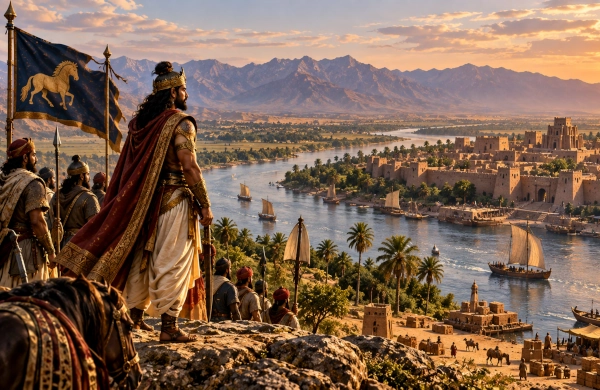
Intelligence from Defectors: Vibhishana, Rama and the Battlefield Value of Inside Knowledge
In the Yuddha Kanda of the Ramayana, Vibhishana’s arrival in Rama’s camp is one of
News, articles and Essays on Sanatana Dharma, Hinduism and Indian way of life.
In the Yuddha Kanda of the Ramayana, Vibhishana’s arrival in Rama’s camp is one of
The name Thirunakkara is connected to Nakkara Kunnu, the sacred hill on which the temple stands. Kerala Tourism notes that the temple is located on Thirunakkara Hill, locally known as Nakkara Kunnu. This elevated position adds to the temple’s atmosphere. Even though modern Kottayam has grown around it with roads, shops, traffic and civic activity, the temple still preserves the old feeling of a hill shrine placed above the daily movement of the town.
One of the first major tragedies of his reign was the fall of Raja Kesavadas, the brilliant Dewan who had served Dharma Raja and had contributed immensely to Travancore’s administration, trade, public works, ports and finances. The State Manual credits Kesavadas with developing Alleppey as a commercial centre, improving roads, bridges, markets, fortifications, temples and revenue arrangements. His removal soon after Balarama Varma’s accession weakened the administrative backbone that could have guided the young ruler through a dangerous decade.
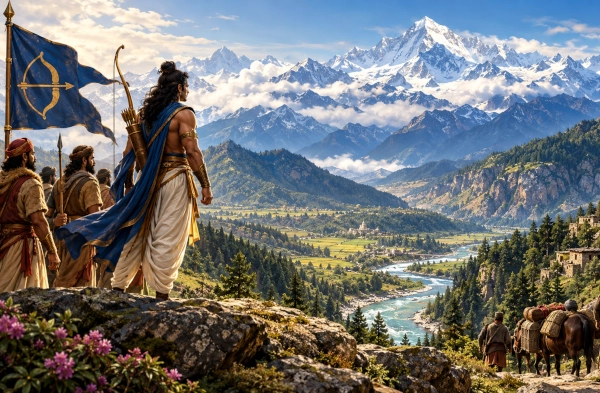
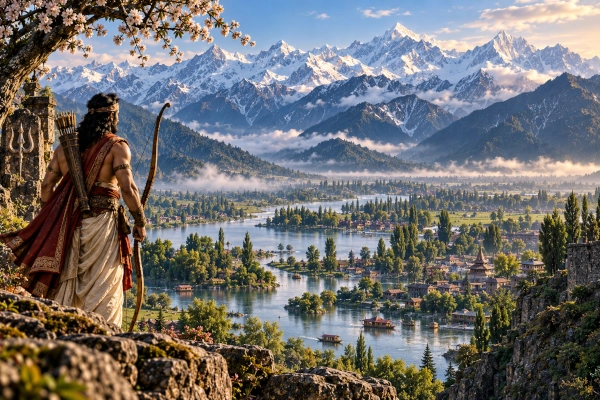
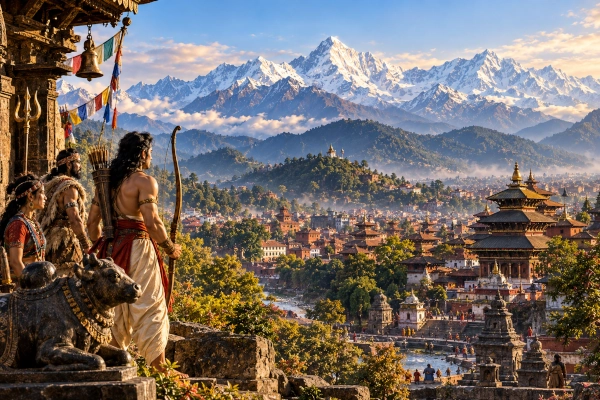
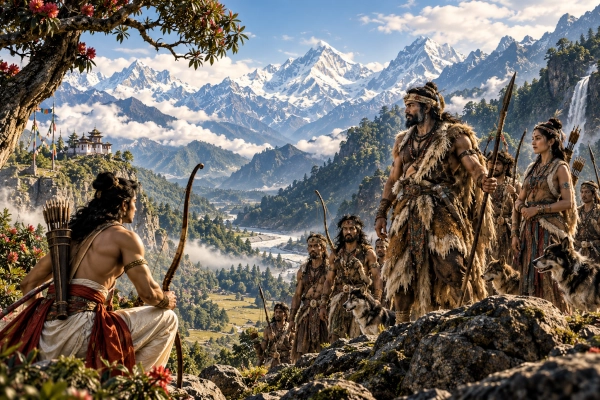
One of the major war tactic in the Ramayana is long-range reconnaissance. Before Rama’s army
Modern India follows a similar strategic logic, though in a very different geopolitical setting. It is not pretending that self-reliance means isolation. Instead, India is building partnerships to fill capability gaps while steadily strengthening its own base.
His reign is remembered first for firmness. Hyder Ali’s expansion into Malabar created panic among Kerala’s old ruling houses. The Mysorean military machine was large, mobile and aggressive. Malabar’s political order began to collapse under pressure. Travancore, however, stood behind its northern defensive belt, diplomatic caution and military preparedness. Dharma Raja refused to behave like a frightened vassal
The greatness of Sanskrit begins with the Vedic tradition. The Vedas were preserved not merely through writing, but through an astonishing oral discipline where pronunciation, accent, metre and sequence were protected with almost scientific care. This made Sanskrit a language of sound as much as meaning. Every syllable mattered. Every pause mattered. Every tonal movement carried weight. That is why Sanskrit survived political change, regional diversity and long historical disruptions with unusual continuity.
The original Mahabharata passages describe the formation as a firm, fierce, foremost and impenetrable circular array formed by Drona. Abhimanyu openly says he has been taught by Arjuna how to penetrate and strike such an array, but he also admits that if danger overtakes him, he does not know how to come out. This single admission gives the episode its entire military depth: Abhimanyu has entry knowledge, but lacks complete exit doctrine.
Marthanda Varma ascended the Venad throne in 1729. Britannica notes that he crushed Dutch expansionist designs at the Battle of Kolachel twelve years later and then adopted a European style of martial discipline while expanding Venad into the southern state of Travancore. That single summary captures the scale of his reign: internal consolidation, military modernisation, territorial expansion and state-building.
The epic describes the war as a clash of enormous scale, with eighteen Akshauhinis gathered at Samanta-panchaka and destroyed in the conflict. One Akshauhini itself was counted as 21,870 chariots, 21,870 elephants, 65,610 horses and 109,350 foot soldiers, giving the war a military scale that naturally invites comparison with modern corps-level and theatre-level planning.