Indian Legends

Featuring legends from India.

Balarama Varma of Travancore: The Young King Who Ruled Through Intrigue, British Pressure and the Velu Thampi Revolt

One of the first major tragedies of his reign was the fall of Raja Kesavadas, the brilliant Dewan who had served Dharma Raja and had contributed immensely to Travancore’s administration, trade, public works, ports and finances. The State Manual credits Kesavadas with developing Alleppey as a commercial centre, improving roads, bridges, markets, fortifications, temples and revenue arrangements. His removal soon after Balarama Varma’s accession weakened the administrative backbone that could have guided the young ruler through a dangerous decade.

Dharma Raja: Karthika Thirunal Rama Varma, the King Who Turned Travancore into a Fortress of Dharma

His reign is remembered first for firmness. Hyder Ali’s expansion into Malabar created panic among Kerala’s old ruling houses. The Mysorean military machine was large, mobile and aggressive. Malabar’s political order began to collapse under pressure. Travancore, however, stood behind its northern defensive belt, diplomatic caution and military preparedness. Dharma Raja refused to behave like a frightened vassal

Marthanda Varma: The Warrior-King Who Forged Modern Travancore

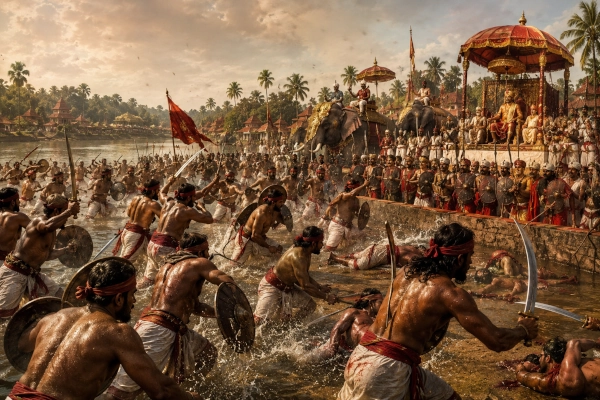
Marthanda Varma ascended the Venad throne in 1729. Britannica notes that he crushed Dutch expansionist designs at the Battle of Kolachel twelve years later and then adopted a European style of martial discipline while expanding Venad into the southern state of Travancore. That single summary captures the scale of his reign: internal consolidation, military modernisation, territorial expansion and state-building.

Sthanu Ravi Varma: The Chera Perumal King Who Made Kerala a Port, Temple and Knowledge Power

The most famous document of his reign is the Tharisapalli copper plate grant, also known as the Quilon Syrian Christian copper plates. This record is dated to the fifth regnal year of Sthanu Ravi, around 849–850 CE, and is one of the most important early medieval documents in Kerala history. It was issued at Kollam by Ayyan Adikal Thiruvadikal, the Venad chieftain under Chera authority, in favour of Mar Sapir Iso, a Christian merchant-leader connected with the establishment of a church and trading settlement at Kollam.

Kulasekhara Alvar / Kulasekhara Varman: The Chera King Who Turned Royal Power into Bhakti

Tradition places Kulasekhara in Chera Nadu, the western land of mountains, rivers, ports and temples that corresponds broadly with Kerala. Sri Vaishnava tradition says he was born in the Chera country, came to the throne after his father, and became deeply devoted to Sri Rama. The Koyil Divya Prabandham tradition associates him with Thiruvanjikkalam, presents him as a Chera king, and remembers him as a ruler whose mind moved constantly towards Rama, Srirangam and the service of Vishnu. The traditional biography even says that when he heard the Ramayana narrated, he reacted as if the events were happening before his eyes. This is the key to understanding him: for Kulasekhara, sacred memory was not literature alone; it was living presence.

Mullakkal Rajarajeswari Temple, Alappuzha: The Bhagavathy Shrine at the Heart of Alleppey

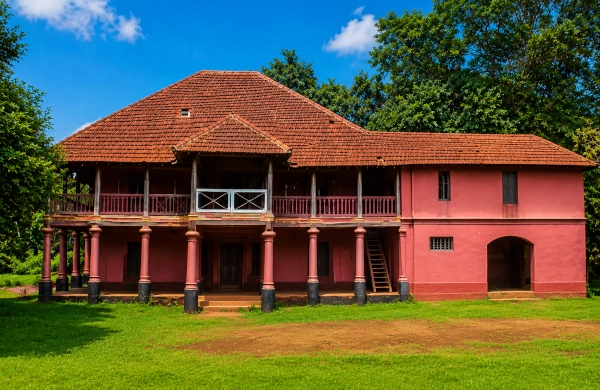
The presiding deity of the temple is Goddess Rajarajeswari, worshipped here as a powerful form of Bhagavathy/Durga. Kerala Tourism describes the temple as a grand Kerala-style shrine where Goddess Durga is the main deity, with other deities including Hanuman, Ganesha, Krishna, Ayyappa, Nagaraja and the Navagrahas also worshipped within the temple complex. The temple is believed to be around 500 years old, making it one of the important historic temples associated with Alappuzha’s religious landscape.

Kanaikkal Irumporai: The Chera King Whose Defeat Became a Legend of Honour

The title “Irumporai” itself carried the weight of a Chera lineage known from Sangam poems. In that old Tamil world, dynastic legitimacy was expressed not only through ancestry but also through conduct. A king had to be brave in battle, generous to poets, fierce to enemies and dignified in hardship. Kanaikkal Irumporai’s story fits this ideal perfectly. He is remembered not for palaces, temples or inscriptions, but for war, captivity and a final act of royal self-respect.

Cheran Senguttuvan: The Chera King Who Turned Kannagi into a Goddess of Justice

As a ruler, Senguttuvan is said to have reigned for 55 years, a remarkably long reign in early South Indian political memory. A scholarly account in Chera Kings of the Sangam Period notes this 55-year reign and describes his consecration of a Pattini temple as an event of “international significance,” especially because the Sri Lankan king Gajabahu is traditionally said to have attended the ceremony.

Nedum Cheralathan — The Sangam Age Emperor Who Challenged Kings Across Land and Sea

the ancient world’s most vibrant maritime trade networks.

Nedum Cheralathan is particularly remembered for expanding Chera prestige beyond Kerala’s western coast and projecting military influence deep into Tamilakam. Sangam poets describe him as a ruler whose authority extended up to the Himalayas, giving rise to the title “Imayavaramban,” meaning “the one whose boundary reached the Himalayas.”