Art and Culture

Art and Culture of India and Sanatana Dharma

Ramayana in Singapore: A Living Bridge of Indian and Southeast Asian Civilisation

This makes Singapore special in the Ramayana map. It is both Indian and Southeast Asian in its cultural inheritance. The epic is preserved through Indian classical forms such as Bharatanatyam, Odissi and storytelling, while also being understood as part of the wider Southeast Asian cultural family. In Singapore, the Ramayana is not only remembered as scripture or literature; it becomes performance, education, community identity and shared heritage.

Guruvayur Sri Krishna Temple: Kerala’s Sacred Abode of Devotion, Grace and Living Tradition

Located in Guruvayur, in the culturally rich district of Thrissur, the temple occupies a special place in Kerala’s sacred geography. Thrissur is celebrated as the cultural capital of Kerala, a land of poorams, temple arts, classical music, ritual traditions and festive grandeur. In this atmosphere, Guruvayur stands as a luminous spiritual centre where faith is lived every day through prayer, offerings, vows and devotion.

Ramayana in Vietnam: Champa, Hindu Deities and the Sacred Cultural Bridge With Bharat

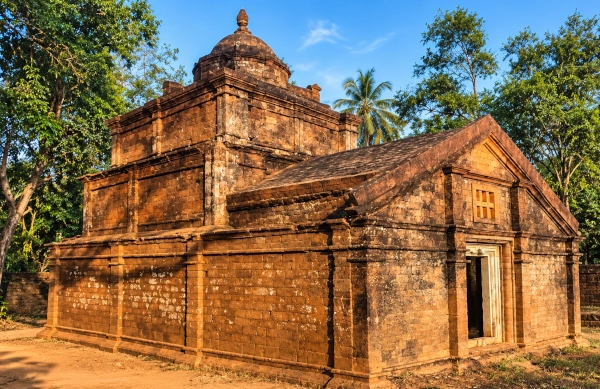
The ancient Champa kingdom flourished along the coast of present-day central and southern Vietnam for many centuries. Located on important maritime routes between India, China and Southeast Asia, Champa became a powerful cultural meeting ground. Indian merchants, priests, scholars and maritime networks carried Sanskrit, Hinduism, Buddhism, temple architecture, royal rituals and epic traditions into the Cham world. Over time, the Cham people created their own refined civilisation, blending Indic religious ideas with local Austronesian culture.

Ramayana Beyond Borders: Akhand Bharat, Tibet, China and the Civilisational Journey of Rama

The Ramayana’s presence in China and Tibet shows the deeper meaning of Akhand Bharat as a civilisational idea. Here, Akhand Bharat is best understood as a sacred-cultural sphere shaped by dharma, knowledge, pilgrimage, literature, philosophy, language and memory. It is not merely a modern political expression. It is the story of how Indian civilisation touched neighbouring regions through wisdom, ethics, devotion and narrative power.

Human Skeletal Remains from Rakhigarhi Transferred to Anthropological Survey of India for Advanced Scientific Research

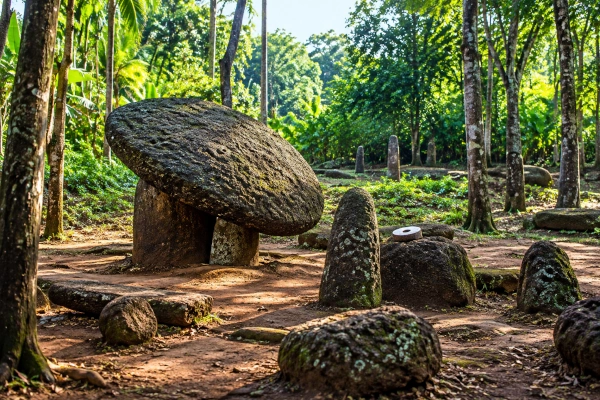
Rakhigarhi, spread across approximately 550 hectares in Haryana, is widely recognized as the largest known settlement of the Indus-Saraswati Civilization. Archaeological excavations have revealed evidence of continuous habitation from the Early Harappan to the Mature Harappan periods, including planned settlements, drainage systems, craft production centres, trade networks, and burial grounds

Mongolia and the Ramayana: A Forgotten Chapter of Bharat’s Cultural Reach

The Ramayana is central to this world because it carries the idea of Maryada — disciplined conduct, righteous leadership, loyalty, sacrifice and the victory of Dharma. Rama is remembered as the king who places duty above comfort, the warrior who fights for justice, the son who honours his father, the husband who crosses oceans for Sita, and the ruler whose name becomes a standard for good governance.

Lucknow to Get ₹23.42-Crore Museum Celebrating India’s Rituals and Life Traditions

The proposed Uttar Pradesh Sanskriti Sangrahalay and Ritual Centre will focus on the idea that Indian culture is lived through ceremonies, family customs, seasonal practices, sacred duties and community traditions. From birth to the final rites, every stage of life in the Indian worldview carries meaning. The museum aims to present this civilisational journey in a way that is accessible to modern audiences, especially younger visitors, students, tourists and international guests.

Sanskrit: The Ancient Language That Still Carries India’s Civilisational Genius

The greatness of Sanskrit begins with the Vedic tradition. The Vedas were preserved not merely through writing, but through an astonishing oral discipline where pronunciation, accent, metre and sequence were protected with almost scientific care. This made Sanskrit a language of sound as much as meaning. Every syllable mattered. Every pause mattered. Every tonal movement carried weight. That is why Sanskrit survived political change, regional diversity and long historical disruptions with unusual continuity.

Netherlands Returns Chola-Era Anaimangalam Copper Plates, Restoring a Priceless Chapter of Tamil Maritime History

The plates belong to the world of Rajaraja Chola I and Rajendra Chola I, two rulers who transformed the Chola kingdom into one of Asia’s most influential maritime powers. Rajaraja Chola I, who ruled from 985 CE to 1014 CE, is remembered not only for military expansion and monumental temple-building, but also for creating a disciplined administrative state that recorded land, revenue and religious grants with remarkable precision.