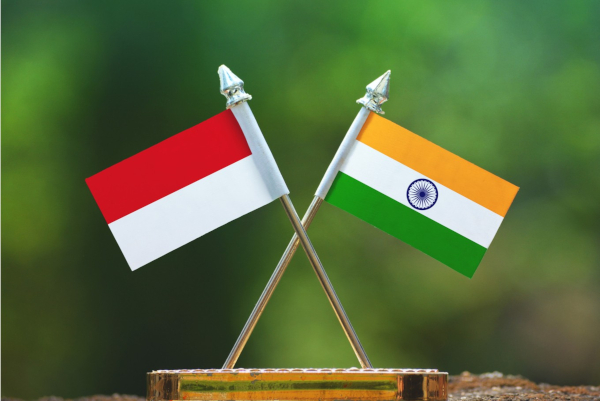
Prime Minister Narendra Modi’s State Visit to Indonesia from 6 to 8 July 2026 has given a major new push to one of India’s most important relationships in Southeast Asia. At the invitation of Indonesian President Prabowo Subianto, the visit marked a significant step in strengthening the India-Indonesia Comprehensive Strategic Partnership, building on President Prabowo’s State Visit to India in January 2025 as the Chief Guest for India’s 76th Republic Day celebrations.
The visit was rich in symbolism and substance. Prime Minister Modi was accorded a ceremonial reception at Istana Merdeka in Jakarta, held official talks with President Prabowo in restricted and delegation-level formats, addressed the Indonesian Parliament at the invitation of Speaker Dr. Puan Maharani, and joined President Prabowo in inaugurating the initiation of restoration and conservation work at the Prambanan Temple Compounds in Yogyakarta, a UNESCO World Heritage Site.
India and Indonesia are no longer looking at their relationship only through the lens of history and culture. They are now shaping it as a future-facing partnership across defence, maritime security, digital public infrastructure, trade, critical minerals, health, energy, education, space and regional diplomacy. The talks covered the full spectrum of bilateral relations, including political engagement, defence and security cooperation, maritime cooperation, trade and investment, digital economy, science and technology, space, critical minerals, energy, agriculture, health, pharma, education, culture, tourism, youth exchanges and people-to-people ties.
A Strategic Partnership Rooted in the Indo-Pacific
India and Indonesia are maritime neighbours separated by the Indian Ocean and connected by history, trade routes and civilisational memory. Indonesia sits astride some of the world’s most important sea lanes, while India’s Andaman and Nicobar Islands face the maritime approaches toward Southeast Asia. This geography gives the relationship enormous strategic weight.
Both leaders reaffirmed their commitment to the Shared Vision of India-Indonesia on Maritime Cooperation in the Indo-Pacific, first announced in 2018. They also underlined their support for a free, open, transparent, rules-based, peaceful, prosperous and inclusive Indo-Pacific region. This is important at a time when the Indo-Pacific is witnessing strategic competition, maritime pressure, supply-chain uncertainty and new security challenges.
The two sides also emphasised respect for sovereignty and territorial integrity, adherence to international law, including the 1982 United Nations Convention on the Law of the Sea, and freedom of navigation and overflight. For India, this aligns with its wider Indo-Pacific approach and the MAHASAGAR vision, which seeks mutual and holistic advancement for security and growth across regions.
Defence Cooperation Gets a Major Boost
One of the most important outcomes of the visit was the deepening of defence and maritime cooperation. India and Indonesia agreed to strengthen regular defence dialogue, joint exercises, staff talks, joint research, co-production of defence technologies, port calls, peacekeeping activities, information sharing, hydrography, capacity building, cadet training and defence industrial cooperation.
The joint statement specifically welcomed the elevation of defence cooperation, including cooperation on the BrahMos Missile System and the Air-to-Air Missile Cooperation Agreement. This is a major signal for India’s defence diplomacy. It shows that India’s indigenous and jointly developed defence systems are increasingly becoming instruments of strategic partnership with friendly nations.
The two countries also identified defence industry and technology as a priority area. They agreed to explore joint production of equipment, technology transfer, technical assistance, capacity building, sourcing of defence equipment, shipbuilding cooperation, MRO facilities for similar defence platforms, defence R&D and stronger defence supply chains. This widens the relationship from buyer-seller engagement to industrial collaboration.
Maritime Security and the Indian Ocean Link
Maritime cooperation was another central pillar of the visit. The leaders welcomed cooperation in maritime domain awareness, maritime connectivity, coastal surveillance, humanitarian assistance and disaster relief, pollution control, and search and rescue. They also welcomed the renewal of the MoU on Maritime Safety and Security Cooperation and the Implementing Arrangement between BAKAMLA RI and the Indian Coast Guard.
Indonesia’s decision to position an International Liaison Officer at the Information Fusion Centre–Indian Ocean Region in Gurugram is also strategically significant. The IFC-IOR helps improve maritime domain awareness by linking partner countries and supporting information sharing on developments across the Indian Ocean. Indonesia’s presence there can strengthen coordination against piracy, smuggling, illegal fishing, maritime accidents and other security challenges.
Sabang Port and Andaman-Aceh Connectivity
The visit also placed new focus on physical connectivity between India and Indonesia. Both leaders emphasised enhanced maritime and air connectivity and looked forward to the next meeting of the Joint Task Force on Andaman-Aceh Connectivity in the second half of 2026.
President Prabowo welcomed India’s interest in partnering on the integrated development of Sabang Port. The proposed cooperation could include cruise and marine-tourism facilities, maritime industries such as ship repair and shipbuilding, and shore-based services supporting offshore energy activities in the Andaman Sea. This could create a powerful economic and strategic bridge between India’s Andaman and Nicobar Islands and Indonesia’s Sumatra region.
For India, Sabang is more than a port opportunity. It is part of a broader maritime connectivity vision linking the eastern Indian Ocean with Southeast Asia. It can support trade, tourism, logistics, energy services and maritime cooperation, while also strengthening India’s Act East outreach.
Trade, Critical Minerals and Steel Cooperation
Economic cooperation was recognised as a key pillar of India-Indonesia ties. Both leaders connected India’s Viksit Bharat 2047 vision with Indonesia’s Indonesia Emas 2045 vision, highlighting the developmental synergy between two large, young and fast-growing economies. They also supported the timely conclusion of the ASEAN-India Trade in Goods Agreement review to create a more balanced and facilitative trade environment.
Critical minerals and rare earths emerged as a major area of cooperation. Both countries agreed to strengthen resilient supply chains that are essential for manufacturing, clean energy, electronics, defence and future technologies. They welcomed collaboration involving India’s Non-Ferrous Materials Technology Development Centre, Midwest Ltd. and Indonesia’s PT Perusahaan Mineral Nasional.
The visit also produced a significant steel-sector outcome. The leaders welcomed the MoU on cooperation in the field of Minerals and Technology of Steel Supply Chain and the strategic joint venture between Steel Authority of India Ltd. and PT Krakatau Steel to explore a stainless-steel slab manufacturing facility in Indonesia. This links India’s industrial capacity with Indonesia’s mineral strength and supports both nations’ manufacturing ambitions.
Digital Public Infrastructure Goes Global
A major highlight was the launch of the Indonesia Open Network, based on India’s Open Network for Digital Commerce architecture. This is a powerful example of India’s digital public infrastructure model moving into international partnerships. The platform is expected to support Indonesian MSMEs by helping them participate more effectively in the digital economy.
The two sides also welcomed progress on the Cross-Border QR Payment Linkage between India and Indonesia, agreed between the Reserve Bank of India and Bank Indonesia. Once operationalised, this can make transactions easier for tourists, students, traders and small businesses. It can also deepen financial integration and support local currency-based engagement.
This digital cooperation is important because it moves the relationship beyond traditional diplomacy. India is increasingly offering digital systems, payment architecture and technology platforms as part of its development partnership model.
Health, Pharma, Food and Energy Security
Health and pharmaceuticals formed another key area of cooperation. The leaders welcomed an Implementation Arrangement on Professional Health Workforce Development, covering fellowship programmes, skill enhancement, clinical training, exchange of health professionals and sharing of best practices. They also welcomed the MoU between CDSCO and Indonesia’s BPOM on cooperation in medical products regulation.
Food security, agriculture, marine fisheries and fertiliser cooperation were also discussed. Both sides agreed to strengthen cooperation in agriculture and food security through trade, joint studies, innovation and knowledge sharing. Fertiliser cooperation was highlighted as important for ensuring stable, affordable and reliable supplies amid changing global market conditions.
On energy, India and Indonesia agreed to deepen cooperation in conventional energy, renewable energy, LNG, green hydrogen, bioenergy, solar energy and energy-efficiency technologies. This is important for two countries that need growth, energy access and cleaner development pathways at the same time.
Space, Science and Emerging Technologies
Space cooperation between ISRO and Indonesia’s BRIN received special attention. The leaders welcomed the extension of the framework agreement on cooperation in the peaceful uses of outer space and noted the 6th Joint Commission Meeting on Outer Space Cooperation held in Bengaluru in June 2026.
Prime Minister Modi appreciated Indonesia’s support for India’s satellite and launch vehicle programmes and the Gaganyaan Mission through collaborative arrangements involving the Biak Telemetry, Tracking and Command facilities. President Prabowo appreciated India’s support for Indonesian satellite launches and training of Indonesian officials.
This space cooperation adds a high-technology dimension to the relationship. It connects India’s proven space capability with Indonesia’s strategic location and growing space ambitions.
Cultural Diplomacy: Prambanan, Nalanda and Tagore
The visit also carried a strong civilisational message. The two leaders inaugurated the India-supported restoration and conservation project at the Prambanan Temple Compounds in Yogyakarta. Indonesia also appreciated India’s gifting of a replica of the original Nalanda Copper Plate, dating to around 860 CE, now exhibited in the new museum at Muara Jambi.
Both countries also agreed to commemorate 2026–2027 as the Tagore-Dewantara Year of India-Indonesia Cultural and Educational Diplomacy, marking the centenary of Rabindranath Tagore’s visit to Indonesia in 1927. The commemoration will include cultural, educational, academic and people-to-people initiatives in both countries.
This cultural layer is crucial. India and Indonesia share deep links through ancient trade, Buddhism, Hindu traditions, Sanskritic influence, temple architecture, maritime exchanges and anti-colonial intellectual history. The visit converted that shared memory into modern diplomatic capital.
Education and People-to-People Ties
Education was another important part of the visit. The two leaders encouraged stronger academic mobility, joint research, institutional collaboration and knowledge exchange. President Prabowo welcomed the growing interest of Indian institutions in setting up branch campuses in Indonesia, and both leaders welcomed the proposed setting up of an IIM Bangalore campus in Indonesia.
Tourism and ease of travel were also discussed. Both countries recognised tourism as a driver of people-to-people ties and agreed to discuss ways to improve travel facilitation and two-way visitor flows.
A Partnership for the Global South
On global issues, India and Indonesia projected a shared voice for the Global South. The two leaders called for reforms in international institutions, including expansion of the United Nations Security Council in both permanent and non-permanent categories. They also supported a fair, open and inclusive international trading system with the WTO at its core.
Indonesia reaffirmed full support for India’s 2026 BRICS Chairship, while India expressed support for Indonesia’s role as a BRICS member. Both leaders agreed to increase engagement through platforms such as BRICS, G20 and IORA.
The two countries also supported stronger ASEAN-India cooperation and closer synergy between the ASEAN Outlook on the Indo-Pacific and India’s Indo-Pacific Oceans Initiative. This places India-Indonesia ties at the centre of a larger regional architecture connecting ASEAN, the Indian Ocean and the Indo-Pacific.
Conclusion
Prime Minister Modi’s Indonesia visit was more than a diplomatic exchange. It was a comprehensive strategic reset that joined history with hard interests, culture with connectivity, and civilisational memory with modern technology.
The visit strengthened defence cooperation, advanced maritime security, opened new pathways in critical minerals and steel, expanded digital public infrastructure, deepened health and pharma ties, boosted space cooperation, and revived shared cultural heritage through Prambanan, Nalanda and Tagore. It also positioned India and Indonesia as two major democratic voices of the Global South working for a balanced, rules-based and inclusive Indo-Pacific.
For India, Indonesia is not just a Southeast Asian partner. It is a maritime neighbour, civilisational cousin, ASEAN anchor, Indo-Pacific stakeholder and strategic bridge to the eastern Indian Ocean. PM Modi’s visit has given this relationship a wider canvas and a sharper purpose. As India moves toward Viksit Bharat 2047 and Indonesia advances toward Indonesia Emas 2045, the partnership between the two nations can become one of the defining relationships of the Asian century.
You may also like
-
Indian Semiconductor Companies Propose New Manufacturing and Chip Design Investments in Madhya Pradesh
-
CSIR-CRRI Partners with Industry to Develop Advanced Indigenous Airport Runway and Pavement Materials
-
Paras Semiconductors Secures 43 Acres in Madhya Pradesh for Proposed ₹6,200 Crore Advanced Chip Packaging Facility
-
Petronet LNG Plans ₹1,200 Crore Joint Venture for Ten Compressed Biogas Plants Across India
-
India Strengthens Trade Ties with Netherlands as Piyush Goyal Visits Port of Rotterdam
