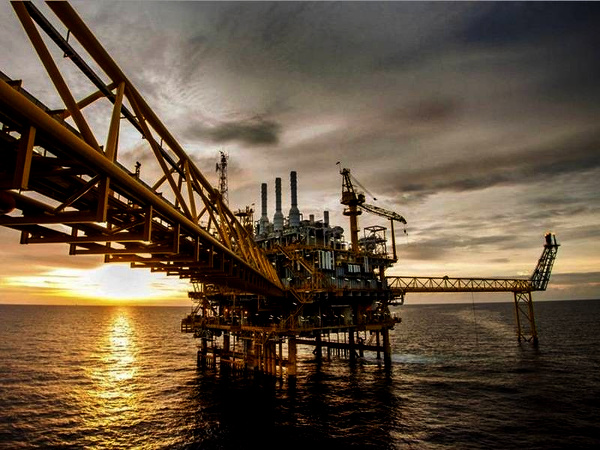
India is intensifying the exploration of its deepwater and frontier offshore basins under the Samudra Manthan Mission, a national initiative intended to discover new oil and natural-gas resources beneath the sea and strengthen the country’s long-term energy security.
Formally presented as the National Deep Water Exploration Mission, Samudra Manthan seeks to bring together advanced seismic surveys, scientific data, deepwater drilling and international exploration expertise. The mission forms part of India’s wider effort to increase domestic hydrocarbon production and reduce its dependence on imported crude oil and natural gas.
The initiative was announced by Prime Minister Narendra Modi during his Independence Day address in August 2025. The government subsequently began advancing offshore exploration programmes in areas including the Andaman Sea and the eastern continental margin.
Exploring India’s Offshore Energy Potential
India possesses an extensive coastline and a large Exclusive Economic Zone containing several sedimentary basins with potential oil and gas resources.
Many of these regions remain insufficiently explored, particularly in deepwater and ultra-deepwater areas where drilling is technically complex and financially demanding.
Samudra Manthan is intended to accelerate the systematic study of these regions through geophysical surveys, seismic imaging, geological interpretation and exploratory drilling.
The programme places particular emphasis on frontier basins where the presence, size and commercial viability of hydrocarbon resources have yet to be fully established.
Data-Driven Exploration
A central element of the mission is the use of high-quality geological and seismic data to reduce uncertainty for exploration companies.
In April 2026, the Directorate General of Hydrocarbons organised a Data Driven Exploration Conference under Samudra Manthan. The meeting brought together government agencies, public-sector oil companies, private operators, global energy companies and seismic-technology providers.
Participants included major international exploration companies and specialist data firms. The discussions focused on improving access to seismic information and encouraging a multi-client data model under which several companies can analyse the same geological datasets.
This approach can help generate competing interpretations of offshore geology, improve the identification of drilling targets and lower the initial risks faced by potential investors.
Deepwater Drilling in the Mahanadi Basin
The mission gained further momentum in July 2026 with the commencement of drilling at the first appraisal well in the Mahanadi offshore basin.
The MN-DWN18-1-HD well is the first of four planned deepwater wells intended to evaluate the basin’s hydrocarbon potential systematically.
The drilling programme uses specialised deepwater technology capable of operating in challenging offshore environments. Information obtained from the wells will help determine reservoir characteristics, resource estimates and the potential for future commercial production.
The Petroleum and Natural Gas Ministry has described the programme as part of a broader strategy combining new discoveries with improved recovery from existing fields.
Natural Gas Discovery Near the Andaman Islands
India’s offshore exploration campaign received an important boost in June 2026 when natural gas was encountered at the Sri Vijayapuram-3 well, around 15 kilometres off the eastern coast of the Andaman Islands.
The well is located in a water depth of approximately 355 metres. Initial production testing at a depth exceeding 1,900 metres established the presence of natural gas through continuous flaring.
Oil India began analysing gas samples to determine their composition and calorific value. Further appraisal will be required to establish the size of the accumulation and whether it can be developed commercially.
The discovery nevertheless provides evidence of an active petroleum system in the Andaman offshore region and supports the case for continued exploration.
Opening Former No-Go Areas
The expansion of offshore exploration follows the opening of large areas that were previously restricted for strategic, defence or environmental reasons.
The government states that nearly 99 per cent of the former offshore no-go area has now been made available for exploration, subject to applicable approvals and safeguards.
Opening these areas has created access to deepwater and frontier regions that had received limited geological investigation in the past.
The government has also introduced the Hydrocarbon Exploration and Licensing Policy and the Open Acreage Licensing Programme, allowing companies to identify and seek exploration blocks rather than waiting exclusively for predetermined bidding rounds.
Growing Exploration Acreage
Under the Open Acreage Licensing Programme, 172 exploration blocks covering nearly 3.8 lakh square kilometres had been awarded by July 2026.
The committed investment associated with these blocks exceeded US$4.3 billion, according to the Petroleum and Natural Gas Ministry.
Around 674 wells were drilled during the 2025–26 financial year. Five new discoveries were reported, while seven earlier discoveries were brought into production or monetised.
These figures indicate an expansion of exploration activity, although major offshore discoveries can require several years of appraisal, infrastructure development and regulatory work before production begins.
Technologies Required for Deepwater Exploration
Deepwater oil and gas exploration involves considerably greater technical challenges than drilling on land or in shallow coastal waters.
Companies require advanced seismic vessels, high-resolution imaging systems, dynamically positioned drilling rigs, remotely operated underwater vehicles and subsea well-control equipment.
Drilling must take place through hundreds or thousands of metres of water before the equipment reaches the seabed. Wells may then extend several kilometres through geological formations.
High pressure, low temperatures, strong currents and remote operating locations increase both engineering complexity and financial risk.
Samudra Manthan therefore depends on cooperation among Indian public-sector companies, private explorers, international technology providers and specialist offshore contractors.
Role of the National Data Repository
India has developed a National Data Repository to store and provide access to geological, geophysical, seismic and well-related information collected from sedimentary basins.
Making this information available to qualified exploration companies can help them identify promising areas and prepare more accurate investment proposals.
The government has also supported the National Seismic Programme, Mission Anveshan, the Hydrocarbon Resource Assessment Study and surveys of India’s extended continental shelf.
Together, these initiatives are intended to create a more comprehensive understanding of India’s subsurface geology.
Reducing Dependence on Energy Imports
India imports a substantial share of the crude oil and natural gas consumed by its transport, industrial, electricity and household sectors.
This dependence exposes the economy to global price volatility, geopolitical disruptions and fluctuations in foreign-exchange expenditure.
Successful domestic discoveries could improve energy security by increasing the share of supplies produced within the country.
Offshore production can also support associated industries including shipbuilding, subsea engineering, offshore services, fabrication, logistics and specialised technical employment.
However, exploration does not guarantee commercial production. Discoveries must be sufficiently large and accessible to justify the cost of wells, platforms, pipelines and processing infrastructure.
Environmental and Safety Considerations
Deepwater exploration must be accompanied by strict environmental and operational safeguards.
Potential risks include oil spills, drilling-fluid discharge, damage to marine ecosystems and accidents involving offshore personnel or equipment.
Projects require environmental assessments, emergency-response plans, well-control systems and continuous monitoring.
Exploration in ecologically sensitive regions such as the Andaman Sea also requires careful assessment of biodiversity, fisheries and coastal communities.
The long-term credibility of Samudra Manthan will therefore depend on balancing energy-security objectives with responsible offshore development.
A Long-Term National Mission
Samudra Manthan is not centred on a single well or discovery. It is a long-term effort to improve geological knowledge, attract investment and establish sustained exploration activity across India’s offshore basins.
The natural-gas indication near the Andaman Islands and the deepwater appraisal campaign in the Mahanadi basin represent early steps in this broader programme.
Commercial success will depend on the results of further seismic analysis, drilling and reservoir evaluation. Even so, the mission has placed offshore exploration at the centre of India’s strategy for energy self-reliance.
By combining data-driven science, policy reform, modern drilling technology and collaboration with experienced exploration companies, India aims to unlock resources that have remained beneath its seas for millions of years.
You may also like
-
EON Space Labs and Dhruva Space Advance Indian Space Hardware on Transporter-18 Mission
-
SatLeo Labs’ TAPAS-1 Reaches Orbit, Advancing India’s Private Thermal-Imaging Capability
-
TakeMe2Space’s MOI-1A Reaches Space on Falcon 9 Transporter-18 Mission
-
Bank of Baroda Enters Pension Fund Management After PFRDA Appointment
-
SCI and India’s Push for a Larger Indigenous Maritime Fleet
