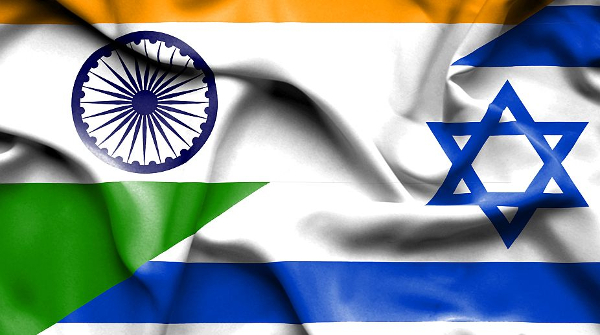
Israeli Prime Minister Benjamin Netanyahu’s latest remarks about India have once again placed the India-Israel relationship in the spotlight. Speaking at a conference in the West Bank, Netanyahu said Israel faces delegitimisation in much of the world, but finds unusually strong public support in India. He described India as a “huge power” and spoke of the emotional warmth Israel receives from Indian citizens.
The statement is striking because it comes at a time when Israel is facing intense criticism in many parts of the world over its military actions and regional security policy. In that environment, Netanyahu’s reference to India was clearly intended to show that Israel still has strong friends and deep public goodwill beyond the West. For him, India represents more than a diplomatic partner. It represents a large democratic society where support for Israel has developed a visible public dimension.
India and Israel have built one of the most practical strategic partnerships of the post-Cold War era. The relationship rests on defence cooperation, counter-terrorism, agriculture, water management, innovation, cybersecurity, space, start-ups, digital technology and political trust. It has grown steadily since the establishment of full diplomatic relations in 1992 and has expanded sharply in the last decade through high-level visits and strategic agreements.
The public warmth that Netanyahu referred to has several roots. Many Indians view Israel through the lens of national security, technological innovation and counter-terrorism resolve. Israel’s image as a small country with strong military capability, advanced agriculture, water technology and high-tech innovation has created admiration among sections of India’s public. Social media has amplified this sentiment, making India one of the most visible sources of online support for Israel during periods of conflict.
Netanyahu has often highlighted his personal equation with India. His 2018 visit to India was remembered for its public optics, cultural moments and warm exchanges with Prime Minister Narendra Modi. He has repeatedly described that visit as an unusually affectionate experience. His latest remarks continue that pattern, presenting India as a country where Israel’s image remains strong despite global criticism.
The relationship, however, is not only emotional. It has deep strategic logic. India and Israel have cooperated extensively in defence and security, with Israel emerging as a key supplier of advanced military technology, surveillance systems, drones, missiles, sensors, electronic warfare equipment and air defence systems. Over time, the partnership has moved from buyer-seller transactions towards joint development, co-production and technology collaboration.
Recent official engagement has widened that relationship further. In February 2026, India and Israel highlighted the transformative potential of cooperation in agriculture, water management, start-ups, fintech, digital healthcare, biotechnology and advanced pharmaceuticals. The two sides also agreed to expand collaboration in trade and investment, defence and security, space, energy, critical technologies, cyber security, education, scientific research and innovation.
Agriculture and water cooperation remain among the most visible civilian pillars of the partnership. Israel’s expertise in drip irrigation, desert farming, protected cultivation, water recycling and precision agriculture has found strong relevance in India. Under India-Israel agricultural cooperation, Centres of Excellence have helped demonstrate modern farming techniques across Indian states, especially in fruits, vegetables, flowers and horticulture.
Technology gives the partnership its future-facing character. Israel is known globally as a start-up and innovation hub, while India brings scale, talent, engineering depth, digital public infrastructure and a massive market. The combination creates opportunities in artificial intelligence, cybersecurity, fintech, health technology, climate technology, agritech, mobility and defence innovation. This is why the India-Israel relationship is increasingly described through the language of innovation rather than only security.
Netanyahu’s statement also reflects the changing nature of diplomacy in the age of social media. Earlier, bilateral ties were shaped mainly by governments, embassies, trade delegations and strategic communities. Today, online publics create their own diplomatic atmosphere. Public sympathy, hashtags, digital communities and influencer narratives can shape how leaders perceive foreign support. Netanyahu’s comment about Indian followers shows how digital approval has become part of political messaging.
For India, the relationship with Israel is managed within a broader and carefully balanced West Asia policy. New Delhi has strong ties with Israel, but it also maintains deep partnerships with Gulf countries, supports the Palestinian cause through official channels, values energy security and has millions of citizens living and working in West Asia. This balancing act has become one of the defining features of Indian diplomacy.
India’s position has generally combined strategic cooperation with Israel and continued engagement with the Arab world. The success of this approach lies in its practicality. India buys energy from the Gulf, receives remittances from Indian workers in the region, maintains strong ties with the UAE, Saudi Arabia and Qatar, cooperates with Israel on security and technology, and continues humanitarian and diplomatic engagement on Palestine. This makes Indian policy more complex than social media narratives suggest.
Netanyahu’s praise of India must therefore be understood in two layers. At the public level, it reflects genuine visibility of pro-Israel sentiment among many Indian citizens. At the strategic level, it highlights the importance Israel attaches to India as a rising power, a major market, a technology partner and a country with growing influence in the Global South.
The Global South dimension is especially important. Israel often faces criticism in international forums, including from many developing countries. India’s growing global weight makes its relationship valuable to Israel. New Delhi is now a major economy, a central player in the Indo-Pacific, a technology power, a defence modernisation hub and a voice in platforms such as the G20, BRICS and the United Nations. Supportive sentiment from India gives Israel a diplomatic and psychological advantage at a difficult time.
At the same time, India benefits from the partnership in concrete ways. Israeli defence systems have strengthened Indian military capability. Agricultural cooperation has helped farmers access modern techniques. Water technology supports Indian states facing scarcity and urban stress. Cybersecurity and innovation exchanges support India’s digital ambitions. The relationship has moved into areas that directly serve India’s development and security needs.
The emotional chemistry between the two countries is therefore backed by hard interests. Public affection may create the mood, but strategic utility sustains the partnership. This is why India-Israel ties have survived changes in governments, regional crises and international pressure. The relationship has become institutional, multi-sectoral and resilient.
Netanyahu’s remark also shows how India’s global image has changed. For many countries, India is no longer seen only as a large market or a developing economy. It is seen as a major civilisational state, a technology power, a defence partner and a society whose public opinion matters. When the leader of Israel publicly invokes Indian support, it demonstrates how India’s citizens, digital presence and geopolitical weight now form part of global political messaging.
The challenge ahead will be to keep the partnership mature. Strong public support can energise relations, but foreign policy must remain steady, balanced and interest-driven. India’s ties with Israel can deepen further in defence, technology, agriculture, water and innovation while India continues to preserve its wider West Asian relationships. That balance is one of New Delhi’s diplomatic strengths.
Netanyahu’s latest praise of India is therefore more than a headline about online popularity. It is a reminder that the India-Israel relationship now works at several levels: leader-to-leader trust, public emotion, strategic cooperation, technology collaboration and shared security interests. In a turbulent global environment, that combination makes the partnership unusually durable.
India and Israel have moved from cautious engagement to open strategic warmth. Netanyahu’s words capture one part of that story — the visible affection Israel receives from many Indians. The deeper story is even larger: two countries have built a relationship where security, innovation, agriculture, water, digital technology and public goodwill now reinforce each other.
You may also like
-
India, Russia and the Ukraine Conflict: Putin Highlights Modi’s Continued Push for Dialogue and a Negotiated Settlement
-
India and France Discuss Aerospace Manufacturing, UPI Integration and India-EU FTA
-
Côte d’Ivoire Military Delegation Visits HAL, Shows Interest in India’s Indigenous Aerospace Platforms
-
India and Netherlands Move to Deepen Agricultural Cooperation in Seeds, Horticulture and Innovation
-
Tarang Shakti Delegates from 28 Countries Visit HAL and BEL to Explore India’s Defence Manufacturing Ecosystem
