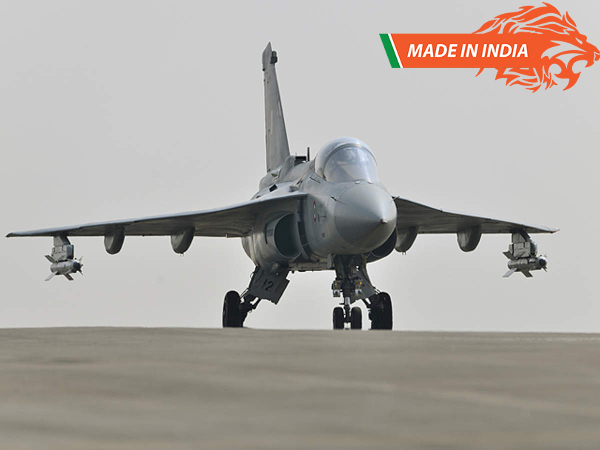
India’s Light Combat Aircraft Tejas Mk1A is set to receive another major indigenous upgrade with the development of a domestically designed radome by the Defence Research and Development Organisation.
The new radome has been developed by DRDO’s Research and Development Establishment (Engineers), or R&DE(E), in Pune. Once cleared after flight trials, it is expected to replace the imported radome presently used on the Tejas Mk1A and support the expanding production requirements of the fighter aircraft.
The technology has reportedly completed structural, mechanical and electromagnetic evaluations and met the requirements specified by the Indian Air Force. Flight trials are now being conducted as the final stage of assessment before the technology is transferred to an Indian industrial partner for series production.
What Is a Radome?
A radome is the protective aerodynamic enclosure placed over an aircraft’s radar antenna, usually at the nose of a fighter jet.
Although it must withstand aerodynamic pressure, vibration, rain, hail, bird strikes and lightning, it must also allow radar signals to pass through with minimal distortion or loss.
The radome therefore performs two critical roles. It protects the radar and related equipment from external conditions while ensuring that the aircraft’s radar continues to detect, track and engage targets effectively.
Even minor variations in the radome’s material, thickness or shape can affect radar performance. Its development requires expertise in structural engineering, composite materials, electromagnetic testing and precision manufacturing.
Designed for Structural and Electromagnetic Performance
The indigenous Tejas Mk1A radome has been designed as a conical composite structure with variable wall thickness.
Its external surface is coated with an electromagnetic-transparent, anti-static and rain-erosion-resistant paint. This coating is intended to protect the structure from environmental damage without interfering with radar transmission.
The radome also includes a provision for mounting the Nose Air Data Probe, which provides important information relating to airflow and flight conditions.
A dedicated lightning-protection system has been incorporated into the design in accordance with MIL-I-83456 requirements. Diverter strips guide lightning currents over the radome’s surface and away from sensitive radar equipment housed inside it.
The structure is connected to the aircraft’s fuselage through a metallic interface ring, which provides secure integration with the forward section of the fighter.
Advanced Composite Materials Used
The radome uses a monolithic fibre-reinforced polymer composite made with quartz-fibre reinforcement and cyanate-ester resin.
Quartz fibres offer favourable electromagnetic properties, high strength and resistance to demanding operating conditions. Cyanate-ester resin is used in advanced aerospace applications because of its thermal stability, low moisture absorption and suitability for structures through which radar-frequency signals must pass.
The component is manufactured through the Resin Film Infusion process. In this method, resin films are combined with dry fibre reinforcement and consolidated under controlled heat and pressure to create a lightweight and structurally uniform composite component.
The manufacturing process is particularly important because inconsistencies, air pockets or variations in thickness can influence both the strength of the radome and the passage of radar signals.
Flight Trials Form Final Assessment
According to the information cited in the original report, the indigenous radome has already met the structural, mechanical and electromagnetic requirements laid down by the Indian Air Force during multiple evaluation trials.
The ongoing flight-testing phase will assess its behaviour under actual operational conditions. These trials are expected to examine radar performance, aerodynamic stability, structural response, vibration, environmental resistance and compatibility with the aircraft’s onboard systems.
Following successful completion of the flight trials, DRDO is expected to transfer the technology to industry for mass production.
Supporting Tejas Mk1A Manufacturing
The indigenous radome is expected to reduce dependence on imported aerospace components at a time when production of the Tejas Mk1A is being expanded.
A locally manufactured radome could help improve supply-chain security, reduce exposure to overseas delivery delays and ensure the continued availability of a critical aircraft component.
This becomes particularly important as additional Tejas aircraft are produced for the Indian Air Force and further orders are considered.
Domestic production will also allow Indian agencies and manufacturers to exercise greater control over maintenance, repair, design modifications and future integration requirements.
Advancing India’s Aerospace Composite Capabilities
The project has importance beyond the Tejas Mk1A programme. Radomes are technically demanding aerospace structures that require a careful balance between physical strength and electromagnetic transparency.
Mastering the materials, design techniques and manufacturing processes involved can support the development of radomes for other fighter aircraft, unmanned aerial vehicles, missiles, airborne surveillance platforms and ground-based radar systems.
The technology could also help strengthen India’s industrial expertise in high-performance composite structures, specialised resins, lightning protection and electromagnetic testing.
Once inducted, the DRDO-developed radome will represent another important step in increasing the indigenous content of the Tejas Mk1A and building a more resilient domestic aerospace manufacturing ecosystem.
Reference
The Week
“LCA Tejas Mk1A Set for a ‘Made in India’ Upgrade with DRDO’s New Radome”
Based on information attributed to DRDO and The Times of India
You may also like
-
EON Space Labs and Dhruva Space Advance Indian Space Hardware on Transporter-18 Mission
-
SatLeo Labs’ TAPAS-1 Reaches Orbit, Advancing India’s Private Thermal-Imaging Capability
-
TakeMe2Space’s MOI-1A Reaches Space on Falcon 9 Transporter-18 Mission
-
PRAHAAR: India’s First National Counter-Terrorism Policy and Strategy
-
SCI and India’s Push for a Larger Indigenous Maritime Fleet
