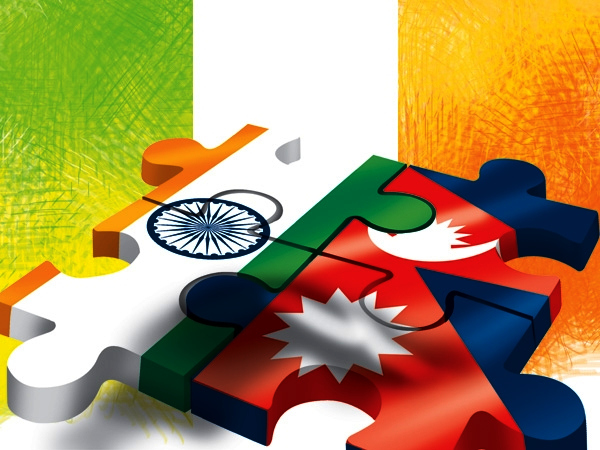
India and Nepal have formalised a Mutual Legal Assistance Agreement in Criminal Matters, creating a structured mechanism for their investigative, prosecutorial and judicial authorities to cooperate in cases involving evidence, suspects, assets or criminal activity spread across the two countries.
The agreement was signed in Kathmandu by Indian Ambassador to Nepal Naveen Srivastava and Binod Kumar Bhattarai, Joint Secretary in Nepal’s Ministry of Law, Justice and Parliamentary Affairs. Although the signing was publicly reported on February 18, the official text records that the agreement was concluded in Kathmandu on February 17, 2026, in Hindi, Nepali and English, with the English version prevailing in case of differences in interpretation.
The pact addresses a practical challenge faced by neighbouring countries: evidence required for a criminal case may be located across the border, financial proceeds may be moved into another jurisdiction, witnesses may reside outside the investigating country, and digital records may be held by foreign service providers. Until such cooperation is placed within an agreed legal procedure, investigations can be delayed by separate laws, documentation requirements and administrative channels.
Under the agreement, India and Nepal undertake to provide the widest possible assistance permitted by their respective national laws in criminal investigations, prosecutions and judicial proceedings. The framework covers the collection of evidence and witness statements, exchange of criminal and judicial records, identification and location of accused or convicted persons, search and seizure, delivery of exhibits and service of summons and other legal documents. It also permits assistance in locating, freezing, forfeiting or confiscating the proceeds and instruments of crime.
The agreement designates the Ministry of Home Affairs in India and the Ministry of Law, Justice and Parliamentary Affairs in Nepal as the central authorities responsible for handling requests. They may communicate directly or through diplomatic channels, replacing informal or fragmented exchanges with clearly identified institutional points of contact.
Requests must ordinarily be submitted in writing and contain information about the authority conducting the investigation, the facts and relevant laws, the assistance required, the identity and location of the persons concerned and any desired timeline. In urgent cases, a request may initially be made through an expedited channel, but a formal written request must follow within ten days unless the requested country permits additional time.
The arrangement is particularly important for investigating organised financial crime. Either country may seek assistance in identifying bank accounts held by a suspected or accused person, obtaining account or transaction records and tracing proceeds derived from criminal activity. Where suspected assets are found, the requested country may take measures allowed by its domestic law to prevent their transfer or disposal while courts determine whether they should be confiscated. The two governments may also consult on the final disposal or sharing of recovered criminal proceeds after reasonable expenses are deducted.
A separate provision deals with terrorist financing. When either country has reasonable grounds to believe that a person or group within its jurisdiction is collecting or contributing funds intended to finance terrorist acts in the other country, it must alert its counterpart and take legally permitted action involving search, seizure, confiscation and prosecution. This gives the agreement direct relevance to cooperation on money laundering, illegal financial flows and terror-financing controls.
The pact also allows India and Nepal to establish joint investigation teams on a case-by-case basis. The two sides must agree on the composition, duration, location, purpose and operating procedures of such a team. This mechanism could prove useful in complex cases involving coordinated activity, evidence and financial transactions in both jurisdictions.
Digital and personal information receives specific protection. Data must be obtained and processed lawfully, remain relevant to the purpose for which it was requested and be protected from unauthorised access, loss, alteration or disclosure. Information supplied under the agreement cannot be passed to a third country, private person or international organisation without the consent of the country that provided it. Authorities must also correct or delete inaccurate information and maintain records of transferred data and its destruction.
These safeguards are significant because contemporary criminal investigations increasingly rely on electronic communications, subscriber information, banking data and other digital records. The agreement allows preservation requests to be directed to internet or telephone service providers under the applicable domestic laws, helping prevent relevant electronic evidence from being deleted before the formal legal process is completed.
The agreement protects sovereignty and individual rights by allowing either country to refuse assistance under specified circumstances. A request may be declined when it threatens sovereignty, national security, public order or national interest; violates domestic law or a court order; concerns an offence already finally adjudicated; relates solely to military law; or is considered political in character. Assistance may also be refused where there are substantial grounds to believe that a person is being targeted because of race, sex, religion, nationality or political opinion.
Before rejecting a request, however, the requested country must consider whether assistance could be provided subject to conditions. This encourages cooperation while preserving legal safeguards and allowing each government to apply its own constitutional and judicial standards.
The pact should not be confused with an extradition treaty. It expressly excludes arrest or detention for extradition, the general enforcement of a foreign criminal judgment, transfer of sentenced persons and transfer of criminal proceedings. Its principal purpose is to help authorities obtain evidence, records, testimony and assets required to investigate and prosecute crimes according to their own laws.
The agreement builds upon existing India–Nepal security cooperation involving narcotics trafficking, organised cross-border crime, money laundering and border management. The two governments had reviewed progress on concluding the legal-assistance framework during the India–Nepal Joint Working Group on Border Management held in Pokhara in March 2025.
Its importance is heightened by the open India–Nepal border and the extensive movement of people, goods and money between the two countries. Open connectivity supports trade, tourism, employment and close family relations, while also creating opportunities for offenders to move evidence, funds or operations across jurisdictions. A formal legal-assistance channel enables authorities to address such misuse without disrupting legitimate cross-border interaction.
The agreement’s entry into force required both governments to complete their respective domestic procedures and inform each other through diplomatic notes. Under its terms, it becomes effective on the thirtieth day after receipt of the latter notification. By June 6, 2026, India and Nepal had welcomed the completion of their internal processes, describing the pact as an institutional framework for improving criminal investigations, prosecutions and judicial proceedings.
Once fully operational, the framework can reduce delays in obtaining admissible evidence, make the tracing of illicit funds more effective and improve coordination between police, prosecutors, courts and central ministries. Its real impact will depend on timely execution of requests, accurate documentation, respect for confidentiality and regular communication between the designated authorities.
The agreement represents a substantive expansion of India–Nepal relations from traditional diplomacy and border cooperation into institutional judicial partnership. By creating common procedures for evidence sharing, asset recovery, financial investigation and assistance in court proceedings, the two countries have established a legal tool capable of making cross-border crime harder to conceal and easier to prosecute.
References
Embassy of India, Kathmandu, Government of India. “India–Nepal Relations: Defence and Security Cooperation.” Updated July 2026.
Ministry of Law, Justice and Parliamentary Affairs, Government of Nepal. “Agreement Between the Government of Nepal and the Government of the Republic of India on Mutual Legal Assistance in Criminal Matters.” Signed at Kathmandu on 17 February 2026.
Embassy of India, Kathmandu, Government of India. “Visit of Minister for Foreign Affairs of Nepal to India.” 6 June 2026.
Akashvani News, Government of India. “India Signs Mutual Legal Assistance Agreement on Criminal Matters with Nepal.” 18 February 2026.
You may also like
-
India, Russia and the Ukraine Conflict: Putin Highlights Modi’s Continued Push for Dialogue and a Negotiated Settlement
-
India and France Discuss Aerospace Manufacturing, UPI Integration and India-EU FTA
-
Côte d’Ivoire Military Delegation Visits HAL, Shows Interest in India’s Indigenous Aerospace Platforms
-
India and Netherlands Move to Deepen Agricultural Cooperation in Seeds, Horticulture and Innovation
-
Tarang Shakti Delegates from 28 Countries Visit HAL and BEL to Explore India’s Defence Manufacturing Ecosystem
