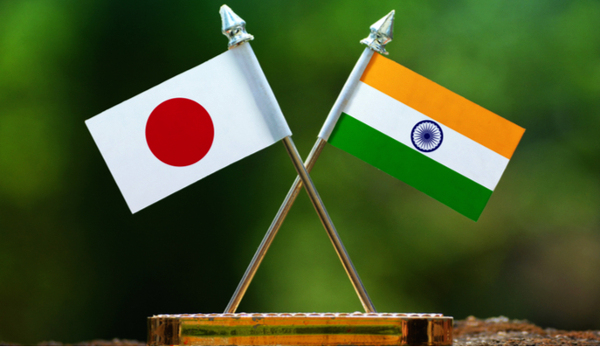
India and Japan have set a target of facilitating the movement of more than five lakh people between the two countries over the next five years, including 50,000 skilled professionals and emerging talent from India to Japan.
Minister of State for External Affairs Kirti Vardhan Singh informed the Rajya Sabha that the target forms part of the Action Plan for India–Japan Human Resource Exchange and Cooperation.
The programme is included in the Next Gen People-to-People Partnership under the India–Japan Joint Vision for the Next Decade, which was adopted during the bilateral annual summit held in Tokyo in 2025.
Focus on Skilled Professionals and Talent Mobility
The proposed exchange will take place in both directions and is intended to deepen professional, educational and cultural engagement between India and Japan.
A major component of the plan is the movement of 50,000 skilled Indian workers, professionals and potential talent to Japan.
Japan faces growing demand for trained workers in several sectors, while India has a large pool of young professionals and technically qualified personnel. The cooperation framework seeks to connect these complementary requirements through organised training, employment and exchange programmes.
The action plan will focus on vocational education, internships, researcher and student exchanges, professional capacity building and the expansion of Japanese-language education in India.
Improved language training is expected to help Indian professionals adapt more effectively to Japanese workplaces and increase their access to employment and educational opportunities.
Eight Areas Covered by Joint Vision
The India–Japan Joint Vision identifies eight broad areas for expanding cooperation during the coming decade.
These include the economy, economic security, mobility and infrastructure, ecological sustainability, technology and innovation, healthcare, people-to-people exchanges and partnerships between Indian states and Japanese prefectures.
The framework is intended to strengthen bilateral economic ties while creating wider opportunities for businesses, students, researchers and skilled workers.
It also seeks to increase cooperation with countries of the Global South and utilise India’s position as a platform for Japanese companies expanding their presence across South Asia and Africa.
Private Investment and Industrial Cooperation
The government said the partnership would encourage Japanese companies to expand private-sector investment and business activity in India.
India is expected to play a larger role as a manufacturing, technology and commercial base for Japanese enterprises seeking access to regional and emerging markets.
Industrial cooperation is also being advanced through the India–Japan Economic Security Initiative.
The initiative focuses on securing supply chains for essential goods and critical materials, diversifying markets and strengthening cooperation in advanced technologies.
The two countries have agreed to expand engagement in sectors including artificial intelligence, batteries, pharmaceuticals, medical devices, biogas, energy resilience and research and development.
Economic Security Framework Expanded
During the India–Japan annual summit held in New Delhi in July 2026, the two governments released a Joint Declaration on Economic Security and a revised document titled Factsheet 2.0 on India–Japan Economic Security Cooperation.
These measures are intended to improve coordination in areas where economic activity intersects with strategic security, including technology, energy, manufacturing and critical supply chains.
The partnership reflects a broader effort by India and Japan to reduce vulnerabilities caused by excessive dependence on limited suppliers or markets.
Mobility and Infrastructure Partnership Formalised
India and Japan also formalised the Next Generation Mobility Partnership through a memorandum of cooperation signed on July 2, 2026.
The mobility partnership covers infrastructure, transportation, logistics and related systems that can improve the movement of people and goods.
Alongside physical infrastructure, the human resource exchange programme will create stronger links between institutions, industries and communities in both countries.
The planned exchange of more than five lakh people represents one of the most ambitious components of the India–Japan relationship and is expected to significantly expand employment, education and professional collaboration over the next five years.
Reference
Ministry of External Affairs, Government of India
Written reply by Minister of State for External Affairs Kirti Vardhan Singh in the Rajya Sabha
July 30, 2026
You may also like
-
India, Russia and the Ukraine Conflict: Putin Highlights Modi’s Continued Push for Dialogue and a Negotiated Settlement
-
India and France Discuss Aerospace Manufacturing, UPI Integration and India-EU FTA
-
Côte d’Ivoire Military Delegation Visits HAL, Shows Interest in India’s Indigenous Aerospace Platforms
-
India and Netherlands Move to Deepen Agricultural Cooperation in Seeds, Horticulture and Innovation
-
Tarang Shakti Delegates from 28 Countries Visit HAL and BEL to Explore India’s Defence Manufacturing Ecosystem
