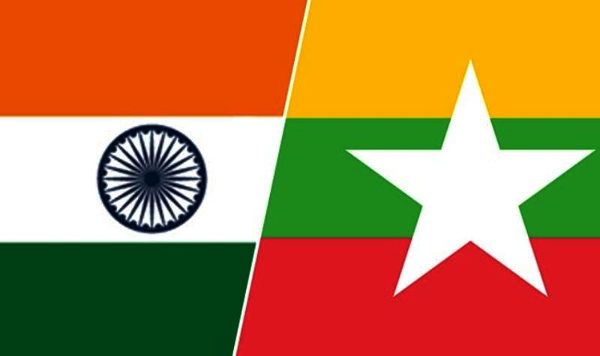
yanmar President U Min Aung Hlaing’s upcoming five-day visit to India marks an important moment in India’s neighbourhood diplomacy, bringing New Delhi and Naypyidaw into direct engagement at a time when regional security, border stability and economic connectivity are becoming increasingly important for South and Southeast Asia.
The visit is being undertaken at the invitation of Prime Minister Narendra Modi. President Min Aung Hlaing will arrive with a high-level delegation that includes Cabinet Ministers, senior officials and business leaders, giving the engagement both diplomatic and economic weight. This will be his first visit to India in his current capacity, making the trip significant in the evolving relationship between the two countries.
During his stay in New Delhi, President Min Aung Hlaing will hold discussions with Prime Minister Modi on June 1. The talks are expected to focus on strengthening the historical, civilisational and strategic relationship between India and Myanmar. Both countries share old cultural links, deep Buddhist connections, a long land boundary and an important place in the wider Indo-Pacific region.
For India, Myanmar has a special place in the Act East vision. It is the land bridge between India’s Northeast and Southeast Asia, making it central to connectivity projects, cross-border trade, security cooperation and regional outreach. Stronger ties with Myanmar can support India’s efforts to connect the Northeast with wider Asian markets through road, port and trade corridors.
The visit also carries strong cultural symbolism. President Min Aung Hlaing is scheduled to travel to Bodh Gaya, one of the holiest Buddhist sites in the world. This part of the itinerary highlights the spiritual and civilisational bond between India and Myanmar. Buddhism has shaped people-to-people contact between the two countries for centuries, and Bodh Gaya remains a powerful cultural bridge between India and the Buddhist-majority nations of Asia.
Mumbai will add an economic dimension to the visit. As India’s financial capital and a major commercial hub, the city offers space for discussions linked to trade, investment, business partnerships and private-sector engagement. The presence of business leaders in the Myanmar delegation gives the visit a wider scope beyond formal diplomacy.
India and Myanmar also share important security concerns. The long border with India’s northeastern states makes cooperation essential for peace, stability and development in the region. Border management, movement of people, infrastructure development, counter-insurgency cooperation and connectivity projects are all closely linked to the health of the bilateral relationship.
The visit comes at a time when India is increasing its attention on regional partnerships that combine security, development and cultural diplomacy. Myanmar’s location gives it strategic importance in the Bay of Bengal, the eastern Indian Ocean and the land routes connecting India with ASEAN. A stable and cooperative India-Myanmar relationship can strengthen regional connectivity and support India’s broader Indo-Pacific outreach.
The engagement also reflects New Delhi’s practical approach to neighbourhood policy. India has long maintained that close contact with neighbouring countries is necessary for regional development, humanitarian cooperation, infrastructure growth and security coordination. Myanmar’s importance in this framework is clear because developments there directly affect India’s border states and eastern strategic environment.
President Min Aung Hlaing’s visit is expected to deepen the multifaceted relationship between the two countries. The combination of political talks in New Delhi, spiritual diplomacy in Bodh Gaya and economic outreach in Mumbai gives the visit a broad character. It places history, geography, security and commerce within one diplomatic frame.
As India expands its role in the Indo-Pacific and strengthens its engagement with Southeast Asia, Myanmar remains a vital partner in the eastern neighbourhood. This visit can give fresh momentum to bilateral dialogue, reinforce civilisational ties and open new space for cooperation in connectivity, trade, border stability and regional development.
Reference: News on Air
You may also like
-
India, Russia and the Ukraine Conflict: Putin Highlights Modi’s Continued Push for Dialogue and a Negotiated Settlement
-
India and France Discuss Aerospace Manufacturing, UPI Integration and India-EU FTA
-
Côte d’Ivoire Military Delegation Visits HAL, Shows Interest in India’s Indigenous Aerospace Platforms
-
India and Netherlands Move to Deepen Agricultural Cooperation in Seeds, Horticulture and Innovation
-
Tarang Shakti Delegates from 28 Countries Visit HAL and BEL to Explore India’s Defence Manufacturing Ecosystem
