India is seeking to train one crore young people in artificial intelligence within a year as it attempts to build the human-capital base needed for a technology economy increasingly shaped by AI, semiconductors, quantum computing and advanced electronics.
Prime Minister Narendra Modi reiterated the one-crore AI-skilling target during a semiconductor industry roundtable with leading executives on September 16, while calling for substantially greater participation by companies in workforce development, research, innovation and emerging technologies.
The discussion came immediately ahead of SEMICON India 2026, which begins in New Delhi on September 17 and brings together global semiconductor manufacturers, equipment companies, technology firms, investors, researchers and policymakers.
Rather than treating semiconductor manufacturing purely as a question of constructing fabrication plants, the government is increasingly placing skills at the centre of India’s attempt to develop a complete technology ecosystem.
One Crore AI Skills Target
The one-crore target itself was announced by Modi during his Independence Day address on August 15. The government said the objective is to train 10 million young Indians in AI skills within one year, reflecting the rapid adoption of artificial intelligence across industries and professions.
The scale is considerably larger than conventional specialist AI-training programmes. Reaching one crore people would require AI education to extend beyond computer scientists and software engineers into students, workers, professionals and people using AI within individual sectors.
The government’s existing AI-skilling architecture has already begun moving in that direction. The Skilling for AI Readiness, or SOAR, programme offers AI literacy and application-oriented courses through the Skill India Digital Hub.
As of August 6, 2026, more than 5.17 lakh learners had enrolled in SOAR courses and over one lakh had been certified. The programme has expanded to 50 AI and AI-application qualifications covering workplace productivity, employment, education, sector-specific applications and the use of AI by workers in the unorganised economy.
PMKVY 4.0 has similarly incorporated AI, machine learning, data science, cybersecurity, cloud computing, semiconductors, drones, robotics, electric vehicles and other emerging technologies into India’s formal skills programmes. By June 2026, more than 5.44 lakh people had been trained or oriented in future-skills job roles under PMKVY 4.0, with around 3.74 lakh certified.
Semiconductor Companies Asked to Become Training Partners
At the September 16 roundtable, Modi urged semiconductor companies to participate more directly in the next phase of India’s technology development, particularly in skilling, innovation, AI and quantum computing.
His argument linked India’s large pool of technical talent with the manufacturing experience and technological capabilities of global semiconductor companies. Greater industry involvement could allow training programmes to move closer to actual requirements in fabs, packaging facilities, chip-design centres and advanced manufacturing operations.
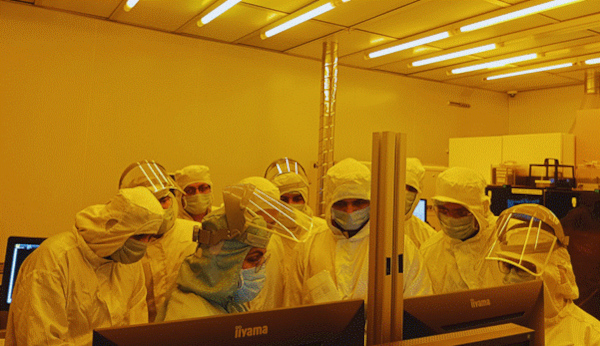
This distinction is important because semiconductor manufacturing requires skills that differ considerably from conventional electronics assembly or general software development. Fabrication plants depend on specialists in process engineering, materials, device physics, contamination control, precision manufacturing, equipment maintenance and highly automated production systems.
Developing fabrication capacity therefore requires a parallel investment in technicians, engineers and researchers capable of operating and improving semiconductor manufacturing processes.
India Already Building Semiconductor Talent Pipeline
India has already begun developing this workforce through academic and industrial programmes.
Under the Chips to Startup initiative, Electronic Design Automation tools have been deployed across hundreds of educational institutions. Government figures released in July indicated that more than 68,000 students had received semiconductor-related training, while a new semiconductor curriculum had been adopted by more than 500 engineering colleges.
India also retains an established position in semiconductor design. Government estimates place roughly 20 per cent of the world’s semiconductor design talent in India, although the country’s manufacturing capability remains much smaller than its design presence.
The transition from design expertise towards domestic fabrication, packaging, equipment and materials therefore requires a broader workforce than India’s existing chip-design industry alone can provide.
Semicon 2.0 places talent development among its central pillars. The programme envisages closer industry involvement in areas such as clean-room operations, semiconductor fabrication, manufacturing infrastructure and specialised technical training.
AI and Semiconductors Increasingly Interconnected
The decision to discuss AI skills alongside semiconductors reflects the growing technological connection between the two industries.
Modern AI systems depend on specialised semiconductor hardware, particularly GPUs, accelerators, high-bandwidth memory and advanced packaging technologies. At the same time, semiconductor companies are increasingly using AI for chip design, process optimisation, equipment monitoring, manufacturing yield improvement and defect detection.
India’s technology strategy is consequently beginning to treat AI and semiconductors as interconnected capabilities rather than separate industries.
At the India AI Impact Summit earlier this year, officials described semiconductor capability as central to the AI economy while also noting the increasing importance of AI within semiconductor development and manufacturing.
India’s AI infrastructure has also been expanding. Under the IndiaAI Mission, shared computing capacity had crossed 45,000 GPUs by June 2026, while hundreds of projects had received access to subsidised computing resources for model development, research and testing.
The IndiaAI Mission itself carries an approved outlay of approximately ₹10,372 crore and covers computing infrastructure, indigenous models, datasets, startup financing, skills and responsible AI development.
Quantum Computing Added to the Skills Conversation
The semiconductor roundtable also brought quantum computing into the workforce discussion.
Quantum technologies depend on a combination of advanced physics, materials science, electronics, cryogenic systems, photonics, semiconductor devices, specialised software and high-performance computing. Building capability in the sector therefore requires multidisciplinary talent that cannot be created through conventional software training alone.
India’s National Quantum Mission is already supporting research and technology development through specialised hubs involving universities and research institutions. The wider policy objective is to develop domestic expertise in quantum computing, communication, sensing and materials.
Bringing AI, semiconductors and quantum technologies together in the same industry discussion reflects the increasingly interconnected nature of advanced technology supply chains.
SEMICON India 2026 Provides Industry Platform
The roundtable precedes the fifth edition of SEMICON India, being held at Yashobhoomi in New Delhi from September 17 to 19.
The 2026 edition carries the theme “Silicon to Systems: Building the Ecosystem” and is expected to bring together more than 600 companies and representatives from dozens of countries. Government documents say 12 semiconductor projects have been approved under the first phase of the semiconductor programme.
The emphasis on building an ecosystem reflects a shift from simply attracting individual semiconductor plants towards developing the network surrounding them. That includes materials, chemicals, gases, equipment, chip design, fabrication, assembly, testing, packaging, research institutions and skilled manpower.
India’s semiconductor ambitions therefore depend as much on the availability of specialised people as on financial incentives or factory construction.
From Mass AI Literacy to Advanced Technical Skills
The one-crore AI target and semiconductor workforce programmes address two different but related requirements.
Large-scale AI training is intended to spread practical AI literacy through a much wider section of the population. Semiconductor and quantum programmes, by contrast, require comparatively smaller numbers of highly specialised engineers, technicians and researchers.
Both become important as artificial intelligence moves from a specialised software discipline into manufacturing, healthcare, finance, logistics, defence, education and scientific research.
India’s challenge will consequently be to create skills at several levels simultaneously: basic AI literacy for millions of users, applied AI capability for workers and businesses, advanced engineering skills for semiconductor manufacturing, and research expertise in fields such as quantum computing and next-generation chip technologies.
The September 16 semiconductor roundtable indicates that the government expects industry to play a larger role in building that workforce. If companies become directly involved in curriculum development, laboratories, apprenticeships and factory-level training, India’s semiconductor expansion could increasingly be accompanied by a domestic technical workforce capable of supporting it.
The target of training one crore young people in AI therefore represents only one part of a broader effort. Alongside semiconductor manufacturing, chip design, quantum technologies and advanced computing infrastructure, India is attempting to build the human-capital base required to sustain a much larger emerging-technology economy.
You may also like
-
India’s Quick Commerce Market Could Reach US$90 Billion by FY31 as Retail Shopping Undergoes Major Transformation
-
India Targets 10% of Global 6G Patents and Standards, Pushes Indigenous Telecom Technologies
-
Chokuwa Rice of Assam — The Traditional “Soak-and-Eat” Grain of the Brahmaputra Valley
-
India’s Satellite Broadband Industry Nears Commercial Launch as Bharti OneWeb, Jio and Starlink Await Final Approvals
-
India’s Defence Electronics Industry Expands as BEL, Astra Microwave and Private Manufacturers Strengthen Indigenous Supply Chains
