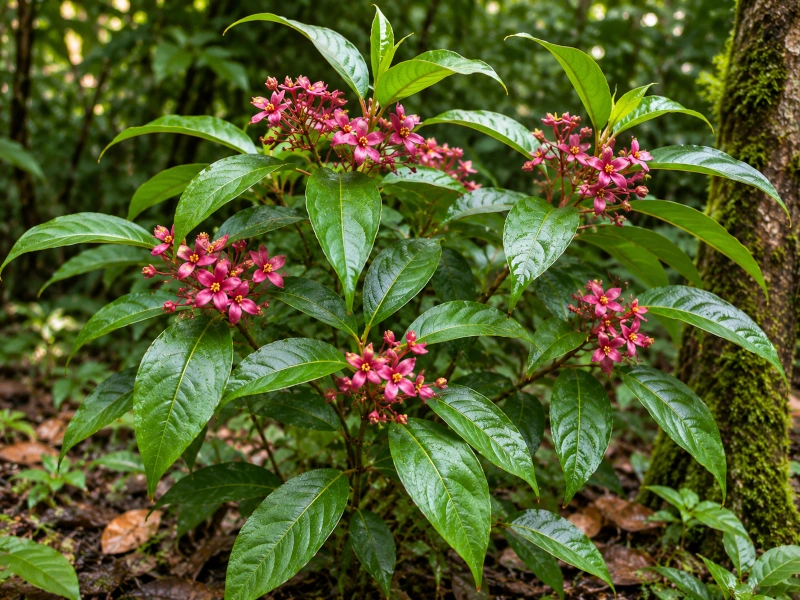
Researchers from Gauhati University have rediscovered a rare flowering shrub in Assam after approximately 204 years without a confirmed botanical collection from India, resolving a longstanding mystery surrounding a plant first described in 1821. The species, Ardisia colorata, was documented in the Abhayapuri area of Bongaigaon district during botanical investigations conducted between 2020 and 2025. The findings, published in October 2026, represent an important contribution to Indian botanical research and highlight the remarkable plant diversity that continues to survive in the forests of northeastern India.
The rediscovery was made by Manash Baruah and Nilakshee Devi of Gauhati University’s Department of Botany. Their research was published on October 16, 2026, in the international botanical journal Feddes Repertorium, under the title From Neglect to Recognition: A Taxonomic Review of Ardisia colorata G. Lodd. (Primulaceae: Myrsinoideae), Recollected From India After Two Centuries. Assam’s Environment, Forest and Climate Change Minister Jayanta Malla Baruah subsequently highlighted the achievement on October 20, 2026, recognising its significance for the state’s biodiversity research.
The scientists documented only 12 individual plants at the surveyed location, demonstrating the importance of further investigations into the shrub’s geographical distribution and conservation requirements. The research not only confirms the continued presence of a historically described species in India but also clarifies botanical classifications that had remained uncertain for more than two centuries.
A Botanical Mystery That Began in 1821
The scientific history of Ardisia colorata dates to 1821, when British horticulturist George Loddiges formally described the plant in The Botanical Cabinet, a publication documenting botanical specimens cultivated in Britain. The original description was based on a plant introduced into cultivation from India around 1816, although the precise location of its collection was not recorded. The shrub attracted attention because of its distinctive foliage and flowering characteristics, but it subsequently became difficult to identify within the expanding scientific literature of the nineteenth century.
The situation became more complicated in 1824 when botanist William Roxburgh applied the name Ardisia colorata to a different plant. The use of similar botanical names for distinct specimens created uncertainty concerning the identity of the original species described by Loddiges. Over time, the plant became obscured by taxonomic confusion, and its occurrence in India remained largely absent from subsequent botanical records.
This historical uncertainty illustrates one of the important challenges faced by botanists when examining plant species described centuries ago. Early botanical records were sometimes based on cultivated specimens whose original collection sites were poorly documented, while descriptions and illustrations did not always include the information required for distinguishing closely related species. As scientific classifications changed, some plants became incorrectly identified or were overlooked in later research.
The Gauhati University researchers revisited these historical descriptions while investigating members of the genus Ardisia. Their examination eventually established that specimens collected in Assam corresponded to the species originally described by Loddiges, bringing an overlooked plant back into India’s documented botanical flora.
Rare Shrub Rediscovered in Assam’s Bongaigaon District
The researchers identified Ardisia colorata in a shaded and humid forest environment near Abhayapuri in Bongaigaon district, at an elevation of approximately 211 metres above sea level. The location contains vegetation that provides the relatively moist and protected growing conditions associated with the species. During their field investigations, the scientists documented 12 individual plants, making the rediscovery especially noteworthy from the perspective of botanical conservation.
The limited number of individuals recorded at the surveyed location does not establish the total population of the species in India. The shrub may occur in other suitable habitats that have not yet been systematically examined, and additional field surveys will be necessary to determine its wider distribution. Nevertheless, the small documented population highlights the importance of protecting the known habitat while scientists investigate whether other populations survive in Assam or neighbouring regions.
Northeastern India is internationally recognised for its exceptional biological diversity, supported by a combination of tropical and subtropical forests, varied elevations, abundant rainfall and complex ecological conditions. These environments provide habitats for numerous flowering plants, including species that are uncommon, geographically restricted or inadequately documented. The rediscovery demonstrates how continued botanical exploration can reveal important information even in regions that have been studied for generations.
The finding also reinforces the value of surveying smaller forest habitats and relatively undisturbed vegetation outside the country’s most widely recognised protected areas. Such locations may preserve plant species that are difficult to detect because of their limited populations, seasonal flowering patterns or resemblance to more common relatives.
Understanding the Botanical Characteristics of Ardisia colorata
Ardisia colorata is an evergreen flowering shrub belonging to the family Primulaceae and the subfamily Myrsinoideae. The plant generally reaches a height of approximately 0.5 to two metres and is characterised by glossy, leathery leaves and clusters of small flowers displaying pink, reddish or purple colouration. Its flowering period has been reported to occur mainly between April and June, providing important information for future botanical surveys seeking to identify additional populations.
The shrub grows in shaded and humid environments where surrounding vegetation helps maintain suitable conditions for its development. Its evergreen foliage allows the plant to retain leaves throughout much of the year, while its flowers provide distinctive characteristics that can assist botanists in distinguishing it from related species.
The genus Ardisia includes numerous shrubs and small trees distributed across tropical and subtropical regions. Several species share similar leaf shapes, branching patterns and general growth characteristics, making accurate identification difficult without careful examination of their reproductive structures and other diagnostic features. Botanical classification therefore depends on detailed comparisons involving the arrangement of flowers, leaf characteristics and other morphological features.
In the case of Ardisia colorata, such comparisons were essential because of the confusion surrounding its historical descriptions. The Gauhati University researchers established the identity of the rediscovered plants through systematic examination rather than relying solely on their general appearance.
Researchers Resolve Two Centuries of Taxonomic Confusion
One of the most important contributions of the Gauhati University study is its resolution of the longstanding confusion surrounding the scientific identity of Ardisia colorata. During their initial examination, the researchers considered whether the collected specimens belonged to Ardisia solanacea, a related species with certain similar botanical characteristics. However, closer investigation revealed differences that required a detailed review of historical taxonomic records.
The scientists examined descriptions and illustrations associated with the original nineteenth-century publications, including the botanical illustration accompanying the description by George Loddiges in 1821. This illustration had previously been designated as the lectotype of Ardisia colorata, meaning that it serves as an authoritative reference for determining the application of the scientific name.
By comparing the newly collected specimens with the historical illustration and descriptions, the researchers established that the plants found in Assam corresponded to the original species described by Loddiges. The investigation also examined confusion involving Ardisia sanguinolenta and other related botanical names, helping clarify distinctions that had complicated the classification of these plants.
The findings demonstrate the importance of botanical taxonomy in maintaining accurate scientific records. Without reliable identification, researchers may underestimate the geographical distribution of species, overlook rare plants or produce incorrect assessments of their conservation requirements. Taxonomic clarification therefore forms an essential foundation for biodiversity documentation and environmental protection.
The study also illustrates the continuing scientific value of historical botanical collections and illustrations. Materials produced more than two centuries ago remain relevant because they provide reference points against which newly collected specimens can be examined and accurately classified.
Botanical Specimen Preserved at Gauhati University
As part of the scientific documentation, the researchers collected a specimen of Ardisia colorata on May 6, 2025, and deposited it in the herbarium of Gauhati University. This provides a preserved contemporary reference for future studies involving the species and establishes a documented connection between the historical description and the newly identified population in Assam.
A herbarium is a scientific collection containing preserved plant specimens accompanied by information about their identification, collection location, date and other relevant characteristics. Such collections are essential resources for botanical research because they allow scientists to examine plant material long after the original collection and compare specimens obtained from different geographical regions.
Herbarium collections also contribute to understanding changes in species distributions over time. Historical specimens can demonstrate where plants occurred in previous centuries, while newly collected materials help establish whether those species continue to survive in their known habitats or have appeared in additional locations.
The preservation of Ardisia colorata at Gauhati University is therefore an important component of the rediscovery. It provides verified material that can support future morphological comparisons, taxonomic investigations and studies into the plant’s distribution and conservation status.
Rediscovery Highlights Assam’s Rich Botanical Heritage
Assam forms part of one of India’s most biodiverse regions, containing extensive tropical and subtropical vegetation and a wide range of forest ecosystems. Its geographical position, climatic conditions and ecological diversity have contributed to the presence of numerous flowering plants, trees, shrubs, climbers and other botanical groups.
Despite a long history of botanical exploration, the region’s plant diversity remains incompletely documented. Some species occur in small or scattered populations, while others are difficult to identify because they closely resemble more common plants. Seasonal flowering patterns can also influence their detection, particularly when surveys are conducted outside periods when reproductive structures are visible.
Historical taxonomic confusion creates an additional challenge. Plants described during earlier centuries may remain overlooked when original descriptions are incomplete or later classifications introduce uncertainty about their identities. The rediscovery of Ardisia colorata demonstrates how modern researchers can address these problems through a combination of field investigations and detailed examination of historical scientific literature.
The achievement also highlights the contribution of Indian universities to documenting lesser-known components of the country’s biological heritage. While discoveries of large animals and colourful birds frequently attract public attention, the identification and rediscovery of flowering plants are equally important for understanding ecosystems and developing effective conservation strategies.
Limited Population Raises Important Conservation Questions
The discovery of only 12 individual plants at the surveyed location raises important questions about the conservation requirements of Ardisia colorata. However, the available information is insufficient to determine whether the species is genuinely rare throughout its wider distribution or whether additional populations remain undetected in suitable habitats.
The researchers have treated the species as Data Deficient because sufficient evidence is not yet available to assess its extinction risk reliably. This classification indicates a lack of adequate information rather than demonstrating that the species is either secure or necessarily facing imminent extinction.
Further field investigations will be necessary to establish the extent of its geographical distribution, the number and size of populations and the environmental conditions required for successful reproduction. Studies of flowering, fruiting, seed dispersal and regeneration could also provide valuable information about its ability to maintain populations over time.
The known habitat requires particular attention because plants associated with shaded and humid forest environments can be affected by changes in vegetation cover, moisture conditions and surrounding land use. Conservation assessments must therefore consider both the condition of the existing population and the availability of suitable habitat elsewhere.
The rediscovery provides an opportunity to undertake these investigations before potential environmental pressures affect the known plants. Continued scientific monitoring and appropriate habitat protection can help researchers obtain the information necessary for informed conservation decisions.
Scientific Importance of Rediscovering Historically Known Species
The rediscovery of a plant after more than two centuries demonstrates that botanical research involves much more than identifying species that are entirely new to science. Equally important is the process of locating historically described organisms that have disappeared from scientific collections or remained unrecognised because of incomplete records and taxonomic confusion.
Such rediscoveries can substantially improve scientific understanding of plant distributions. A species believed to be absent from a region may actually survive in small populations, while historically recorded plants may have been incorrectly assigned to other species.
The work undertaken by the Gauhati University researchers combined modern field observations with historical literature, botanical illustrations and comparative taxonomy. This approach enabled them to establish the identity of a plant that had remained overlooked for approximately 204 years.
The study also demonstrates the importance of training researchers in traditional botanical identification alongside modern scientific techniques. Detailed field observations, examination of plant structures and interpretation of historical classifications remain essential components of biodiversity science.
By restoring Ardisia colorata to India’s documented botanical records, the researchers have created a foundation for further ecological, taxonomic and conservation investigations.
A Significant Contribution to Indian Botanical Research
The rediscovery of Ardisia colorata represents an important scientific achievement for Gauhati University and contributes to the documentation of India’s botanical diversity. By identifying the plant in Assam after approximately two centuries, the researchers have resolved a longstanding taxonomic question and confirmed the continued presence of a historically described flowering shrub in the country.
The investigation has also provided contemporary information about the species’ appearance, habitat and known population. The deposition of a specimen in Gauhati University’s herbarium ensures that future researchers will have access to verified reference material for additional scientific examination.
The limited number of plants documented at the surveyed location demonstrates the need for continued exploration and conservation assessment. Further surveys may identify additional populations and improve understanding of the environmental conditions necessary for the shrub’s survival.
The achievement reinforces the importance of India’s scientific institutions in preserving and expanding knowledge of the country’s natural heritage. It also highlights how careful botanical investigation can produce significant discoveries through the re-examination of historical records and the systematic study of living plants.
Rediscovery After 204 Years Opens New Opportunities for Conservation
The return of Ardisia colorata to India’s botanical records after approximately 204 years is an encouraging reminder of the remarkable biodiversity that remains to be fully documented across the country.
The Gauhati University researchers have demonstrated how historical scientific knowledge and contemporary field exploration can be combined to resolve questions that have remained unanswered for generations. Their investigation has restored the identity of a rare flowering shrub, clarified its taxonomic classification and established a verified modern record of its occurrence in Assam.
The findings also create opportunities for further research into the species’ geographical distribution, ecological requirements and conservation needs. Protecting the known habitat while identifying additional populations will be important for understanding its long-term prospects.
For Assam, the rediscovery highlights the ecological value of its forests and the importance of supporting botanical research across both protected areas and lesser-known natural habitats. It also demonstrates the contribution of local researchers and academic institutions to documenting the biological heritage of northeastern India.
Through continued scientific exploration, responsible habitat management and collaboration between research institutions and conservation authorities, discoveries such as this can contribute to a more complete understanding of India’s flora and help ensure that rare and overlooked plant species receive appropriate attention.
The rediscovery of Ardisia colorata stands as a significant achievement in Indian botanical research and an inspiring example of how the country’s natural landscapes continue to reveal valuable scientific knowledge.
You may also like
-
Rare Striolated Bunting Spotted Near Mangaluru, Reported as Coastal Karnataka’s First Record
-
Ladakh’s Black-Necked Crane Population Rises Nearly 25% to 108, Marking Important Conservation Progress
-
Scientists Discover Five New Horned Frog Species in Arunachal Pradesh
-
Rare Spotted Flycatcher Recorded in Gadag, Reported as North Karnataka’s First Sighting
-
Bar-headed Geese Return to Maharashtra’s Nandur Madhmeshwar Wildlife Sanctuary
