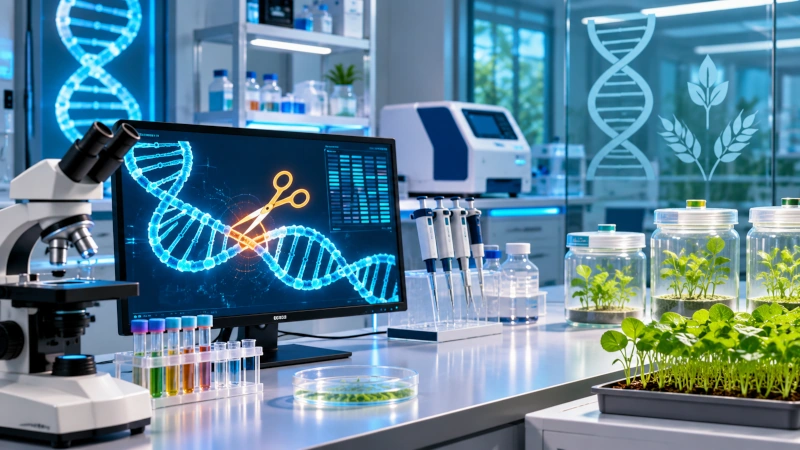
The Indian Council of Agricultural Research (ICAR) has inaugurated a Centre of Excellence for Genome Editing in Horticultural Crops at the ICAR–Indian Institute of Horticultural Research (IIHR) in Bengaluru, marking an important development in India’s agricultural biotechnology research infrastructure. The facility, inaugurated on November 15, 2026, includes a Biosafety Level-II (BSL-II) laboratory and is intended to strengthen indigenous research capabilities in advanced plant genetics, crop improvement and modern horticultural biotechnology.
The centre was inaugurated by Dr. M. L. Jat, Secretary of the Department of Agricultural Research and Education (DARE) and Director General of ICAR, during his visit to the institute. He also inaugurated a Farmers’ Advanced Training Centre, expanding the institution’s capabilities in agricultural education, technology dissemination and farmer-oriented training.
According to the Ministry of Agriculture and Farmers’ Welfare, the new genome editing facility represents an important step towards developing advanced scientific capabilities for horticultural crops. The initiative reflects ICAR’s emphasis on strengthening domestic research infrastructure, developing indigenous genomic resources and using modern biotechnology to address challenges associated with agricultural productivity, climate resilience and nutritional security.
Centre of Excellence to Strengthen Advanced Plant Biotechnology Research
The Centre of Excellence for Genome Editing in Horticultural Crops has been established to support advanced research into the genetic characteristics of horticultural plants.
Horticultural crops include fruits, vegetables, flowers, spices, plantation crops, medicinal plants and several other economically important agricultural products. Their cultivation contributes significantly to India’s agricultural economy, nutritional requirements, processing industries and export activities.
Improving these crops presents several scientific challenges because plant characteristics are influenced by complex interactions between genes, growing conditions, diseases and environmental stresses.
Conventional plant breeding has contributed substantially to developing improved varieties. However, breeding programmes can require several generations of selection, particularly when desirable characteristics must be introduced into crops with complex genetic backgrounds.
Genome editing provides researchers with an additional scientific approach for investigating and modifying specific genetic sequences associated with selected plant characteristics.
The newly inaugurated centre will strengthen the infrastructure available for such investigations, supporting research that may eventually contribute to the development of improved horticultural varieties.
Understanding Genome Editing and Its Agricultural Applications
Genome editing refers to a collection of molecular techniques that allow scientists to make targeted changes to DNA sequences within living organisms.
One of the most widely studied approaches is CRISPR-based genome editing, which uses molecular components capable of recognising selected genetic sequences and enabling modifications at particular locations.
In agricultural research, genome editing can be used to investigate the function of plant genes and examine how changes in particular genetic sequences influence characteristics such as disease susceptibility, growth, fruit quality and responses to environmental stress.
For example, researchers may investigate genes associated with susceptibility to plant pathogens or those involved in responding to drought, heat and salinity.
By studying these genes and their functions, scientists can identify opportunities for developing plants with more desirable agricultural characteristics.
The approach differs from conventional breeding because researchers can focus on selected genetic sequences rather than relying exclusively on the inheritance and selection of broader combinations of genetic traits.
Genome editing also differs from some forms of genetic engineering involving the introduction of genetic material from unrelated organisms. Depending on the method employed, genome editing may introduce targeted changes without retaining foreign DNA in the final plant.
However, the scientific assessment and regulatory requirements applicable to individual genome-edited plants depend on the techniques used, the nature of the genetic changes and the relevant national framework.
The inauguration of the Bengaluru centre does not constitute the release or approval of a new genome-edited horticultural crop. It establishes research infrastructure intended to support future scientific work.
Biosafety Level-II Laboratory Strengthens Research Infrastructure
An important component of the newly inaugurated centre is its Biosafety Level-II laboratory.
BSL-II facilities are designed for laboratory activities requiring specified biological safety precautions, controlled working practices and appropriate containment procedures.
Such laboratories incorporate arrangements for safe handling of biological materials, management of laboratory waste, personnel protection and the prevention of unintended exposure or contamination.
In plant biotechnology research, appropriate laboratory infrastructure is important for activities involving molecular biology, genetic characterisation, tissue culture and other specialised experimental procedures.
The availability of a BSL-II facility strengthens the institutional environment for conducting advanced biological research under established safety requirements.
However, a laboratory’s biosafety classification should not be confused with regulatory approval for the cultivation or commercial release of genome-edited crops. Those activities are subject to separate applicable requirements.
The new laboratory will provide additional research capacity for ICAR-IIHR as it expands its work in modern plant biotechnology.
Focus on Indigenous Genomic Resources and Scientific Self-Reliance
During the inauguration, ICAR Director General Dr. M. L. Jat emphasised the importance of developing indigenous genomic resources to support India’s future genome editing research.
Genomic resources include information and research materials that help scientists understand the genetic composition of organisms and identify genes associated with particular biological characteristics.
Such resources may include reference genome sequences, genetic databases, characterised plant materials and information about relationships between genes and observable traits.
Developing these capabilities domestically is important because effective genome editing requires detailed knowledge of the genetic sequences and biological mechanisms associated with the traits under investigation.
India possesses considerable diversity in horticultural crops, including indigenous varieties, locally adapted cultivars and plant genetic resources associated with different agro-climatic regions.
Understanding this diversity can support research into characteristics such as adaptation to environmental conditions, resistance to diseases and nutritional quality.
Dr. Jat called for stronger research prioritisation, better identification of scientific targets and the development of a comprehensive data ecosystem.
He also encouraged Indian agricultural scientists to pursue innovative research capable of meeting international scientific standards.
The emphasis on indigenous genomic resources reflects the importance of building domestic scientific expertise and reducing dependence on external research capabilities for understanding and improving Indian crops.
Genome Editing Offers Opportunities for Climate-Resilient Horticulture
Climate variability presents an important challenge for horticultural production because many fruits, vegetables and other high-value crops are sensitive to temperature fluctuations, water availability and changes in growing conditions.
Periods of excessive heat, prolonged dry weather, unseasonal rainfall and other environmental stresses can affect plant development, flowering, fruit formation and agricultural productivity.
Genome editing is being investigated internationally as one of several approaches that may contribute to developing crop varieties better adapted to particular environmental challenges.
Researchers can examine genetic pathways associated with drought tolerance, temperature responses, water-use efficiency and resistance to selected plant diseases.
Such investigations may identify genetic changes capable of improving specific crop characteristics.
However, the development of useful agricultural varieties requires more than identifying a promising gene.
Scientists must evaluate whether the intended change produces the desired characteristic, whether it affects other aspects of plant growth and whether the resulting plants perform consistently under practical cultivation conditions.
Field evaluation, assessment of genetic stability and compliance with applicable regulatory requirements are important stages in translating laboratory research into agricultural applications.
The new ICAR-IIHR centre provides research infrastructure that can contribute to these longer-term crop improvement efforts.
Potential Applications in Fruits, Vegetables and Other Horticultural Crops
India’s horticultural sector includes a wide range of crops with distinct production requirements and economic importance.
Fruits such as mango, banana, papaya and pomegranate are important for domestic consumption, agricultural livelihoods and food processing industries.
Vegetable crops, including tomato, brinjal, chilli and other horticultural products, are essential components of everyday diets and agricultural markets.
Plant diseases, environmental stress and post-harvest deterioration can affect the productivity and commercial quality of these crops.
Advanced genetic research offers opportunities to investigate the biological mechanisms underlying these challenges.
In fruits, researchers may examine characteristics associated with disease resistance, fruit development, quality and post-harvest behaviour.
In vegetables, potential research areas include resistance to specific pathogens, tolerance of environmental stress and improvements in selected nutritional or agronomic characteristics.
The suitability of genome editing for any particular objective depends on the crop, the relevant genes and the availability of reliable methods for regenerating plants following laboratory modifications.
The Bengaluru centre can contribute to developing the scientific knowledge and research capabilities needed for such investigations.
The official inauguration announcement does not identify a specific newly developed genome-edited variety or a completed breakthrough involving an individual crop.
Farmers’ Advanced Training Centre Inaugurated Alongside Research Facility
During the same visit, Dr. Jat inaugurated the Farmers’ Advanced Training Centre at ICAR-IIHR, strengthening the institute’s activities in agricultural education and technology dissemination.
The centre is intended to support training and capacity-building activities associated with improved horticultural practices and research-based agricultural technologies.
Following the inauguration, the ICAR Director General interacted with progressive farmers, agricultural entrepreneurs, nursery owners, startup representatives and practitioners of natural farming.
The discussions included the adoption of ICAR-IIHR-developed varieties and technologies, innovations in horticulture and approaches to managing agricultural challenges associated with El Niño and potentially stronger climate variability.
The interaction highlighted the importance of connecting scientific institutions with farmers and agricultural enterprises.
Research institutions contribute to agricultural development not only by generating new scientific knowledge but also by making proven technologies and practices accessible to farming communities.
Farmer training programmes can support the adoption of improved cultivation methods, nursery management techniques, plant protection practices and other technologies relevant to horticultural production.
The inauguration of the training centre alongside the genome editing facility reflects ICAR-IIHR’s combined emphasis on advanced scientific research and practical agricultural extension.
ICAR-IIHR’s Role in India’s Horticultural Research Ecosystem
The Indian Institute of Horticultural Research, headquartered in Bengaluru, is one of India’s important research institutions dedicated to horticultural science.
Established in 1967, the institute conducts research involving fruit crops, vegetables, ornamental plants and other horticultural commodities.
Its scientific activities encompass crop improvement, plant protection, production technologies, post-harvest management, biotechnology and the development of agricultural technologies for farmers.
ICAR-IIHR has developed numerous horticultural varieties, hybrids and agricultural technologies through its research programmes.
The institute also contributes to farmer training, entrepreneurship development, nursery technologies and the commercialisation of selected agricultural innovations.
Its existing scientific capabilities provide an institutional foundation for expanding genome editing research.
The new Centre of Excellence adds specialised infrastructure to this research ecosystem, complementing conventional breeding, genomics-assisted improvement and other established scientific approaches.
The combination of advanced biotechnology research and farmer-oriented training strengthens the institute’s ability to address both long-term scientific challenges and practical agricultural requirements.
ICAR Emphasises Research, Innovation and Human Resource Development
During his visit, Dr. Jat also interacted with postgraduate students and young researchers, highlighting the importance of developing scientific talent within India’s agricultural research system.
He encouraged scientists to explore new research opportunities, strengthen technical capabilities and pursue innovative approaches to agricultural challenges.
The discussions included opportunities associated with microbial technologies, biofertiliser startups, nutrition and other areas of agricultural innovation.
Human resource development is particularly important in biotechnology because advanced research requires specialised expertise in molecular biology, genetics, bioinformatics, laboratory techniques and plant physiology.
Developing these capabilities through postgraduate education and research training can strengthen India’s scientific workforce.
The visit also included inspections of research laboratories and field facilities, providing opportunities to review the institute’s scientific and agricultural activities.
Dr. Jat emphasised the need for agricultural research to contribute more effectively to India’s long-term economic development and the growth of technology-driven agriculture.
The new genome editing centre and training infrastructure provide additional institutional resources for pursuing these objectives.
Strengthening India’s Agricultural Biotechnology Capabilities
The inauguration of the Centre of Excellence for Genome Editing in Horticultural Crops represents a significant investment in the scientific infrastructure supporting India’s agricultural research system.
As horticulture becomes increasingly important to nutritional security, agricultural diversification and high-value crop production, the development of advanced research capabilities assumes greater significance.
Genome editing offers an additional method for investigating plant genetics and exploring improvements in crop characteristics.
Its effectiveness in agricultural applications will depend on scientific validation, appropriate safety assessment, regulatory compliance and the successful translation of research findings into useful varieties.
The new centre provides a dedicated environment for developing the knowledge and technical expertise required for such work.
By emphasising indigenous genomic resources, advanced laboratory capabilities and research prioritisation, ICAR is strengthening the foundations of domestic biotechnology research.
The parallel establishment of the Farmers’ Advanced Training Centre also reinforces the importance of ensuring that advances in agricultural science are connected with practical needs.
A New Research Milestone for India’s Horticultural Future
The establishment of the genome editing Centre of Excellence at ICAR-IIHR, Bengaluru, marks an important step in expanding India’s capabilities in advanced horticultural biotechnology.
The newly inaugurated facility, including its Biosafety Level-II laboratory, strengthens the research infrastructure available for investigating plant genetics and developing modern crop improvement technologies.
The initiative also highlights ICAR’s emphasis on scientific self-reliance, indigenous genomic resources and the development of specialised research expertise.
Alongside the new research facility, the Farmers’ Advanced Training Centre provides additional opportunities to connect agricultural knowledge with farmers, entrepreneurs and other stakeholders.
Although the inauguration does not represent the release of a new genome-edited crop variety, it establishes institutional capabilities that can support future scientific discoveries and agricultural innovation.
The development reinforces India’s commitment to combining modern biotechnology, conventional agricultural expertise and farmer-oriented training in pursuit of more productive, resilient and sustainable horticultural systems.
Through continued scientific research, responsible technology development and effective knowledge transfer, institutions such as ICAR-IIHR can contribute to strengthening India’s agricultural capabilities and creating new opportunities for the country’s horticultural sector.
You may also like
-
Himalayan marmot droppings could reveal clues about climate change
-
IIT Gandhinagar Develops Seaweed-Based Smart Fertiliser Beads That Release Nutrients When Plants Need Them
-
IIT Kharagpur Research Finds 37.76% Decline in Metal Pollution Index of Ganga–Hooghly Estuary
-
IIT Mandi Researchers Advance Next-Generation Memory Materials for Brain-Inspired Computing
-
Archaeological Survey Identifies 21 Prehistoric Sites and Over 580 Stone Artefacts in Madhya Pradesh
