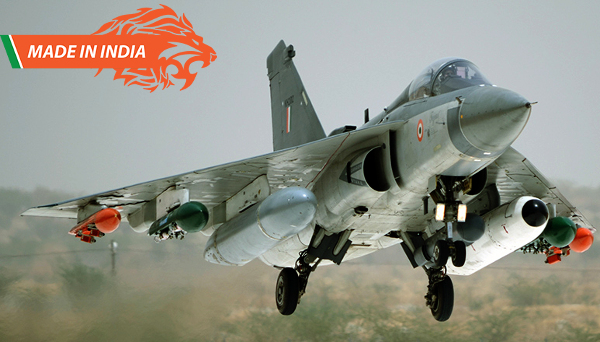
Hindustan Aeronautics Limited has received another important boost for the LCA Tejas Mk1A programme, with GE Aerospace shipping three F404-IN20 fighter engines to India during August 2026. The latest consignment takes deliveries under the current programme to 10 engines and provides HAL with additional powerplants needed to move completed and advancing Mk1A airframes towards Indian Air Force service.
GE Aerospace confirmed the shipment on September 3, stating that three F404-IN20 engines were dispatched to HAL during August. The deliveries followed the seventh engine supplied in July and represent a noticeable acceleration compared with the slower supply rate that had affected the programme earlier.
Engine Supply Has Been a Critical Production Constraint
The availability of production-standard engines has been one of the most significant challenges facing the Tejas Mk1A programme. HAL has already advanced the manufacture and testing of multiple aircraft, but the slower arrival of F404-IN20 engines has prevented production from translating into deliveries at the planned rate.
The original Ministry of Defence order for 83 Tejas Mk1A aircraft was placed in 2021, comprising 73 fighters and 10 trainers. Aircraft deliveries were originally scheduled to begin in 2024, but the programme subsequently encountered delays, with engine availability becoming a major bottleneck. As of early September 2026, the first Mk1A had still not been formally handed over to the IAF.
The latest three-engine shipment therefore has greater significance than the relatively small number might suggest. Every additional production engine gives HAL another opportunity to complete final aircraft integration, ground testing and flight activity before delivering fighters to operational units.
HAL’s 99-Engine Contract With GE
HAL placed an order with GE Aerospace in 2021 for 99 F404-GE-IN20 engines and associated support services for the initial Tejas Mk1A programme. GE originally valued the agreement at $716 million, while Indian reporting places the contract at approximately ₹5,375 crore.
The supply programme required GE to restart a production line that had been inactive for several years. GE had previously delivered 65 F404-IN20 engines for earlier Tejas aircraft, completing those deliveries by 2016. With no immediate follow-on order at the time, production of the India-specific variant was subsequently shut down.
The Mk1A order required GE to reactivate the line and rebuild the associated global supplier network. The company has acknowledged that restarting production after a five-year gap, particularly amid supply-chain disruptions that followed the pandemic, proved challenging.
With 10 engines now supplied under the renewed programme, attention is shifting towards whether deliveries can maintain a sustained higher rate as HAL works through its growing Tejas production pipeline.
F404-IN20 Was Developed Specifically for Tejas
The F404-IN20 is not simply a standard F404 installed on the Indian fighter. GE customised the engine specifically for the single-engine Tejas.
It is the highest-thrust variant within the F404 family and incorporates a higher-flow fan, Full Authority Digital Electronic Control, single-crystal turbine blades and specialised features designed for a single-engine combat aircraft. The engine produces approximately 84–85 kN of thrust in afterburner, while HAL lists the Tejas with a maximum speed of Mach 1.6 and a service ceiling of 50,000 feet.
The F404 family itself has accumulated extensive service experience across several military aircraft. That maturity is important for the Tejas because propulsion reliability and maintainability directly influence aircraft availability across a fighter fleet.
Production Ramp-Up Now Becomes the Priority
HAL’s challenge is gradually shifting from simply obtaining the first engines to establishing a predictable flow capable of supporting serial fighter production.
Tejas Mk1A manufacturing is being expanded beyond a single production line, with HAL investing in greater capacity to support the substantially larger requirement emerging from the Indian Air Force. The initial 83-aircraft programme has since been followed by approval and contracting activity for 97 additional Mk1A fighters, taking the planned fleet to 180 aircraft.
That scale changes the requirements of the engine supply chain. The Mk1A programme needs a sustained flow of engines over several years rather than occasional batches, particularly as HAL seeks to raise annual fighter output.
GE has been working with its suppliers to increase production of components and materials for the F404-IN20 after rebuilding the dormant supply chain. The August shipment provides an early indication that the delivery rate is beginning to improve.
More Than Engines Remains Involved in Mk1A Delivery
Additional F404 deliveries remove one of the largest constraints, but engine supply is not the only task involved in bringing the Mk1A into service.
The aircraft introduces significant improvements over earlier Tejas variants, including an Active Electronically Scanned Array radar, upgraded electronic warfare capabilities, improved avionics and weapons integration. HAL must complete production integration and qualification of these systems before individual aircraft can be accepted by the Indian Air Force.
This makes the arrival of engines an enabling milestone rather than the final step. HAL can now push more aircraft through powered ground testing, flight testing and acceptance processes as propulsion units become available.
India Is Also Building Domestic F404 Maintenance Capability
A parallel development could strengthen long-term support for the Tejas fleet. In April 2026, GE Aerospace announced a contract with the Indian Air Force to help establish an in-country depot for F404-IN20 engines.
The facility will be owned, operated and maintained by the IAF, while GE provides technical inputs, training, specialised equipment, spares and support personnel. Once operational, the depot is intended to reduce dependence on overseas repair centres and shorten engine maintenance turnaround times.
The combination of a larger engine supply and domestic overhaul infrastructure is important because the Tejas programme is transitioning from a relatively small fleet into a major component of the IAF’s combat-aircraft structure.
Tejas Mk1A Has Become Central to IAF Fighter Modernisation
The Tejas Mk1A is increasingly important to the IAF as older fighter types are retired and squadron numbers remain below sanctioned strength. A planned fleet of 180 aircraft would make the Mk1A one of the largest single fighter fleets in Indian service.
The aircraft combines an indigenous airframe and mission-system architecture with the proven American F404 propulsion system, while progressively incorporating more Indian sensors, electronic systems and weapons.
For HAL, the August delivery represents progress on the most immediate industrial challenge facing the programme. Ten production engines are now available under the current order, and the critical objective is establishing a reliable delivery rhythm that can match HAL’s expanding aircraft manufacturing capacity.
The three-engine shipment does not by itself resolve the accumulated Mk1A schedule delay, but it marks a meaningful improvement in the propulsion supply chain. With additional airframes already moving through production, a sustained increase in F404 deliveries can allow HAL to convert its manufacturing pipeline into completed fighters and begin accelerating Tejas Mk1A induction into the Indian Air Force.
You may also like
-
India Moves Towards Five-Year Assured Orders for Defence Startups Under New Procurement Reforms
-
Zen Technologies Introduces Indigenous Hyper-Strike Falcon AI-Guided Counter-Drone Interceptor
-
L&T and Germany’s SCHOTTEL Expand Partnership for Controllable Pitch Propeller Systems in Indian Shipbuilding
-
India to Train 60,000 Civil Defence Volunteers Across 12 States and UTs with Indian Army Support
-
Indian Army’s Northern Command Opens 75-Day Defence Technology Internship Programme for Young Innovators
