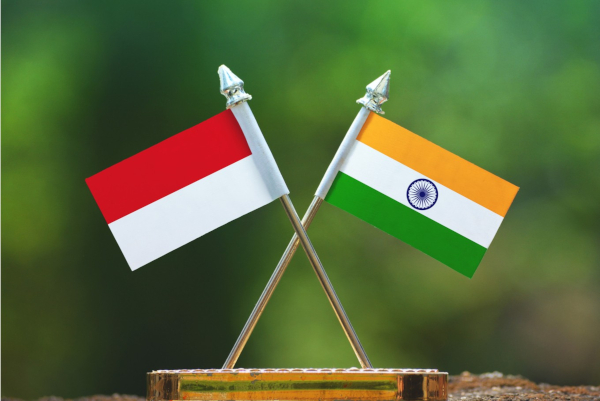
India and Indonesia have reaffirmed their commitment to strengthening bilateral and international cooperation against terrorism during the seventh meeting of the India–Indonesia Joint Working Group on Counter-Terrorism, held in New Delhi on 12 November 2026. The two countries called for decisive and coordinated international action to counter terrorism in all its forms, emphasising the need for comprehensive and sustained cooperation to address evolving security challenges.
The meeting was co-chaired by Dr. Suhel Ajaz Khan, Additional Secretary (Counter Terrorism) in India’s Ministry of External Affairs, and Dionnisius Elvan Swasono, Deputy for International Cooperation at Indonesia’s National Counter Terrorism Agency. The discussions provided an institutional platform for reviewing the terrorism threat environment and strengthening coordination between the two countries.
Joint Assessment of Regional and Global Terrorism Threats
During the consultations, Indian and Indonesian representatives exchanged assessments of the domestic, regional and global terrorism landscape, including challenges associated with cross-border terrorism. Both countries strongly condemned terrorism in all its forms and manifestations and underscored the importance of international cooperation in addressing threats that extend beyond national boundaries.
The discussions covered existing and emerging counter-terrorism challenges, including radicalisation, violent extremism conducive to terrorism, terrorist financing and the exploitation of emerging technologies for terrorist purposes. These issues formed an important part of the bilateral dialogue as the two countries examined the changing nature of terrorist threats and the security challenges confronting governments and international institutions.
The inclusion of cross-border terrorism, terrorist financing and emerging technologies in the discussions highlights the broad scope of India–Indonesia counter-terrorism cooperation. Both countries recognised the need for coordinated international efforts to address these challenges through sustained engagement.
Strengthening Cooperation Through International Organisations
India and Indonesia reaffirmed their commitment to strengthening cooperation through multilateral organisations and international mechanisms involved in counter-terrorism efforts. The discussions specifically identified the United Nations, the Association of Southeast Asian Nations (ASEAN), BRICS and the Financial Action Task Force (FATF) as important platforms for coordinated action.
The emphasis on these organisations reflects the international dimension of bilateral counter-terrorism cooperation. The United Nations provides a framework for international counter-terrorism efforts, while FATF establishes standards aimed at combating money laundering and terrorist financing. ASEAN and BRICS provide additional platforms for regional and international security engagement.
Both countries reaffirmed their intention to coordinate counter-terrorism efforts through established multilateral mechanisms, recognising that combating terrorism requires cooperation extending beyond bilateral security arrangements.
Counter-Terrorism Cooperation Within the India–Indonesia Strategic Partnership
Counter-terrorism cooperation has been an established component of relations between India and Indonesia for more than two decades. The two countries signed a Memorandum of Understanding on Cooperation in Counter-Terrorism in 2004, providing an institutional foundation for their bilateral engagement in this field.
The first meeting of the Joint Working Group on Counter-Terrorism was held in New Delhi in February 2005. The sixth meeting took place in Jakarta on 23 August 2024, where representatives discussed regional and global terrorism threats, terrorist financing, the misuse of emerging technologies and other counter-terrorism challenges.
The seventh meeting in New Delhi continued this institutional dialogue within the wider India–Indonesia Comprehensive Strategic Partnership. Security cooperation forms an important component of the relationship between the two maritime neighbours, alongside defence engagement, economic cooperation and regional diplomacy.
The continuation of the Joint Working Group mechanism demonstrates the institutional importance both countries attach to counter-terrorism cooperation as part of their broader strategic partnership.
Next Joint Working Group Meeting to Be Held in Jakarta
At the conclusion of the consultations, India and Indonesia agreed to convene the next meeting of the Joint Working Group on Counter-Terrorism in Jakarta.
The decision maintains the established bilateral consultation mechanism and provides for continued discussions on terrorism-related security challenges.
The seventh meeting concluded with both countries reaffirming their commitment to combating terrorism through bilateral cooperation and coordinated international action. Their emphasis on cross-border terrorism, terrorist financing, radicalisation and the misuse of emerging technologies reflects the range of challenges addressed through the India–Indonesia security dialogue.
You may also like
-
Two Envoys, Two Missions: Comparing Hanumān’s and Aṅgada’s Diplomatic Strategies
-
Russian Pacific Fleet Warships Arrive in Kochi, Strengthening India–Russia Naval Engagement
-
Astra Microwave Advances Indigenous Virupaksha Radar Programme with Prototype Hardware Delivery to DRDO
-
XINFINITI Aerospace Advances Indian Navy Chetak Helicopter-to-Drone Conversion Project
-
Kalyani Strategic Systems Unveils Indigenous 120 mm Vehicle-Mounted Rapid Attack Mortar System
