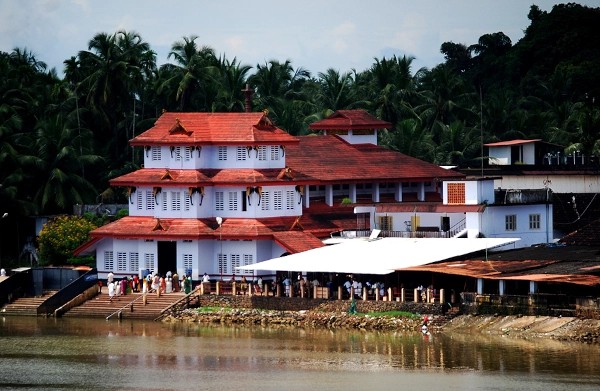
Parassinikadavu Muthappan Temple, also known as Parassini Madappura Sree Muthappan Temple, is one of the most celebrated pilgrimage centres of northern Kerala. Situated on the banks of the Valapattanam River in Kannur district, the shrine is renowned for its daily Theyyam worship, inclusive traditions and distinctive offerings. It lies around 20 kilometres from Kannur and about 10–11 kilometres from Taliparamba.
Unlike many conventional temples, Parassinikadavu centres its worship on the living ritual presence of Muthappan through Theyyam. The shrine is therefore both a place of devotion and one of Kerala’s most important centres of folk religious tradition.
Lord Muthappan
The presiding deity, Sri Muthappan, is commonly understood as embodying the qualities of both Shiva and Vishnu. The two principal ritual forms associated with the deity are Vellattam and Thiruvappana. Vellattam is linked with Shiva, while Thiruvappana is associated with Vishnu in the temple tradition.
Muthappan occupies a distinctive position within the religious culture of North Malabar. He is revered as a guardian of ordinary people, especially those living outside the traditional centres of social and ritual power. This popular character has helped make the shrine accessible to devotees from varied communities and backgrounds.
The temple is widely known for welcoming visitors regardless of caste or religion. This inclusive character has become one of its defining features and reflects the folk-centred nature of Muthappan worship.
The Legend of Muthappan
According to the traditional legend, a child was found and raised by a local couple. As he grew, the boy displayed unusual habits and a strong preference for hunting, wandering through forests and consuming food that did not conform to orthodox ritual customs.
His behaviour disturbed his family, and he eventually left home. During his travels, he revealed extraordinary powers and came to be recognised as a divine manifestation. He later arrived near the Valapattanam River, where his presence became associated with the site now occupied by the Parassinikadavu shrine.
Different versions of the story survive in oral tradition, but all present Muthappan as a deity who lived close to hunters, labourers and rural communities. The legend explains why the customs of the temple differ considerably from the formal rituals seen in many other Kerala shrines.
Theyyam as the Central Form of Worship
The most remarkable feature of Parassinikadavu is that Theyyam is the primary form of worship. During the ritual, the performer wears elaborate facial makeup, ornaments and ceremonial dress before assuming the divine form of Muthappan.
Devotees approach the performer directly, present their concerns and receive words of reassurance, advice or blessing. The interaction often resembles a personal conversation between the devotee and the deity. For believers, the Theyyam performer is no longer merely an artist during the ritual but the living embodiment of Muthappan.
The two principal manifestations are:
Vellattam, generally performed in a simpler form and associated with the early phase of worship.
Thiruvappana, presented with fuller ornamentation and ceremonial splendour.
Together, these forms create a powerful devotional experience combining music, dance, percussion, storytelling and direct spiritual interaction.
Distinctive Offerings
The offerings at Parassinikadavu differ markedly from those found in many other temples. Traditional offerings associated with Muthappan include fish, meat and toddy, reflecting the deity’s connection with the food culture and folk practices of North Malabar.
Tea and boiled black gram are also distributed as prasadam to devotees. The temple’s approach to food and worship expresses a devotional tradition rooted in everyday community life rather than highly formalised ritual restrictions.
Sacred Association With Dogs
Dogs hold a special place at Parassinikadavu because they are regarded as the companions of Muthappan. Dogs are commonly seen within the temple grounds and are treated with affection and respect.
This association comes from the belief that Muthappan travelled and hunted accompanied by dogs. Their presence has therefore become part of the sacred identity of the shrine rather than an incidental feature.
Images and representations of dogs may also be seen in connection with the deity. The tradition reinforces Muthappan’s character as a forest guardian, hunter and protector closely linked to the natural world.
Architecture and Riverside Setting
The temple stands beside the broad and peaceful Valapattanam River. Its riverside location contributes greatly to the atmosphere of the shrine, particularly during early-morning worship and evening rituals.
The complex differs from the monumental stone temples found in some other parts of India. Its architecture reflects the traditional madappura or ritual-house style associated with Muthappan worship. Sloping roofs, timber elements, open ritual spaces and access to the river give the temple a distinctly regional appearance.
The shrine’s spiritual importance lies less in monumental architecture than in its continuous ritual life. Drums, lamps, Theyyam costumes, river breezes and the movement of devotees together create the temple’s distinctive character.
Puthari Thiruvappana Festival
The most important annual celebration is the Puthari Thiruvappana, generally held during the first week of December. The festival is linked with the harvest season and the ceremonial offering of newly harvested grain.
Large numbers of devotees gather for the Theyyam rituals, prayers, community meals and festive observances. The event represents both thanksgiving for the harvest and renewal of the bond between the deity and the agricultural communities of North Malabar.
The festival is among the best times to witness the temple at its most vibrant, although the large crowds can make the surroundings considerably busier than on ordinary days.
A Shrine of Equality and Community
Parassinikadavu’s enduring appeal comes from its open and direct form of worship. Devotees can approach the divine manifestation, speak about personal difficulties and receive a response during the ritual.
The temple’s inclusive tradition, free distribution of food and close connection with folk culture have made it a significant social institution as well as a religious centre. Kerala Tourism notes that the temple has traditionally provided free meals and accommodation to devotees, particularly during important celebrations.
The shrine demonstrates how Kerala’s religious heritage extends beyond formal temple systems. It preserves a living tradition in which devotion, performance, oral history and community participation remain inseparable.
Best Time to Visit
The period between October and June generally offers favourable conditions for visiting Parassinikadavu. December is especially important because of the Puthari Thiruvappana festival.
Visitors seeking a quieter experience may prefer an ordinary weekday, while those interested in witnessing the shrine’s full ceremonial energy may choose a major Theyyam or festival occasion.
Ritual timings can change according to the temple calendar, festivals and local conditions. Visitors should verify current timings with the temple office before travelling.
How to Reach Parassinikadavu Muthappan Temple
Parassinikadavu is well connected by road with Kannur, Taliparamba, Payyannur and other towns in northern Kerala.
By road: The temple is approximately 22 kilometres from Kannur and around 11 kilometres from Taliparamba. Buses, taxis and autorickshaws operate towards Parassinikadavu and Dharmashala. The usual road from Kannur passes through Puthiyatheru and Dharmashala.
By rail: Kannur Railway Station is the major railhead for long-distance travellers. Kannapuram Railway Station is geographically closer, at roughly 14 kilometres according to the temple’s official travel information. Local taxis and buses can be used for the remaining journey.
By air: Kannur International Airport is the nearest airport, approximately 26–32 kilometres from the temple depending on the route used. Taxis are available from the airport to Parassinikadavu.
A Living Expression of North Malabar
Parassinikadavu Muthappan Temple is far more than a conventional pilgrimage destination. It is a living expression of North Malabar’s folk spirituality, where the deity is encountered through movement, music, conversation and community participation.
Its daily Theyyam rituals, reverence for dogs, unconventional offerings and open-door tradition distinguish it from almost every other major shrine in Kerala. Set beside the Valapattanam River, the temple continues to preserve a devotional culture in which ancient belief remains closely connected to the everyday lives of the people.
Reference
- Kerala Tourism, Government of Kerala.
“Parassinikadavu Sri Muthappan Temple.”
https://www.keralatourism.org/temples/kannur/parassinikadavu-muthappan - Kerala Tourism, Government of Kerala.
“Muthappan Temple, Parassinikadavu.”
https://www.keralatourism.org/destination/parassinikadavu-muthappan-temple/196/ - Incredible India, Ministry of Tourism, Government of India.
“Parassinikadavu Sri Muthappan Temple.”
https://www.incredibleindia.gov.in/en/kerala/kannur/parassinikadavu-sri-muthappan-temple - District Tourism Promotion Council, Kannur.
“Parassinikadavu Sri Muthappan Temple.”
https://www.dtpckannur.com/destination/parassinikadavu-sri-muthappan-temple - Parassini Madappura Sree Muthappan Temple.
“How to Reach.”
https://parassinimadappurasreemuthappan.com/about/how-to-reach
You may also like
-
Samatata — The Low-Lying Deltaic Realm of Southeastern Bengal
-
Tamralipta — The Maritime Gateway of the Lower Ganga
-
Suhma — The River-and-Forest Country of Southwestern Bengal
-
Gauda — The Western Bengal Country of the Bhagirathi and the Rise of Karnasuvarna
-
Pundra — The Northern Bengal Kingdom of the Karatoya and the Ancient City of Pundranagara
