Kautilya

Chakra Vyuham: The Trap Formation That Turned Battlefield Geometry into Psychological Warfare

The original Mahabharata passages describe the formation as a firm, fierce, foremost and impenetrable circular array formed by Drona. Abhimanyu openly says he has been taught by Arjuna how to penetrate and strike such an array, but he also admits that if danger overtakes him, he does not know how to come out. This single admission gives the episode its entire military depth: Abhimanyu has entry knowledge, but lacks complete exit doctrine.
Marthanda Varma: The Warrior-King Who Forged Modern Travancore

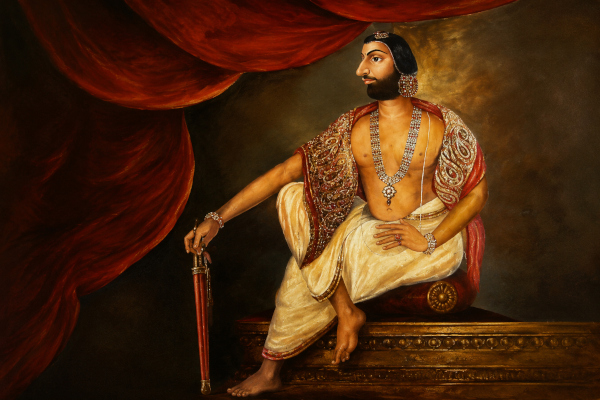
Marthanda Varma ascended the Venad throne in 1729. Britannica notes that he crushed Dutch expansionist designs at the Battle of Kolachel twelve years later and then adopted a European style of martial discipline while expanding Venad into the southern state of Travancore. That single summary captures the scale of his reign: internal consolidation, military modernisation, territorial expansion and state-building.

India’s Cold Water Fisheries Emerging as a Key Pillar of the Blue Economy

Cold-water fisheries are practiced in high-altitude snow-fed rivers, streams, lakes, and reservoirs with temperatures ranging between 5°C and 25°C, dissolved oxygen above 6 mg/L, and pH levels between 6.5 and 8.0. Species such as rainbow trout, golden mahseer, and snow trout are cultivated using specialized infrastructure including hatcheries, raceways, RAS, biofloc systems, and cold chain facilities. Trout farming is generally practiced above 1,500 metres altitude, while mahseer culture is suitable at relatively lower elevations.

RBI’s ₹2.87 Lakh Crore Surplus Transfer Gives Centre a Major Fiscal Cushion for FY26

The size of the transfer reflects the strength of the RBI’s balance sheet during FY26. According to the available details, the central bank’s balance sheet expanded by 20.61% to ₹91.97 lakh crore as of 31 March 2026. Its gross income rose by 26.42%, while expenditure before risk provisions increased by 27.60%. Net income before risk provisions and transfers to statutory funds stood at ₹3,95,972.10 crore, compared with ₹3,13,455.77 crore in the previous year.

India Sends 20 Tonnes of Vaccine Support to Afghanistan, Strengthening Its Humanitarian Outreach

India’s assistance to Afghanistan has consistently avoided narrow political framing and focused instead on the needs of ordinary Afghan citizens. Food, medicines, vaccines, disaster relief materials and development support have formed the core of New Delhi’s outreach. This latest consignment fits that larger pattern: India is helping keep essential health services alive in a neighbouring country where public welfare systems remain under pressure.

India’s Data Centre Boom Could Create One Lakh Engineering Jobs, Says Dr Jitendra Singh

According to the Minister, India’s data centre capacity is projected to expand sharply from around 1.5 GW to nearly 6.5 GW by 2030. This growth is expected to create new employment opportunities for engineers and technical professionals in areas such as artificial intelligence systems, cooling technologies, smart grids, renewable energy integration, secure digital infrastructure and advanced data management systems.

Kurukshetra as a War Studies Manual: What Modern Armies Can Still Learn from the Mahabharata

The epic describes the war as a clash of enormous scale, with eighteen Akshauhinis gathered at Samanta-panchaka and destroyed in the conflict. One Akshauhini itself was counted as 21,870 chariots, 21,870 elephants, 65,610 horses and 109,350 foot soldiers, giving the war a military scale that naturally invites comparison with modern corps-level and theatre-level planning.

Coconut Oil in Ayurveda: Narikela Taila and the Indian Idea of Food as Medicine

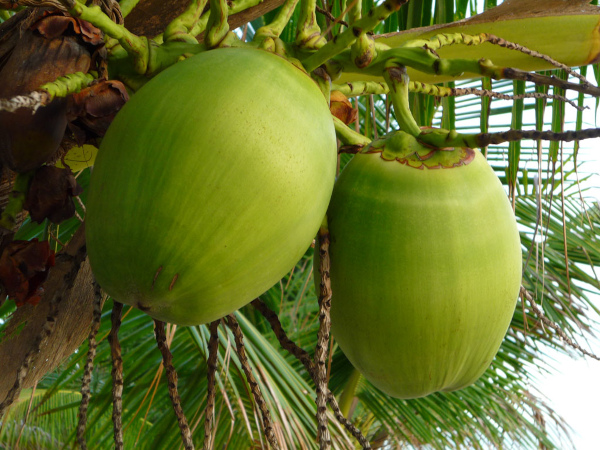
The Ayurvedic Pharmacopoeia of India describes Narikela as the dried endosperm of Cocos nucifera, cultivated especially in the coastal and deltaic regions of South India. It gives Narikela the qualities of madhura rasa or sweet taste, guru and snigdha guna or heavy and unctuous qualities, shita virya or cooling potency, and madhura vipaka or sweet post-digestive effect. Its actions are described as balya, hridya, vrishya, vatahara, pittahara, brimhana and kaphakara, meaning it is strengthening, heart-supportive, nourishing, Vata-Pitta pacifying and Kapha-increasing when overused.