India is expanding its youth development ecosystem across education, skilling, employment, entrepreneurship, sports, healthcare and civic participation as the country seeks to convert its demographic advantage into long-term economic and social gains.
With nearly 65% of India’s population below the age of 35, the government has placed young people at the centre of its Viksit Bharat@2047 vision. A new government assessment released on August 13 highlights the scale of programmes created over the past decade to provide young Indians with greater access to education, skills, employment opportunities, entrepreneurship, public service and competitive sport.
MY Bharat Emerges as National Youth Platform
A major component of this strategy is Mera Yuva Bharat, or MY Bharat, launched in October 2023 for young people between the ages of 15 and 29.
The technology-enabled platform brings volunteering, experiential learning, leadership development, skilling, career opportunities and civic participation into a single national ecosystem.
As of July 2026, more than 2.22 crore youth had registered on MY Bharat. The platform has facilitated over 1.52 lakh volunteering opportunities covering community service, environmental initiatives, cultural programmes and public campaigns.
More than 24,900 experiential learning programmes have also connected young people with areas such as governance, healthcare, technology, media and public administration.
Youth participation has expanded beyond digital platforms. Under the Viksit Bharat Young Leaders Dialogue 2026, more than 50 lakh young people participated through a nationwide quiz, while 78 members of the Indian diaspora from 21 countries also took part. The initiative identified around 6,000 young leaders for a district-wise national repository.
The National Service Scheme has also expanded, with volunteer enrolment rising from 34.09 lakh in 2014-15 to 38.90 lakh in 2025-26.
Education System Expands Reach and Digital Capacity
India’s education system has simultaneously undergone significant expansion.
The country now has approximately 14.67 lakh schools serving 24.72 crore students, supported by more than 1.02 crore teachers.
Retention has improved substantially. The secondary-school dropout rate declined from 14.54% in 2013-14 to 7% in 2025-26, indicating that a larger proportion of students are remaining within the formal education system.
Digital infrastructure has also expanded rapidly. By 2025-26, more than 1.49 lakh schools had been covered under information and communication technology initiatives. More than 1.76 lakh smart classrooms and 1.79 lakh ICT laboratories had been sanctioned as of March 2026.
Innovation programmes have also reached deeper into the school system. More than 10,000 Atal Tinkering Labs have engaged over 1.1 crore student innovators, who have collectively worked on more than 16 lakh projects.
Higher Education Enrolment Continues to Rise
Higher education has also witnessed significant growth.
Total enrolment increased from 3.4 crore in 2014-15 to 4.5 crore in 2023-24. Female enrolment rose by 42.2% over the same period to approximately 2.2 crore students.
Alongside conventional institutions, India has been building a larger innovation and incubation network. According to government data, 85 Atal Incubation Centres have supported more than 2,900 startups and helped create over 32,000 jobs.
The National Education Policy 2020 has also encouraged greater flexibility between academic disciplines, skills and vocational learning.
More than 700 universities and 7,500 affiliated colleges have adopted the National Credit Framework. Meanwhile, 3,123 institutions have joined the Academic Bank of Credits ecosystem, while more than 35.27 crore APAAR IDs had been issued as of August 12, 2026.
Digital education platforms have grown to unprecedented scale. SWAYAM now offers more than 20,370 courses and has recorded over 6.5 crore enrolments. DIKSHA has recorded approximately 19.06 crore course enrolments, 15.02 crore completions and 13 crore certificates issued.
More Than Six Crore People Reached Through Skill Programmes
Skill development has become another major pillar of India’s youth policy.
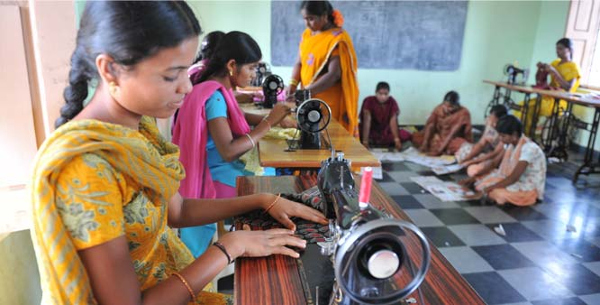
The government says more than six crore people have been empowered through various skilling initiatives, with programmes increasingly focused on industry requirements, apprenticeships and emerging technologies.
Under the Pradhan Mantri Kaushal Vikas Yojana, more than 1.64 crore youth have been trained across four phases since 2015. Training now includes areas such as artificial intelligence, robotics, drones, electronics and green energy, alongside conventional trades.
Jan Shikshan Sansthan programmes had trained 36.48 lakh people by March 2026, while the National Apprenticeship Promotion Scheme had engaged more than 54.41 lakh apprentices.
The government has also highlighted a decline in the unemployment rate from 7.71% in 2014 to 4.2% in 2025.
Startup Ecosystem Expands Rapidly
Entrepreneurship has become an increasingly important pathway for young Indians.
India’s recognised startup base has expanded from only a few hundred enterprises before 2014 to more than 2.47 lakh startups by August 2026, placing India among the world’s largest startup ecosystems.
The Prime Minister’s Internship Scheme has also expanded access to workplace experience. As of August 12, the programme had offered 1,64,902 internship opportunities across 31 sectors.
Industrial training infrastructure is also being modernised.
The PM-SETU programme, launched in October 2025 with an estimated outlay of ₹60,000 crore, aims to upgrade 1,000 government Industrial Training Institutes through a network of 200 hubs and 800 spokes. The programme is designed around industry participation and labour-market demand.
Between 2014 and 2025, the number of ITIs increased from 9,977 to 14,688, while enrolment rose from 9.5 lakh to 14.7 lakh. National Skill Training Institutes increased from 25 to 33, while Institutes for Training of Trainers expanded from 11 to 120.
Sports Infrastructure and Athlete Support Expand
Youth development policy has also increasingly incorporated sports as a professional and developmental pathway.
Under Khelo India, 349 infrastructure projects worth about ₹3,176 crore have been approved. The programme has also established 1,067 Khelo India Centres and 267 academies, while supporting approximately 2,745 athletes.
Since 2018, more than 63,000 athletes have participated in various Khelo India competitions, including Youth, University, Winter, Para, Beach, Water Sports and Tribal Games.
At the elite level, the Target Olympic Podium Scheme currently supports 51 Core athletes, 52 Para Core athletes and 130 Development athletes. Core athletes receive a monthly stipend of ₹50,000, while Development athletes receive ₹25,000.
The revamped Khelo India Scheme and enhanced support for National Sports Federations together have an outlay of ₹36,441 crore for 2026-27 to 2030-31.
Health and Mental Well-Being Receive Greater Attention
The youth development framework also places increasing emphasis on physical and mental health.
The number of Adolescent Friendly Health Clinics rose from 6,619 in 2014-15 to 7,203 in 2021-22. The number of adolescents receiving clinical and counselling services increased from 39 lakh to 82 lakh during the same period.
Mental-health services have expanded considerably through Tele-MANAS, which had handled more than 43.70 lakh calls through 53 cells as of August 12, 2026. The network is supported by 23 mentoring institutes and five Regional Coordinating Centres.
The Nasha Mukt Bharat Abhiyaan has also expanded its reach. As of August 12, 2026, the programme had reached more than 30.05 crore people, including 11.86 crore youth.
More than 28.56 lakh awareness activities have been conducted in educational institutions, while over 28.29 lakh people have received treatment and rehabilitation support under related programmes.
From Beneficiaries to Participants in Development
Taken together, the figures point to a shift in India’s youth policy from basic access towards a more integrated model linking education, skills, entrepreneurship, employment, health, sports and civic participation.
The emphasis is increasingly on preparing young Indians not merely for conventional employment, but for a rapidly changing economy shaped by technology, advanced manufacturing, digital services and new forms of entrepreneurship.
The scale of platforms such as MY Bharat, Skill India, Startup India, Khelo India, SWAYAM and Tele-MANAS also reflects a broader attempt to build national systems capable of reaching young people across regions and socio-economic backgrounds.
As India looks towards Viksit Bharat@2047, the country’s demographic advantage will depend not simply on the size of its youth population, but on its ability to equip that population with education, health, skills, institutional opportunities and pathways to productive participation.
The emerging policy framework therefore places the Amrit Peedhi at the centre of India’s long-term development strategy, seeking to transform young people from beneficiaries of public programmes into active participants in the country’s economic and social transformation.
Source: Press Information Bureau, Government of India, “Empowering Youth, Transforming India,” published August 13, 2026; supporting data from the Ministries of Education, Skill Development and Entrepreneurship, Health and Family Welfare, Social Justice and Empowerment, Corporate Affairs, Commerce and Industry, and NITI Aayog.
You may also like
-
India Proposes Mandatory Advanced Emergency Braking Systems for New Cars from October 2030
-
India Post Creates History-Records ₹8,213 Crore Revenue in First Half of FY 2026–27, Parcel Business Grows 71%
-
Jeeraphool Rice of Chhattisgarh: The Fragrant Heritage Grain of Surguja with GI Recognition
-
HPCL Commissions India’s First Indigenous Blue Hydrogen Unit at Visakhapatnam Refinery
-
Bihar’s GI-Tagged Mithila Makhana Expands Global Reach as India Exports 7,265 Tonnes in FY26
