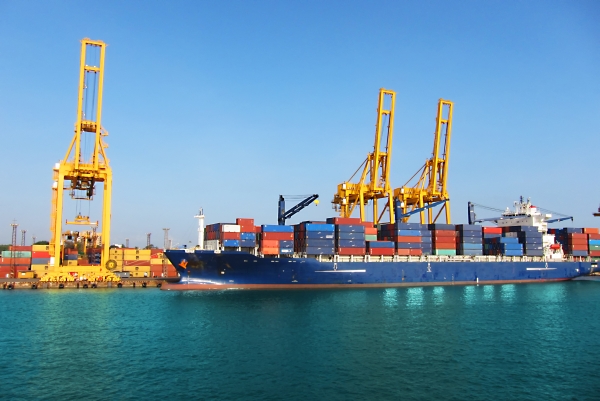
India’s Logistics Data Bank (LDB) has crossed a major milestone by tracking 10 crore export-import containers since its launch in 2016. The achievement highlights the growing role of digital technology in improving visibility, efficiency and transparency across India’s logistics network.
The platform now provides visibility for 100 per cent of India’s EXIM container movement. It uses Radio Frequency Identification, Internet of Things, Big Data and cloud technologies to follow containers across ports, railways, highways, industrial zones and border checkpoints.
Nationwide Logistics Tracking Network
The scale of the LDB network has expanded considerably over the past decade. It currently covers:
- 19 ports and 32 container terminals
- 103 Inland Container Depots
- 439 Container Freight Stations, empty yards, parking plazas and industrial zones
- 89 manufacturing Special Economic Zones
- 5,569 railway stations
- 269 toll plazas
- Three Integrated Check Posts
This extensive network allows exporters, importers, logistics companies and other stakeholders to monitor container movement with near real-time visibility.
The platform also provides data on dwell time, transit time and port and terminal performance. These analytics can help logistics operators identify delays and bottlenecks across the supply chain.
LDB 2.0 Expands Tracking to the High Seas
The government expanded the system further with LDB 2.0, launched by Union Commerce and Industry Minister Piyush Goyal in September 2025.
The upgraded platform introduced high-seas tracking of Indian export containers and expanded multimodal shipment visibility. This enables stakeholders to follow cargo beyond domestic ports and obtain a broader picture of the export logistics chain.
LDB also records strong user engagement, with more than 1.5 crore container searches every month through its single-window container tracking platform.
Efficient Logistics Key to Manufacturing Competitiveness
Marking the 10-crore-container milestone, Piyush Goyal said technology was making Indian logistics simpler, faster and more efficient.
He underlined the importance of efficient logistics for strengthening domestic manufacturing, improving industrial competitiveness and increasing India’s presence in global markets. Better logistics infrastructure is also expected to support the wider goal of building a Viksit Bharat.
The World Bank’s Logistics Performance Index has also recognised the role played by the Logistics Data Bank in improving India’s logistics ecosystem.
Digital Backbone for India’s Trade Growth
LDB is operated by NICDC Logistics Data Services Limited (NLDSL), which also works on the Unified Logistics Interface Platform (ULIP). Together, these digital initiatives aim to improve integration, transparency and efficiency throughout India’s logistics sector.
NLDSL was established on 30 December 2015 as a joint venture between the Government of India, represented through the National Industrial Corridor Development and Implementation Trust, and Japanese technology company NEC Corporation.
The crossing of the 10 crore container mark therefore represents more than a tracking milestone. It reflects the emergence of a nationwide digital logistics infrastructure capable of connecting ports, railways, highways, industrial centres and international trade corridors.
As India seeks to expand manufacturing and exports, such visibility across the logistics chain can help reduce delays, improve predictability and make Indian businesses more competitive in global markets.
Source: Ministry of Commerce & Industry, Government of India / PIB, 14 August 2026.
You may also like
-
India Post Creates History-Records ₹8,213 Crore Revenue in First Half of FY 2026–27, Parcel Business Grows 71%
-
Jeeraphool Rice of Chhattisgarh: The Fragrant Heritage Grain of Surguja with GI Recognition
-
HPCL Commissions India’s First Indigenous Blue Hydrogen Unit at Visakhapatnam Refinery
-
Bihar’s GI-Tagged Mithila Makhana Expands Global Reach as India Exports 7,265 Tonnes in FY26
-
NHPC Announces Commercial Operation of Fifth 250 MW Unit at Subansiri Lower Hydroelectric Project
