Make in India-Defence

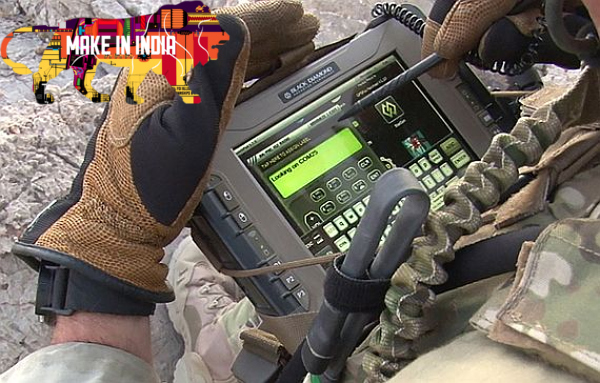
Indian Firm Neuralix Develops Sovereign AI Foundation Model for Indian Army Networks

The company said on September 2, 2026 that the AI model has been built specifically around military requirements rather than by simply adapting a commercially available general-purpose language model. It forms part of a broader indigenous defence-AI ecosystem being developed under the Ministry of Defence’s Innovations for Defence Excellence, or iDEX, ADITI 2.0 programme.

Project Vayu Baan: IAF Develops Helicopter-Dropped Loitering Munition for Stand-Off Strikes

One of the most important aspects of Vayu Baan is its expected ability to function in a GNSS-denied environment. Modern combat zones are increasingly saturated with jamming and spoofing systems designed to interfere with satellite navigation. A drone that depends entirely on GPS can therefore become unreliable at precisely the moment it is needed most. The IAF requirement consequently places emphasis on autonomous navigation even when satellite-navigation signals are unavailable or disrupted.

Prime Toolings Tests Indigenous Rotating Detonation Engine, Achieves TRL-5

Prime Toolings announced the achievement through its official social-media channels, including the company’s Instagram account, stating that its Rotating Detonation Engine had successfully completed development and testing and had reached TRL-5. The company has subsequently released additional glimpses of the engine’s internal configuration and indicated that further technical information from the development programme will be made public.

IAF Successfully Tests Indigenous Khagantak-243 Long-Range Glide Bomb Developed by BEL and JSR Dynamics

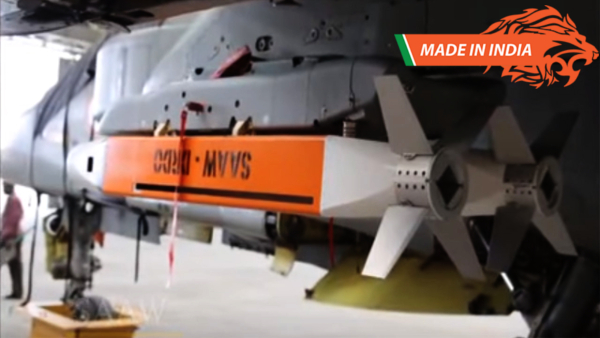
Khagantak-243 is the 300-kg-class member of JSR Dynamics’ Long Range Glide Bomb family. The company’s official specifications list the K-243 with a length of up to four metres, a diameter of approximately 290 mm and a wingspan of up to three metres. The broader LRGB architecture is designed around the widely used Mk 80 family of conventional warheads, allowing different bomb bodies and payload classes to be incorporated into the same basic stand-off weapon concept.

Kepler Aerospace Advances Defence Space Agency’s Autonomous CubeSat Swarm in LEO With Six-Satellite ISR Constellation

Kepler is now preparing to translate that technology-development programme into an operational space-based ISR capability. The company raised $8 million in seed funding on September 1, 2026, in a round led by Blue Ashva Capital and co-led by Finvolve India Accelerator along with other investors. The investment has been reported at around ₹66.4 crore and represents Kepler’s first external fundraising round since the company was established in 2018.