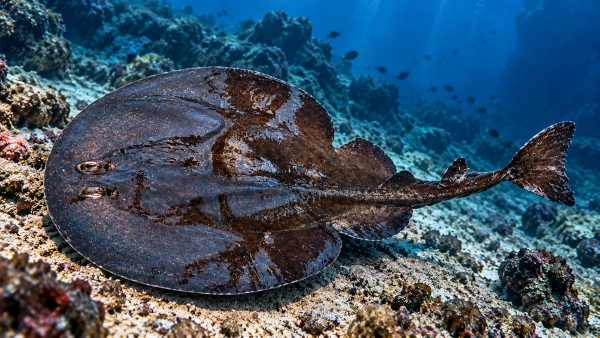
Indian scientists have discovered and scientifically described a previously unknown species of electric ray from the deep waters of the southeastern Arabian Sea, marking an important advancement in the study of India’s marine biodiversity. The newly identified species, named Tetronarce ramanamurthyi, represents the first confirmed record of the genus Tetronarce in the northern Indian Ocean, revealing previously undocumented biological diversity in one of the region’s lesser-explored marine environments.
The discovery was officially announced by the Zoological Survey of India (ZSI), under the Ministry of Environment, Forest and Climate Change, on 27 October 2026. The research was undertaken as part of scientific investigations supported by the Ministry of Earth Sciences’ Deep Ocean Mission, which seeks to strengthen India’s capabilities in deep-sea exploration, marine biodiversity assessment and oceanographic research.
The findings were published in the international scientific journal Zootaxa on 19 October 2026. Researchers examined nine specimens collected from waters off India’s southwestern coastline and employed detailed anatomical comparisons and molecular genetic analysis to establish the distinct identity of the species.
Commonly referred to as the Arabian Black Electric Ray, the newly described fish provides valuable scientific information about the distribution, evolutionary relationships and biological diversity of electric rays inhabiting the Indian Ocean.
First Confirmed Record of Tetronarce in the Northern Indian Ocean
The discovery is particularly significant because it establishes the first scientifically confirmed occurrence of the genus Tetronarce in the northern Indian Ocean. Although members of this genus have been documented from several other marine regions, their presence in the northern Indian Ocean had not previously been established through a formally described species record.
The genus belongs to the family Torpedinidae, a group of cartilaginous fishes commonly known as electric rays. These marine animals possess specialised organs capable of generating electrical discharges, which they use primarily to capture prey and defend themselves against potential predators.
Electric rays have distinctive flattened bodies, with broad pectoral fins forming a rounded disc. Their body structure allows them to remain close to the seabed, where they can encounter prey and move through benthic habitats. Unlike conventional bony fishes, electric rays possess skeletons composed primarily of cartilage, placing them within the larger group of cartilaginous fishes that also includes sharks and other rays.
The identification of Tetronarce ramanamurthyi expands the documented geographical distribution of the genus and provides a new reference point for understanding its evolutionary history. It also demonstrates that significant gaps remain in scientific knowledge of deep-sea biodiversity, even within marine regions that have supported fisheries and maritime activities for centuries.
Scientists Examine Nine Specimens to Establish New Species
The scientific investigation involved the detailed examination of nine electric ray specimens collected from the southeastern Arabian Sea. Researchers studied their external appearance, body proportions, skeletal characteristics and other anatomical features to determine whether the specimens belonged to an already recognised species.
Taxonomic investigations require careful comparisons because closely related marine organisms can possess similar physical characteristics. Differences that appear minor may nevertheless be important in distinguishing separate evolutionary lineages.
The newly discovered species possesses a dark bluish-black to dark-brown upper body surface, which contributes to its common name, the Arabian Black Electric Ray. Its flattened body disc is broader than its length, while its spiracles lack the small fleshy projections known as papillae that occur in some related species.
Spiracles are specialised respiratory openings located behind the eyes of many sharks and rays. They allow water to enter the respiratory system and are particularly useful for animals that spend substantial periods resting near the seabed.
The researchers also identified relatively large endolymphatic pores and comparatively small electric organs among the species’ distinguishing anatomical characteristics. These features, considered together with body proportions and skeletal measurements, helped establish differences between the Arabian Black Electric Ray and previously described members of the genus.
The study provides detailed morphological information that can assist future scientists in recognising the species and distinguishing it from closely related electric rays.
Distinctive Skeletal Characteristics Support Species Identification
Beyond examining external features, the researchers conducted a detailed investigation of the species’ internal skeletal structure. Such examinations are important in the taxonomy of cartilaginous fishes because vertebral arrangements and skeletal proportions can provide distinguishing characteristics that are less apparent from external appearance alone.
The newly identified electric ray possesses 99 vertebral centra, comprising 30 monospondylous and 69 diplospondylous centra. These terms describe different structural arrangements of vertebral elements within the axial skeleton of cartilaginous fishes.
Vertebral counts are frequently used alongside other anatomical measurements to distinguish closely related species. Researchers compare these characteristics with previously published descriptions and scientific reference specimens to determine whether a particular combination of features is unique.
The study also examined the dimensions of the body disc, spiracles, electric organs and other anatomical structures in relation to total body length. Such proportional measurements provide standardised information that can be used by researchers investigating additional specimens in the future.
The detailed anatomical description is especially valuable because deep-sea fishes are often represented by relatively few specimens in scientific collections. Establishing reliable reference characteristics can therefore improve species identification and support subsequent research into their distribution and biology.
DNA Analysis Confirms a Distinct Evolutionary Lineage
The research team supplemented traditional anatomical examination with molecular genetic analysis to investigate the evolutionary identity of the newly discovered ray. The scientists examined two mitochondrial genetic markers, cytochrome c oxidase subunit I (COI) and NADH dehydrogenase subunit 2 (ND2), which are commonly used in studies of species identification and evolutionary relationships.
Mitochondrial DNA analysis allows researchers to compare genetic sequences among organisms and identify differences that may indicate separate evolutionary lineages. These techniques have become increasingly important in marine taxonomy, particularly when closely related species possess similar external characteristics.
According to the Zoological Survey of India, comparisons involving the COI gene revealed genetic divergence ranging from 2.2 per cent relative to Tetronarce tokionis to 6.7 per cent relative to Tetronarce nobiliana.
These genetic differences provided additional evidence supporting the distinct identity of Tetronarce ramanamurthyi. However, genetic divergence alone does not automatically establish whether organisms belong to separate species. Reliable taxonomic conclusions generally require consideration of anatomical characteristics, evolutionary relationships and comparisons with previously recognised species.
In this investigation, the combination of morphological observations and molecular evidence supported the recognition of the Arabian Black Electric Ray as a distinct species within the genus Tetronarce.
The research demonstrates the value of integrating conventional taxonomic expertise with modern genetic techniques to improve scientific understanding of marine biodiversity.
Discovery Led by Zoological Survey of India Researchers
The research was led by Dr. K. K. Bineesh, Scientist E, and Anil Kasinath, Junior Research Fellow, from the Marine Biology Regional Centre of the Zoological Survey of India in Chennai.
The Indian scientists collaborated with Dr. David A. Ebert of the Pacific Shark Research Center at Moss Landing Marine Laboratories, San Jose State University, United States. The collaboration brought together expertise in marine taxonomy, cartilaginous fish biology and evolutionary research.
The Zoological Survey of India is one of the country’s principal scientific institutions responsible for documenting animal diversity, undertaking taxonomic investigations and maintaining reference collections of Indian fauna. Its research contributes to understanding the distribution, classification and conservation requirements of animal species across terrestrial, freshwater and marine ecosystems.
The Marine Biology Regional Centre focuses on organisms inhabiting India’s coastal and offshore environments, including fishes and other groups of marine animals that remain incompletely documented.
The discovery of Tetronarce ramanamurthyi demonstrates the importance of sustained taxonomic research and international scientific collaboration in identifying previously unknown species and improving knowledge of India’s biological resources.
New Species Named in Honour of Deep Ocean Mission Director
The newly discovered electric ray has been named Tetronarce ramanamurthyi in honour of Dr. M. V. Ramana Murthy, Mission Director of India’s Deep Ocean Mission under the Ministry of Earth Sciences.
According to the Zoological Survey of India, the naming recognises his contributions to marine science, ocean engineering and marine hazard mitigation in India.
Scientific names frequently commemorate researchers and individuals whose contributions have supported biological exploration, scientific knowledge or conservation. Such names are formally established through recognised zoological nomenclature procedures and become part of the permanent scientific identity of the species.
In this case, the description published in Zootaxa provides the formal scientific basis for recognising the new electric ray. The publication documents its distinguishing characteristics, genetic relationships and taxonomic classification, enabling future researchers to identify and study the species.
The name also acknowledges the broader institutional efforts supporting India’s exploration of deep-ocean environments and the development of specialised marine research capabilities.
Discovery Highlights Importance of India’s Deep Ocean Mission
The discovery forms part of investigations supported under India’s Deep Ocean Mission, a major initiative of the Ministry of Earth Sciences aimed at strengthening scientific research and technological capabilities in deep marine environments.
The mission encompasses several areas of ocean science, including marine biodiversity exploration, deep-sea technology development, ocean resource assessment and investigations into poorly understood marine ecosystems.
Research associated with the newly discovered electric ray focuses on deep-sea chondrichthyans, a group of cartilaginous fishes that includes sharks, rays and related species. These organisms occupy a variety of marine habitats, from coastal waters to deeper regions of the continental slope and ocean basin.
Many deep-water cartilaginous fishes remain insufficiently studied because their habitats are difficult to access. Scientific investigations frequently require specialised research vessels, sampling equipment and technical expertise capable of operating in demanding oceanographic conditions.
The identification of Tetronarce ramanamurthyi demonstrates how systematic marine surveys can produce important scientific discoveries and expand knowledge of species inhabiting India’s maritime domain.
The finding also provides a foundation for future investigations into the distribution, ecology and evolutionary relationships of electric rays in the Arabian Sea.
Understanding the Electrical Capabilities of Electric Rays
Electric rays are among the most unusual groups of marine fishes because of their ability to produce electrical discharges through specialised organs.
These electric organs contain modified cells known as electrocytes, which are arranged in structures capable of generating electrical potential differences. When activated, the cells produce discharges that can help incapacitate prey or discourage potential predators.
The development of electrical organs represents a remarkable biological adaptation, enabling these fishes to interact with their environment in ways that differ from the behaviour of most other marine animals.
Electric rays generally inhabit marine environments where they can remain close to the seabed and encounter suitable prey. Their flattened bodies and specialised sensory structures support this ecological lifestyle.
The intensity and characteristics of electrical discharges vary among species. The scientific announcement concerning Tetronarce ramanamurthyi does not provide a measured electrical discharge voltage for the newly described fish. Consequently, voltage figures associated with other electric rays should not be applied to this species without specific experimental evidence.
The discovery creates opportunities for future studies examining the electrical capabilities, feeding behaviour, reproductive biology and environmental adaptations of the Arabian Black Electric Ray.
Such research could contribute to a more complete understanding of the species and its ecological role within deep-sea marine communities.
Arabian Sea’s Deep-Water Ecosystems Remain Poorly Explored
The Arabian Sea is an important component of the northern Indian Ocean and supports diverse marine ecosystems extending from coastal habitats to deeper offshore environments.
Its waters sustain commercially important fisheries, marine food webs and a wide range of organisms adapted to different oceanographic conditions. However, scientific knowledge of many deep-water habitats remains incomplete.
Deep marine environments can contain species adapted to reduced sunlight, increased water pressure, lower temperatures and distinctive ecological conditions. Investigating these ecosystems is challenging because direct observation and biological sampling require specialised equipment and considerable logistical resources.
Although India’s coastal biodiversity has received substantial research attention, many organisms inhabiting deeper waters have yet to be adequately documented.
The identification of the Arabian Black Electric Ray demonstrates that previously undescribed species may still be present in marine environments surrounding the Indian subcontinent.
Importantly, the scientific recognition of a new species does not necessarily mean that the organism has recently evolved or newly appeared in the ecosystem. It means researchers have formally distinguished and described an existing biological lineage that had not previously been recognised as a separate species.
The discovery therefore expands scientific knowledge of Arabian Sea biodiversity and highlights the importance of continued exploration of deeper marine habitats.
New Species Provides Foundation for Marine Conservation Research
The formal description of Tetronarce ramanamurthyi establishes an important scientific reference for future biodiversity monitoring and conservation studies.
Accurate species identification is essential for understanding geographical distributions, ecological relationships and potential environmental threats. Without reliable taxonomic information, researchers may find it difficult to distinguish species or assess changes in their populations.
For many deep-sea fishes, information about population size, reproductive behaviour, habitat requirements and interactions with commercial fisheries remains limited.
The Arabian Black Electric Ray is currently known from specimens collected in the southeastern Arabian Sea. However, the available research does not establish its complete geographical distribution, abundance or conservation status.
It would therefore be premature to conclude that the species occurs only within the surveyed region or that it faces a particular level of extinction risk.
Further investigations will be necessary to determine its habitat preferences, reproductive characteristics, distribution and possible exposure to fishing activities or environmental disturbances.
Deep-sea biodiversity research can also contribute to broader assessments of the ecological consequences of marine pollution, habitat alteration and changing oceanographic conditions.
By providing the first formal scientific description of the species, the researchers have created a foundation for subsequent ecological and conservation investigations.
Combining Traditional Taxonomy With Modern Genetic Research
The discovery demonstrates the increasing importance of combining conventional taxonomic methods with molecular biological techniques.
Traditional taxonomy relies on the detailed examination of anatomical features, skeletal structures, body measurements and comparisons with previously described organisms. These methods provide the physical characteristics required to recognise and distinguish species.
Molecular analysis adds further information by allowing scientists to compare DNA sequences and investigate evolutionary relationships that may not be apparent from external appearance alone.
The combination of these approaches is particularly valuable when studying closely related species or organisms represented by relatively few specimens.
In the case of Tetronarce ramanamurthyi, the researchers identified a distinctive combination of anatomical characteristics and supported their findings through mitochondrial DNA comparisons.
This integrated methodology strengthened the scientific evidence for recognising the ray as a separate species.
Such approaches are increasingly important for biodiversity research because accurate identification contributes to ecological monitoring, evolutionary studies and the development of reliable biological reference collections.
The investigation also highlights the need to maintain expertise in classical taxonomy alongside advances in molecular biology and genetic research.
Strengthening India’s Marine Scientific Research Capabilities
The discovery represents an important contribution to Indian marine science and demonstrates the role of national research institutions in documenting biodiversity.
India possesses an extensive coastline and a large maritime domain encompassing diverse ecosystems, including estuaries, coral reefs, continental shelves, seamounts and deep-ocean habitats.
These environments offer considerable opportunities for scientific research into marine organisms, evolutionary relationships and ecological processes.
Institutions such as the Zoological Survey of India play an essential role in building the scientific knowledge necessary for biodiversity assessment and conservation planning.
The Deep Ocean Mission complements these efforts by supporting investigations in marine environments that require specialised technologies and scientific expertise.
The identification of the Arabian Black Electric Ray demonstrates the value of sustained marine exploration and the importance of maintaining detailed scientific records of India’s fauna.
It also highlights the contribution of Indian scientists to international biodiversity research through peer-reviewed publications and collaboration with specialised institutions.
Continued investment in marine taxonomy, genetic research and oceanographic exploration could improve understanding of the organisms inhabiting India’s coastal and deep-water ecosystems.
A Significant Advancement in Arabian Sea Biodiversity Research
The discovery of Tetronarce ramanamurthyi represents a notable advancement in scientific understanding of electric rays and the marine biodiversity of the northern Indian Ocean.
The investigation established the species’ distinct identity through detailed anatomical examination and mitochondrial genetic analysis of nine specimens collected from the southeastern Arabian Sea.
Its recognition as the first confirmed member of the genus Tetronarce from the northern Indian Ocean expands the documented distribution of this group and reveals an important gap in previous knowledge of deep-sea marine life.
The research also demonstrates the importance of India’s Deep Ocean Mission in supporting systematic biodiversity investigations and strengthening national marine research capabilities.
Although the species’ broader geographical range, population size, ecological requirements and conservation status remain unknown, its formal scientific description provides a valuable foundation for future investigations.
As scientific exploration of the Arabian Sea continues, additional discoveries may reveal further dimensions of the biological diversity inhabiting India’s marine environments.
The Arabian Black Electric Ray is a reminder that the oceans surrounding the Indian subcontinent continue to contain organisms whose identities, evolutionary histories and ecological relationships are only beginning to be understood.
Official References
Zoological Survey of India, Ministry of Environment, Forest and Climate Change, Press Information Bureau, 27 October 2026. The official announcement, published by PIB Kolkata under Release ID 2328914, confirms the discovery of Tetronarce ramanamurthyi from the southeastern Arabian Sea. The release provides details of the nine specimens examined, the species’ distinguishing anatomical characteristics, mitochondrial DNA analysis and the participation of Indian and international researchers.
Bineesh, K. K., Kasinath, Anil, and Ebert, David A. (2026). Tetronarce ramanamurthyi sp. nov. (Torpediniformes: Torpedinidae), a new species of electric ray from the southeastern Arabian Sea, northern Indian Ocean. Published in Zootaxa, Volume 5890, Issue 4, pages 557–570, on 19 October 2026. DOI: 10.11646/zootaxa.5890.4.7. The scientific paper provides the original taxonomic description, anatomical comparisons and molecular evidence supporting recognition of the new species.
Ministry of Earth Sciences, Government of India — Deep Ocean Mission. The mission supports research and technological development associated with deep-ocean exploration, marine biodiversity, ocean engineering and studies of India’s deep-sea environments. The investigation of the newly identified electric ray was undertaken through a research programme supported under this initiative.
You may also like
-
ISRO Plans Four Operational Launch Pads by 2029 to Expand India’s Space Capabilities
-
Indian Scientists Discover How Rapidly Spinning Black Holes Produce High-Frequency X-Ray Oscillations
-
ISRO Completes Historic SPADEX Mission as Both Satellites Re-enter Earth’s Atmosphere After Successful Space Docking Experiments
-
Indian Scientists Discover Rare Accretion Disk Around Neutron Star 24,000 Light-Years Away
-
BARC Scientists Develop Indigenous Technology to Recover 90% of Lithium from Seawater
