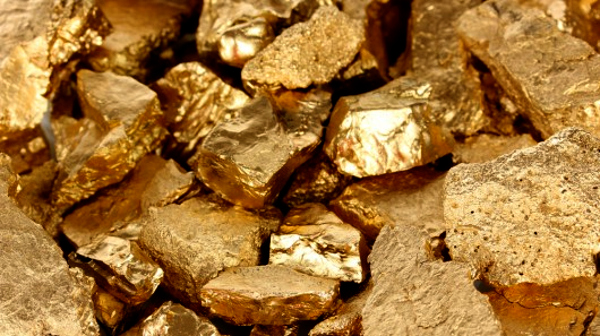
Singareni Collieries Company Limited is preparing for one of the most significant diversification moves in its long mining history, with the Telangana government directing the state-backed miner to explore a possible partnership with Karnataka’s Hutti Gold Mines as it expands beyond coal into gold, copper and other strategic minerals.
The proposed collaboration comes as Singareni begins mineral exploration at the Devadurga Gold–Copper Block in Karnataka’s Raichur-Yadgir region, marking an important step in the company’s strategy to evolve from a predominantly coal-focused enterprise into a broader mining and minerals company.
Telangana Deputy Chief Minister and Energy Minister Mallu Bhatti Vikramarka has asked Singareni officials to examine the possibility of forming a joint venture with The Hutti Gold Mines Company Limited, the Karnataka government-owned enterprise with extensive experience in gold exploration, underground mining, ore processing and refining.
The proposal remains at the exploratory stage. No joint venture agreement has yet been signed. Singareni has instead been directed to prepare a detailed action plan identifying areas in which the two public-sector mining companies could cooperate.
Singareni Begins Gold-Copper Exploration at Devadurga
The immediate focus of Singareni’s diversification is the Devadurga Gold–Copper Block, where mineral exploration was formally launched on 27 August 2026.
Bhatti Vikramarka visited the exploration area at Lingadahalli village in Devadurga taluk of Raichur district and reviewed the geological work being undertaken by Singareni.
The company secured exploration rights for the block through a competitive auction conducted under the Centre’s mineral-block allocation framework.
The Geological Survey of India identifies the Devadurga exploration licence block as covering approximately 199.13 square kilometres across parts of Raichur and Yadgir districts in Karnataka. The principal mineral commodities identified for exploration are gold and copper.
The area lies within the geologically important Raichur-Deodurga schist belt, where previous geological mapping, geochemical investigations, geophysical surveys and aero-geophysical studies have indicated mineralisation potential.
The exploration programme will now attempt to determine whether commercially viable deposits exist, along with their grade, depth, distribution and overall resource potential.
Exploration to Be Accelerated Using Modern Technology
During his inspection of the Devadurga block, the Deputy Chief Minister directed Singareni officials to accelerate exploration using modern geological and geophysical techniques.
The objective is to establish both the quantity and quality of the mineral deposits as quickly and accurately as possible.
Officials have also been asked to prepare plans for subsequent stages of development in advance so that, if exploration results are encouraging, the company can move rapidly towards further evaluation and eventual mine development.
Singareni Chairman and Managing Director Dr Buddha Prakash Jyoti has also been directed to complete arrangements for establishing the company’s site office at Devadurga.
The approach indicates that Telangana does not view Devadurga merely as a speculative exploration project but as a potential foundation for Singareni’s entry into non-coal metallic mining.
Proximity to Hutti Creates a Strategic Advantage
One of Devadurga’s most significant advantages is its location relatively close to the established Hutti gold-mining operations in Karnataka.
Recognising this, Bhatti Vikramarka has specifically directed Singareni to utilise the technical expertise developed by Hutti Gold Mines.
On 28 August, he visited the Hutti and UT gold mines in Raichur district, accompanied by senior Singareni officials, to study the full gold-production chain.
The delegation examined ore extraction, underground and open-cast mining operations, mineral processing and gold-refining facilities.
At Hutti, officials demonstrated how gold-bearing ore moves from the mine through crushing and processing before the precious metal is recovered and refined.
The visit also included an inspection of Hutti’s electrowinning facilities, an important stage in recovering gold from processed solutions.
Hutti Produces Around Two to Four Kilograms of Gold a Day
During the visit, Hutti officials informed the Telangana delegation that the project currently produces an average of approximately two to four kilograms of gold per day.
The operational experience accumulated at Hutti is particularly valuable to Singareni because gold mining presents very different geological, metallurgical and processing challenges compared with coal extraction.
While Singareni possesses extensive experience in large underground and opencast mining operations, Hutti has specialised expertise in identifying gold-bearing formations, extracting relatively low-volume high-value ore and recovering gold through complex mineral-processing techniques.
Combining these complementary capabilities forms the central rationale behind the proposed partnership.
Proposed Collaboration Could Cover Entire Gold Value Chain
The Telangana government has asked Singareni to prepare an action plan for possible cooperation with Hutti across virtually the entire gold-mining value chain.
The areas identified include gold exploration, mine development, extraction, mineral processing and refining.
Cooperation could also involve the adoption of modern mining and processing technologies, deployment of technical specialists and training of Singareni personnel in gold-mining operations.
This human-resource component could be particularly important.
Developing an entirely new minerals business requires geologists, mining engineers, metallurgists and processing specialists with experience very different from that required in traditional coal operations.
Training and technical collaboration with Hutti could therefore allow Singareni to develop its own internal capabilities rather than relying indefinitely on external consultants.
A Joint Venture Has Not Yet Been Finalised
Despite reports describing a Singareni-Hutti joint venture, the current development should be understood as a proposal under examination rather than a completed corporate arrangement.
The Deputy Chief Minister has directed officials to explore the feasibility of such a partnership and prepare an action plan.
The eventual structure could take several forms depending on commercial, regulatory and technical evaluations.
Further discussions would also require agreement between the Telangana government, Singareni, Hutti Gold Mines and relevant Karnataka authorities.
The distinction is important because the immediate confirmed development is Singareni’s entry into gold-copper exploration at Devadurga, while the Hutti partnership remains a mechanism being considered to support that diversification.
Singareni Moves Beyond Coal
The Devadurga programme forms part of a much larger strategic shift taking place within Singareni.
The company has spent more than a century developing coal resources, primarily in the Godavari Valley coalfields, and remains one of India’s major coal-producing enterprises.
However, the long-term transition in the global energy system means coal companies increasingly need to diversify into new businesses and mineral resources.
The Telangana government has therefore directed Singareni to expand into critical and strategic minerals while continuing to strengthen its core coal operations.
On 26 August, Bhatti Vikramarka instructed company officials to actively participate in upcoming domestic and international auctions for mineral resources including copper, graphite, lithium, cobalt, vanadium and titanium.
The company has also engaged international consultants to study mining and investment opportunities in countries including South Africa, Brazil, Australia and Chile.
This suggests Singareni’s diversification ambitions extend considerably beyond the Devadurga project.
Copper Could Be Equally Significant
Although much of the attention surrounding Devadurga has focused on gold, the exploration licence covers both gold and copper.
Copper has become increasingly important to India’s industrial and energy strategy because of its extensive use in electricity networks, renewable-energy installations, electric vehicles, electronics, telecommunications and industrial machinery.
Expansion of domestic copper resources could therefore have strategic implications extending well beyond the commercial value of the Devadurga block itself.
If exploration identifies economically recoverable copper alongside gold, the project could become considerably more important to Singareni’s emerging critical-minerals portfolio.
The company would then gain experience in polymetallic exploration and potentially develop capabilities applicable to future copper and critical-mineral projects elsewhere in India.
Gold Mining Presents a Different Economic Model
Entering gold mining would also require Singareni to adapt to a fundamentally different mining economy.
Coal operations typically involve extracting very large quantities of bulk material that is sold primarily on the basis of calorific value and quality.
Gold mines operate differently.
Only a small quantity of gold may be present within each tonne of ore, making accurate geological modelling and efficient processing essential.
The economic viability of a project depends not simply on the total amount of ore but on gold grade, recovery rate, mining depth, processing costs and metallurgy.
This is another reason why Hutti’s specialised expertise could prove valuable.
Its experience encompasses not only extraction but the complex process of separating small quantities of gold from large volumes of mineral-bearing rock.
Supporting India’s Domestic Gold Production
Bhatti Vikramarka has also linked the proposed collaboration with India’s broader objective of increasing domestic gold production.
India is one of the world’s largest consumers of gold, but domestic mine production remains relatively small compared with national demand.
Much of the country’s requirement is consequently met through imports.
Developing additional commercially viable domestic gold resources would therefore help expand India’s indigenous mineral-production base.
No single project such as Devadurga could eliminate India’s dependence on imported gold, but successful discoveries could contribute incrementally while building domestic expertise in exploration and gold-mine development.
The Telangana government believes cooperation between two experienced public-sector mining companies could help accelerate that process.
Employment and Regional Development Potential
If Devadurga eventually progresses from exploration to commercial mining, the project could also generate employment and associated economic activity in the Raichur-Yadgir region.
Mineral projects typically require geological personnel, mining engineers, machinery operators, processing-plant workers, safety specialists, transport services and numerous supporting businesses.
Mine development can also stimulate investments in roads, power supplies, water-management systems and other infrastructure.
However, such benefits will depend first on exploration proving that the mineralisation is sufficiently rich and extensive to justify commercial extraction.
At present, Devadurga remains an exploration-stage project and no economically mineable reserve has yet been declared.
Environmental and Technical Assessment Will Be Critical
The movement from exploration to mining is a lengthy process.
Exploration must first establish geological resources through drilling, sampling and laboratory analysis.
If encouraging mineralisation is found, additional drilling is generally required to improve confidence in the resource estimate.
Metallurgical testing must then determine how efficiently gold and copper can be recovered from the ore.
Economic feasibility studies must assess capital expenditure, operating costs, commodity prices and expected mine life.
Environmental assessments, land requirements, regulatory approvals and mine-planning processes would follow before commercial development could begin.
Singareni’s decision to prepare subsequent-stage plans in advance is intended to reduce delays if exploration produces positive results.
From Telangana Coal Miner to Diversified Minerals Company
The significance of the Devadurga project therefore extends beyond the possibility of finding gold.
For Singareni, it represents a test of whether a company built around coal can successfully transfer more than a century of mining experience into new mineral sectors.
The company already possesses capabilities in large-scale exploration, mine planning, underground operations, mechanised mining, worker safety and project management.
Gold, copper and critical minerals would add new geological and processing capabilities to that base.
A partnership with Hutti could accelerate the transition by giving Singareni direct access to one of India’s most experienced gold-mining organisations.
Devadurga Could Become the First Step in a Much Larger Transformation
The developments of 27–28 August 2026 mark an important transition for Singareni.
The company has moved beyond merely discussing diversification and has begun actual field exploration for gold and copper at Devadurga.
At the same time, Telangana is examining a possible institutional partnership with Hutti Gold Mines covering exploration, mining, processing, refining, technology and workforce development.
The next milestone will be the results of geological exploration.
If Devadurga reveals commercially viable gold or copper resources, Singareni could move towards mine development and potentially establish an entirely new mineral business alongside coal.
If the proposed Hutti collaboration also materialises, it could bring together Singareni’s large-scale mining capability and Hutti’s specialised gold expertise, creating an unusual partnership between two major state-owned mining enterprises.
For a company whose identity has been associated with coal for more than a century, Devadurga may therefore represent something much larger than another mineral block — it could become the starting point for Singareni’s transformation into a diversified Indian mining and critical-minerals company.
You may also like
-
Punjab’s Rail Coach Factory Advances Vande Bharat Manufacturing as 16-Coach Trainset Undergoes 180 kmph Trial
-
Himachal Startup Tecnod8.AI Develops Industrial AI Copilot for Advanced Manufacturing
-
Skyroot Aerospace Partners with Brazil’s Concert Technologies to Develop New Orbital Launch Vehicle
-
Subex Wins $700,000 African Telecom Contract for AI-Powered HyperSense Fraud Management Technology
-
BEML Secures ₹75.58 Crore Export Order for Heavy Mobility Military Vehicles in Southeast Asia
