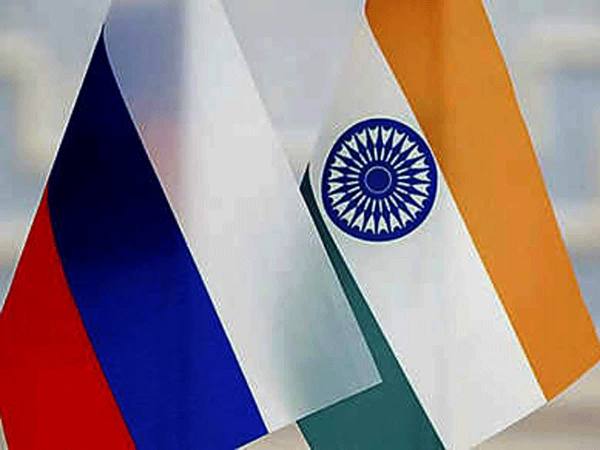
Prime Minister Narendra Modi and Russian President Vladimir Putin met in Bishkek on 31 August 2026, holding wide-ranging talks on defence, energy, trade, space cooperation and major international conflicts on the sidelines of the 26th Shanghai Cooperation Organisation Summit. The two leaders also reviewed preparations for President Putin’s expected visit to India for the 18th BRICS Summit on 12–13 September 2026.
The Bishkek meeting was the first face-to-face meeting between Modi and Putin in 2026. Their previous meeting had taken place in New Delhi during the 23rd India-Russia Annual Summit in December 2025, when the two countries reaffirmed their Special and Privileged Strategic Partnership and laid out an expanded agenda covering trade, defence, energy, technology and connectivity.
India and Russia Review Expanding Strategic Partnership
During their talks in Bishkek, Modi and Putin reviewed progress across virtually every major component of the India-Russia relationship, including political cooperation, economic ties, defence, energy, space, mobility and people-to-people relations.
The breadth of the discussions reflects the continuing transformation of a relationship traditionally associated primarily with defence and strategic cooperation. While military and energy ties remain major pillars, New Delhi and Moscow have increasingly attempted to expand cooperation into manufacturing, technology, transport connectivity, investment, skilled-worker mobility and emerging economic sectors.
Both leaders agreed to remain engaged in strengthening the Special and Privileged Strategic Partnership, which the Indian government said had continued to register significant growth despite geopolitical uncertainty.
Defence Remains a Central Pillar
Defence cooperation remains one of the most established components of India-Russia ties. The relationship has evolved over decades from the straightforward purchase of Russian-origin military systems towards greater emphasis on technology transfer, licensed production, joint development and manufacturing in India.
The wider defence relationship covers aircraft, helicopters, submarines, warships, armoured platforms, missiles, air-defence systems and associated maintenance and support infrastructure. Cooperation increasingly intersects with India’s objective of developing greater domestic defence-manufacturing capability rather than relying exclusively on imported finished systems.
At their December 2025 Annual Summit, India and Russia described their partnership as covering political and strategic affairs, military and security cooperation, trade and investment, energy, science and technology, nuclear cooperation and space.
The inclusion of defence among the principal subjects reviewed again in Bishkek demonstrates that military cooperation remains an important part of the relationship even as both countries seek to diversify it into newer fields.
Energy Cooperation Retains Strategic Importance
Energy is another fundamental component of India-Russia relations. India’s rapidly growing economy requires large and reliable supplies of hydrocarbons as well as increasing electricity-generation capacity, while Russia possesses some of the world’s largest energy resources.
The relationship extends beyond crude oil to petroleum products, coal, liquefied natural gas and civil nuclear energy. Nuclear cooperation has been particularly important through the Kudankulam Nuclear Power Project in Tamil Nadu, which represents one of the largest long-term Indo-Russian industrial collaborations.
Energy cooperation has consequently become linked not merely to bilateral trade but also to India’s wider objective of securing affordable and diversified energy supplies. The Bishkek talks took place amid continuing volatility in global energy markets and disruptions arising from conflicts in several regions.
Economic Partnership Gains Greater Attention
Economic cooperation was given particular prominence during the Modi-Putin meeting, with both leaders welcoming the outcome of the 27th India-Russia Inter-Governmental Commission on Trade, Economic, Scientific, Technological and Cultural Cooperation, held in Moscow on 24 August 2026.
The commission represents the principal institutional mechanism for expanding bilateral economic cooperation and addressing practical obstacles affecting businesses in the two countries. Its agenda encompasses trade, investment, transport, banking arrangements, energy, industrial cooperation, science, technology and other sectors. External Affairs Minister S. Jaishankar participated in the 27th session in Moscow on 24 August.
India and Russia have already established an ambitious goal of increasing bilateral trade to $100 billion by 2030. Achieving that target will require the relationship to move beyond its current concentration in energy and commodities and expand Indian exports and joint industrial activity.
The two countries have identified tariff and non-tariff barriers, logistics constraints, payment mechanisms, insurance and reinsurance arrangements and stronger business-to-business interaction as areas requiring attention. They have also been examining greater use of national currencies and interoperability between payment and financial-messaging systems to facilitate trade.
Space Cooperation Also Reviewed
Space was specifically listed among the areas examined by Modi and Putin in Bishkek, reflecting another longstanding field of cooperation between the two countries.
India and the former Soviet Union established space links during the early decades of India’s space programme, and cooperation has continued through satellite navigation, human-spaceflight-related training and other scientific fields. The inclusion of space alongside defence and energy suggests that high-technology cooperation remains part of the effort to modernise the bilateral partnership.
The broader strategic objective is increasingly to move relations towards technologically sophisticated forms of collaboration capable of supporting both countries’ long-term industrial and scientific priorities.
West Asia and Black Sea Conflicts Discussed
International conflicts formed another major component of the Bishkek talks. Modi and Putin exchanged views on developments in West Asia and the Black Sea region, with particular attention to their implications for maritime commerce and the security of Indian seafarers.
India has repeatedly raised concerns about instability affecting commercial shipping because disruption to important maritime corridors can increase transport costs, insurance premiums and energy prices while exposing merchant crews to direct security risks.
Modi reiterated India’s position that dialogue and diplomacy remain the appropriate route for resolving international conflicts. The formulation is consistent with India’s broader diplomatic approach of maintaining communication with competing sides while urging negotiated settlements rather than prolonged military confrontation.
The maritime dimension has assumed greater importance as conflicts in West Asia and around the Black Sea increasingly affect shipping routes, energy flows and global supply chains. For India, whose international merchandise trade is overwhelmingly dependent on maritime transportation, freedom and security of commercial navigation represent a direct economic interest.
BRICS Cooperation Moves to Centre Stage
The two leaders also discussed coordination within multilateral institutions, particularly BRICS, where India holds the chairship in 2026.
Russia is one of the original members of BRICS, while India’s chairship gives New Delhi an important role in shaping discussions on trade, development finance, economic cooperation, technology, reform of international institutions and greater representation of emerging economies.
Modi told Putin that he looked forward to welcoming him to India for the 18th BRICS Summit on 12–13 September 2026. The meeting would bring the Russian President to India less than two weeks after their discussions in Bishkek, creating another opportunity for bilateral consultations alongside the wider multilateral agenda.
A Relationship That Has Survived Geopolitical Upheaval
One of the most striking characteristics of India-Russia relations has been their continuity despite profound changes in the international system. The partnership survived the end of the Soviet Union, India’s growing engagement with the United States and Europe, Russia’s changing relations with Western countries and repeated geopolitical crises.
New Delhi has maintained that relations with Moscow are based on India’s national interests and a historically established strategic partnership rather than alignment within competing geopolitical blocs. Russia, meanwhile, continues to regard India as a major Asian power and an important partner in an increasingly multipolar international system.
This does not mean that the two countries have identical positions on every international issue. Rather, their relationship has been built around areas where long-term interests continue to overlap, including defence, energy, nuclear cooperation, space, Eurasian connectivity and support for a more multipolar international order.
Putin’s India Visit Could Provide the Next Major Step
The Bishkek meeting effectively serves as a bridge between the India-Russia Annual Summit held in December 2025 and the forthcoming BRICS Summit in India in September 2026.
Its significance lies in the unusually broad agenda discussed by the two leaders. Defence and energy continue to provide the strategic foundation of the partnership, but trade, mobility, space, technology and multilateral cooperation are becoming increasingly prominent.
The next major test will be whether the political relationship can translate into a more balanced economic partnership, particularly through increased Indian exports, investment, joint manufacturing, improved payment mechanisms and greater connectivity.
With President Putin expected in India for the BRICS Summit on 12–13 September, the Bishkek talks indicate that New Delhi and Moscow are preparing to carry forward a relationship that both governments continue to describe as a Special and Privileged Strategic Partnership, while adapting it to an international environment undergoing rapid economic and geopolitical change.
You may also like
-
US Double Standards in Foreign Policy: 16 Recent Cases Involving India, Russia, China and Global Trade
-
Indian Navy Vice Chief Inspects Japan’s Mogami-Class Stealth Frigate as India-Japan Shipbuilding Cooperation Expands
-
INS Trishul Arrives in UK for Exercise KONKAN 2026 as India and Royal Navy Expand Maritime Cooperation
-
INS Sahyadri Arrives in Russia for Exercise INDRA 2026 to Strengthen India-Russia Naval Cooperation
-
India and Qatar Deepen Strategic Partnership with Focus on Energy Security, Trade and West Asia
