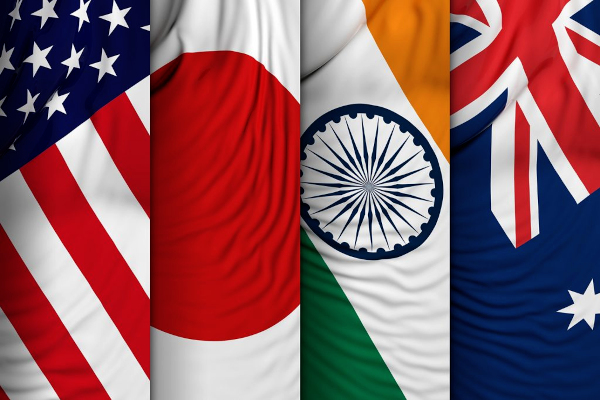
India, the United States, Japan and Australia have announced plans to provide more than US$85 million in technical and financial assistance to expand access to trusted artificial intelligence technologies across the Indo-Pacific, marking a significant development in the Quad’s cooperation on emerging technologies, economic security and resilient digital infrastructure.
The announcement followed a meeting of the Quad foreign ministers in Atlanta, Georgia, on Saturday, where representatives of the four countries reviewed ongoing initiatives and reaffirmed their commitment to strengthening economic and technological cooperation across the region.
External Affairs Minister Dr S. Jaishankar represented India at the meeting, alongside US Secretary of State Marco Rubio, Japanese Foreign Minister Toshimitsu Motegi and Australian Foreign Minister Penny Wong.
The ministers identified artificial intelligence, advanced semiconductor technologies, secure communications networks and resilient supply chains as important areas for future cooperation.
The proposed assistance will support access to trusted AI technologies across the Indo-Pacific, including through the Quad AI Accelerator initiative.
Quad AI Accelerator to Support Regional Technology Development
Artificial intelligence emerged as an important component of the Quad’s economic and technological cooperation agenda during the Atlanta meeting.
In their joint statement on economic prosperity and security, the four countries highlighted the growing importance of advanced AI technologies in supporting economic development and industrial competitiveness.
The ministers announced their intention to provide more than US$85 million in technical and financial assistance to improve access to trusted AI capabilities across the Indo-Pacific.
The initiative includes cooperation through the Quad AI Accelerator, which is intended to support the broader availability and adoption of trusted artificial intelligence technologies.
The assistance reflects the Quad’s recognition that access to advanced digital capabilities is increasingly important for economic growth, technological participation and regional competitiveness.
The statement also referred to the Pax Silica initiative, highlighting the importance of cooperation across the technological and industrial systems supporting advanced computing.
Although the funding commitment represents an important policy announcement, the ministers did not disclose detailed country-wise allocations, individual project beneficiaries or a complete disbursement schedule.
Strengthening Semiconductor and AI Hardware Supply Chains
Alongside the artificial intelligence initiative, the Quad countries announced plans to strengthen cooperation on advanced semiconductor technologies and AI hardware.
Semiconductors are essential components of modern computing systems, communications equipment, industrial machinery, defence technologies and artificial intelligence infrastructure.
Advanced AI systems depend on specialised processors, reliable manufacturing capabilities and access to complex global semiconductor supply chains.
The Quad ministers emphasised the need to establish secure, resilient and trusted supply chains for leading-edge semiconductors and associated hardware.
They also announced a new effort to identify potential vulnerabilities and critical bottlenecks in semiconductor and AI hardware supply chains before they cause major disruptions.
This initiative seeks to improve awareness of risks affecting the production, availability and movement of strategically important technology components.
For India, which is expanding its semiconductor manufacturing and electronics ecosystem, greater international coordination in these areas could create opportunities for industrial partnerships, technological cooperation and supply-chain development.
However, the announcement does not identify specific new semiconductor manufacturing projects or investments in India.
Cooperation on 5G, 6G and Advanced Communications
The Quad ministers also discussed cooperation on trusted advanced telecommunications infrastructure, including fifth-generation and sixth-generation mobile communication technologies.
The four countries agreed to identify priority partner countries where cooperation on secure communications networks could be expanded.
The technologies under consideration include 5G, 6G, Open Radio Access Networks and AI-enabled radio access network systems.
Open Radio Access Network technologies are intended to enable greater interoperability between telecommunications equipment and software supplied by different vendors.
Such systems can provide telecommunications operators with additional flexibility in developing and managing network infrastructure.
The inclusion of AI-enabled radio access networks reflects the growing use of artificial intelligence in improving network efficiency, resource allocation and communications performance.
For India, cooperation in these areas is relevant to domestic telecommunications research, indigenous network equipment development and the country’s participation in emerging global communications standards.
The Quad’s proposed engagement could also help strengthen technological cooperation among participating governments, research institutions and private companies.
India and Quad Partners Address Critical Minerals Supply Chains
Critical minerals formed another important component of the Atlanta discussions.
The Quad ministers emphasised the need to strengthen supply-chain resilience and reduce vulnerabilities associated with concentrated sources of strategically important raw materials.
These minerals are essential for several advanced technologies, including semiconductors, electric vehicles, renewable energy equipment, electronics and defence systems.
The ministers welcomed a separate US commitment of US$10 million to support the development of facilities and infrastructure for recovering critical minerals from waste materials in India and ASEAN countries.
The initiative is intended to improve the recovery of valuable minerals from discarded electronic equipment, industrial scrap and other recyclable materials.
Critical mineral recycling can provide an additional source of raw materials while reducing waste and supporting the development of more diversified supply chains.
The US$10 million commitment covers proposed activities involving India and ASEAN countries and has not been announced as an allocation exclusively for India.
The broader cooperation reflects the Quad’s focus on developing more reliable access to materials essential for advanced manufacturing and technological development.
Quad Raises Concerns Over Economic Coercion and Trade Restrictions
The ministers also discussed economic security and the importance of maintaining reliable global supply chains.
They expressed concern over economic coercion, arbitrary export restrictions and non-market practices that could disrupt critical industries and international commerce.
The discussions reflected the growing importance of supply-chain resilience in an international economy increasingly dependent on specialised technologies, critical raw materials and advanced manufacturing capabilities.
The four countries reaffirmed their commitment to developing open and reliable supply chains and strengthening trusted infrastructure.
The joint statement did not identify any particular country in its discussion of economic coercion and non-market practices.
For India, these issues are relevant to efforts to expand domestic manufacturing capabilities, diversify international sourcing arrangements and strengthen participation in global technology supply chains.
Maritime Security and Digital Cooperation Remain Priorities
Beyond artificial intelligence and industrial technologies, the Quad ministers reaffirmed their commitment to maritime security and regional cooperation.
The meeting highlighted the importance of protecting freedom of navigation and maintaining uninterrupted commercial shipping through strategically important maritime routes.
The ministers specifically referred to navigational rights and freedoms in the Strait of Hormuz, the Red Sea and the Bab el-Mandeb Strait.
The four countries also announced plans for additional maritime domain awareness cooperation, including a regional symposium under the Quad Maritime Training Initiative in early 2027.
Maritime domain awareness involves gathering and sharing information about activities occurring at sea to improve safety, security and operational coordination.
The Quad also intends to advance cooperation against cybercrime and international online scam networks.
The ministers expressed concern about transnational criminal operations involved in online fraud and human trafficking and reaffirmed their commitment to addressing these threats through international cooperation.
These initiatives demonstrate the expanding scope of the Quad’s activities, connecting emerging technologies with maritime security, cybersecurity and economic resilience.
New Business Forum to Strengthen Commercial Partnerships
The Atlanta meeting also produced an announcement concerning private-sector cooperation.
The Quad countries agreed to establish their first Business Leaders’ Forum to strengthen engagement between governments and industry representatives.
The forum is intended to encourage commercial partnerships and facilitate cooperation in strategically important sectors.
The initiative could provide additional opportunities for businesses operating in areas such as advanced manufacturing, digital infrastructure, emerging technologies and industrial supply chains.
The Quad countries also agreed to continue coordination among their export credit agencies, which support international trade and investment through financing and risk-management mechanisms.
The agencies are scheduled to meet in Tokyo on November 18, 2026, to identify opportunities for practical cooperation.
Together, these initiatives reflect an effort to connect diplomatic cooperation with commercial and industrial activity across the Indo-Pacific.
Significance for India’s Emerging Technology Ecosystem
The Quad’s announcement is particularly relevant to India’s expanding artificial intelligence, semiconductor, telecommunications and advanced manufacturing sectors.
India has been pursuing several initiatives to strengthen domestic technological capabilities, including indigenous semiconductor development, digital infrastructure expansion and research in emerging technologies.
International cooperation involving trusted AI infrastructure and advanced computing could complement these domestic efforts by creating additional opportunities for knowledge exchange, technological collaboration and access to specialised capabilities.
The proposed focus on semiconductor supply-chain resilience also aligns with India’s interest in strengthening its position within the global electronics and advanced manufacturing ecosystem.
Similarly, cooperation on secure telecommunications networks could support India’s participation in the development of next-generation communications technologies.
The critical minerals recycling initiative provides another potential area for cooperation, particularly as India seeks to expand industries dependent on advanced materials and electronic components.
However, the Quad announcement establishes an international cooperation framework rather than confirming individual Indian projects, domestic funding allocations or specific industrial investments.
The practical benefits for participating countries will depend on the implementation arrangements and programmes developed under the initiatives.
Towards a More Technology-Focused Indo-Pacific Partnership
The Quad’s latest announcement illustrates the increasing importance of technological capability and economic security in regional diplomacy.
Originally associated primarily with strategic dialogue and maritime cooperation, the grouping has progressively expanded its agenda to include emerging technologies, infrastructure, supply-chain resilience and economic partnerships.
The proposed US$85 million-plus assistance initiative places artificial intelligence among the prominent areas of this cooperation.
By combining AI access with semiconductor supply-chain coordination, trusted communications networks, critical minerals and private-sector engagement, the four countries are seeking to develop a more comprehensive framework for technological cooperation.
For India, the initiatives offer opportunities to deepen collaboration with three major technology and industrial partners while supporting broader efforts to strengthen domestic technological capabilities.
The announcement also reinforces the Quad’s stated objective of promoting a free, open, stable and prosperous Indo-Pacific.
As the four countries move towards implementing the proposed initiatives, the effectiveness of their cooperation will depend on translating diplomatic commitments into accessible technologies, resilient supply chains and practical partnerships across the region.
You may also like
-
India Hosts First BIMSTEC Maritime Security Exercise in Andaman and Nicobar Islands to Strengthen Bay of Bengal Security
-
Air Chief Marshal Ashutosh Dixit Takes Charge as India’s 29th Chief of Air Staff
-
DRDO’s Indigenous Vikram VT-21 Wheeled Combat Vehicle Clears Key Development Trials
-
India, Belgium and Luxembourg Strengthen Trade and Investment Cooperation Across Key Sectors
-
India Strengthens G20 and Quad Diplomatic Engagements as Foreign Ministers Meet in Atlanta
