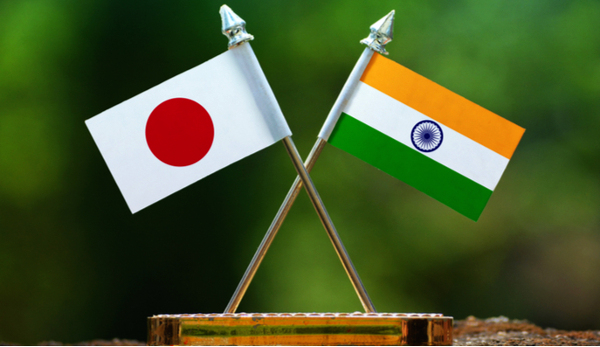
Japan is exploring the possibility of using Indian military training and testing facilities for long-range anti-ship missile exercises and small attack drone operations, potentially opening a new area of defence cooperation between the two countries. The development was officially confirmed on October 27, 2026, by General Masayoshi Arai, Chief of Staff of the Japan Ground Self-Defense Force (JGSDF), during a regular press conference in Japan.
General Arai acknowledged that Japanese defence personnel had been dispatched to India to coordinate with Indian authorities regarding potential training arrangements. The discussions are primarily intended to address the challenges associated with conducting realistic exercises involving increasingly long-range surface-to-ship missiles.
Japan is expanding its stand-off defence capabilities through the introduction of advanced missile systems capable of engaging targets at significantly greater distances than earlier generations of weapons. These developments have created additional requirements for military training facilities capable of accommodating long-range missile operations.
The discussions also include the possibility of conducting training with small attack drones, reflecting the growing importance of unmanned systems in modern military operations.
However, Japan has not announced a final agreement to conduct missile or drone exercises in India. No specific Indian training facility, weapon system or exercise schedule has been officially confirmed.
Japanese Military Confirms Visit to India for Missile Training Discussions
During the October 27 press conference, General Arai was asked about reports that Japan’s Ministry of Defense had dispatched officials to India to explore possible locations for surface-to-ship missile firing exercises.
The JGSDF Chief confirmed that personnel had been sent to India for coordination and explained that the increasing range of modern anti-ship missiles presents challenges for realistic military training.
He stated that Japan is examining how to secure suitable training environments domestically while also considering the use of overseas facilities when necessary.
The discussions reflect Japan’s need to ensure that military personnel can train under conditions relevant to the operational capabilities of its newer weapons.
General Arai also described India as an important partner in the Indo-Pacific region and emphasised the significance of defence cooperation amid an increasingly complex regional security environment.
He declined to provide further details concerning the Japanese delegation’s activities in India, citing the bilateral nature of the discussions.
The confirmation followed Japanese media reports that Ministry of Defense personnel had travelled to India in mid-October to examine possible training arrangements.
According to reporting by Japanese public broadcaster NHK, the delegation spent approximately one week reviewing potential facilities and discussing the feasibility of conducting military exercises.
Japan’s Type-25 Missile Highlights Growing Long-Range Training Requirements
Japan’s development of the Type-25 surface-to-ship guided missile illustrates the increasing importance of long-distance military training facilities.
The Type-25 is a long-range anti-ship missile system developed as part of Japan’s efforts to strengthen its ability to engage maritime targets at extended distances.
The weapon reportedly has an operational range of approximately 1,000 kilometres, representing a substantial increase over earlier generations of Japanese ground-launched anti-ship missiles.
The system was introduced into Japanese service in 2026, with deployment reported at Camp Kengun in Kumamoto Prefecture.
The missile forms part of Japan’s expanding stand-off defence capabilities, which are intended to provide greater operational reach against potential maritime threats.
Japan’s geographical characteristics create challenges for conducting realistic training with such systems.
Long-range missile exercises require suitable launch locations, extensive safety arrangements and sufficiently large areas in which missiles can be operated without endangering civilian populations, maritime traffic or aviation.
As missile ranges increase, the requirements for training areas become correspondingly more demanding.
The possibility of using overseas facilities could therefore provide Japanese forces with additional options for conducting exercises involving long-range weapons.
Although the Type-25 missile has been prominently associated with the discussions in contemporary reporting, the Japanese government has not officially identified it as the missile selected for any prospective exercise in India.
Indian Missile Testing Infrastructure Offers Potential Advantages
India possesses established infrastructure for the testing and evaluation of missile systems, supported by decades of indigenous defence research and development.
The Defence Research and Development Organisation operates missile-testing facilities in Odisha, including the Integrated Test Range at Chandipur and facilities associated with Abdul Kalam Island.
These installations have supported the development and evaluation of various Indian missile systems.
India’s eastern coastline provides access to extensive maritime areas over the Bay of Bengal, which can be used for carefully coordinated missile-testing activities.
Such geographical characteristics are potentially relevant to exercises involving weapons designed to operate over substantial distances.
The availability of specialised instrumentation, tracking infrastructure and established safety procedures also makes India an important centre for missile research and testing.
For Japan, access to suitable overseas training environments could help address limitations associated with conducting long-range missile exercises within its own geographical boundaries.
However, the Japanese military has not publicly identified Chandipur, Abdul Kalam Island or any other Indian facility as the location of a prospective exercise.
Any future use of Indian facilities would require agreement between the two governments, operational coordination and appropriate safety arrangements.
Japan Also Examines Small Attack Drone Training in India
The discussions between Japan and India extend beyond conventional missile systems to include potential training involving small attack drones.
During the October 27 press conference, General Arai was specifically asked whether the Japanese delegation had also examined potential locations for exercises involving small attack-type unmanned aircraft.
He confirmed that such possibilities formed part of the broader coordination efforts.
The Japanese military is examining how to establish suitable training environments for unmanned systems, which are becoming increasingly important in contemporary military operations.
Small attack drones present operational characteristics that differ from those of conventional aircraft and missiles.
Their use can involve specialised communications, remote-control systems, electronic navigation equipment and mission-specific operational procedures.
Training with these platforms requires appropriate arrangements for radio-frequency management, flight safety, operating areas and the handling of any weapons or other potentially hazardous equipment.
General Arai identified these considerations as important factors in determining how drone training should be conducted.
He also explained that Japan is evaluating both domestic and overseas training options, taking into account the intended operational use of unmanned systems.
The discussions do not establish that Japan has selected India as a permanent training location for attack drones or that any specific drone exercise has been approved.
Long-Range Weapons Create New Challenges for Japan’s Military
Japan’s expanding missile capabilities are creating new requirements for training, operational planning and military infrastructure.
Earlier generations of anti-ship missiles generally had shorter operational ranges, allowing military forces to conduct training within more limited geographical areas.
Modern stand-off weapons can engage targets at significantly greater distances, increasing the complexity of exercises intended to evaluate their operational capabilities.
Training with such systems requires coordination across large areas, along with arrangements for surveillance, tracking, range safety and the management of surrounding airspace and maritime activity.
The challenge is particularly relevant to countries where densely populated areas and limited geographical space constrain the availability of suitable training locations.
Japan must balance the need for realistic military preparation with safety requirements and coordination involving civilian authorities.
During his press conference, General Arai emphasised that decisions concerning live-fire training locations would depend on the nature of the exercises, operational requirements and appropriate safety arrangements.
He also clarified that Japan had not decided whether overseas exercises would precede domestic training or take place alongside it.
These remarks demonstrate that the potential use of Indian facilities remains under consideration rather than representing an established military programme.
India and Japan Strengthen Defence Cooperation in the Indo-Pacific
The discussions concerning missile and drone training come amid expanding defence engagement between India and Japan.
Both countries maintain a Special Strategic and Global Partnership and cooperate across maritime security, military exercises, defence technology and regional security matters.
Japan regards India as an important partner in maintaining security and stability across the Indo-Pacific region.
Their defence relationship includes regular exchanges between military personnel, bilateral exercises and cooperation involving the naval, air and land forces.
India and Japan also participate in the Quadrilateral Security Dialogue alongside Australia and the United States.
The Quad provides a framework for cooperation on several regional priorities, including maritime security and broader Indo-Pacific challenges.
However, the proposed missile and drone training arrangements are being explored bilaterally between India and Japan. They have not been announced as part of a Quad military exercise.
For India, closer cooperation with Japan could provide opportunities to expand military exchanges and strengthen practical engagement with a technologically advanced defence partner.
For Japan, the discussions could create additional options for training its armed forces as new long-range weapons enter service.
Defence Ministers Review Expanding Bilateral Cooperation
The exploration of potential missile training arrangements coincides with further progress in India–Japan defence relations.
On October 28, 2026, Defence Minister Rajnath Singh met Japanese Defence Minister Shinjiro Koizumi in the Philippines.
According to an official joint press statement issued by Japan’s Ministry of Defense, the two ministers welcomed progress in bilateral defence cooperation and reviewed ongoing discussions concerning maritime security, defence technology and military exchanges.
The discussions included cooperation on mine countermeasure capabilities and the possibility of joint development in naval shipbuilding and design.
The ministers also acknowledged progress in cooperation between the two air forces, including activities associated with Exercise Veer Guardian 2026.
The meeting recognised the successful organisation of the India–Japan Defence Industry Forum in Tokyo, which brought together approximately 40 companies from the two countries.
Both sides agreed to accelerate discussions towards convening further high-level defence and foreign policy meetings.
The joint statement illustrates the expanding scope of bilateral military cooperation.
However, it did not announce an agreement concerning the use of Indian facilities for Japanese long-range missile or attack drone exercises.
The proposed training arrangements therefore remain a separate exploratory matter.
Potential Cooperation Could Extend Beyond Military Exercises
The possibility of Japanese forces using Indian training facilities demonstrates how bilateral defence relationships can develop beyond conventional military exchanges.
International training cooperation can provide armed forces with access to geographical environments, infrastructure and operational conditions that may not be readily available within their own territories.
Such arrangements can also encourage closer coordination between military organisations in areas involving operational planning, logistics, communications and safety procedures.
For India and Japan, cooperation involving advanced missile and unmanned systems training could strengthen professional exchanges and create opportunities for understanding each other’s operational practices.
It may also complement existing defence technology cooperation, although the present discussions do not include a confirmed joint missile development programme or technology-transfer agreement.
The scope of any eventual arrangement would depend on negotiations between the two governments and the operational requirements identified by their respective armed forces.
At present, the confirmed development is limited to Japan’s dispatch of personnel to India and the examination of possible training options.
India Emerges as a Potential Partner for Advanced Military Training
India’s geographical position, established defence infrastructure and expanding international military partnerships make it a potential partner for specialised training activities.
The country regularly conducts military exercises with foreign armed forces and maintains facilities capable of supporting a wide variety of operational requirements.
Its experience in missile development, testing and military training could provide a foundation for exploring additional forms of defence cooperation.
For Japan, the challenge is to develop training arrangements that correspond to the capabilities of increasingly long-range missiles and emerging unmanned systems.
The possible use of Indian facilities represents one option under consideration as Tokyo evaluates how best to prepare its forces for operating these technologies.
Whether these discussions lead to an agreement will depend on technical assessments, safety considerations, diplomatic negotiations and the availability of suitable facilities.
The Japanese Ground Self-Defense Force has made clear that no final decision has been reached concerning the location or timing of any proposed exercise.
Japan’s Exploration of Indian Facilities Reflects Deepening Defence Engagement
Japan’s confirmation that it has dispatched personnel to India to examine possible long-range missile and attack drone training arrangements marks a noteworthy development in bilateral defence engagement.
The initiative reflects the operational challenges created by the introduction of more capable stand-off weapons and the growing use of unmanned systems.
India’s established military testing infrastructure and extensive maritime geography could make it a suitable partner for certain forms of specialised training.
The discussions also take place against the backdrop of strengthening India–Japan defence cooperation, including maritime security initiatives, military exercises, industrial partnerships and technology-related exchanges.
However, the potential training arrangement remains exploratory. Neither government has announced an agreement authorising Japanese missile launches or attack drone exercises from Indian territory.
The immediate significance of the development lies in Japan’s official acknowledgement that it is examining India as a possible location for future training.
If both governments eventually agree on a suitable arrangement, the cooperation could add a new operational dimension to the India–Japan defence partnership while supporting the training requirements of Japan’s expanding long-range military capabilities.
References
1. Japan Ground Self-Defense Force, Ministry of Defense, Government of Japan — Official Press Conference
“Regular Press Conference by General Masayoshi Arai, Chief of Staff, Japan Ground Self-Defense Force.” October 27, 2026.
The official transcript confirms the dispatch of Japanese personnel to India, discussions concerning long-range surface-to-ship missile training, the consideration of small attack drone exercises and the absence of a final decision on training arrangements.
Official Source: https://www.mod.go.jp/gsdf/news/press-conference/2026/1027/
2. Ministry of Defense, Government of Japan — Official India–Japan Joint Press Statement
“Japan–India Joint Press Statement.” October 28, 2026.
The statement covers the meeting between Japanese Defence Minister Shinjiro Koizumi and Indian Defence Minister Rajnath Singh, including progress in bilateral defence cooperation, maritime security, military exchanges and defence industry engagement.
Official Source: https://www.mod.go.jp/en/article/2026/10/55d4f5a029937159fbe5295787af044ec18e1353.html
3. The Japan Times — Defence Reporting
“Japan Eyes Using Indian Test Ranges for Powerful Missiles and Small Attack Drones.” October 27, 2026.
Source: https://www.japantimes.co.jp/news/2026/10/27/japan/japan-india-missile-test-sites/
4. The Diplomat — Defence and Security Reporting
“Japan Confirms Dispatch to India to Explore Anti-Ship Missile Drills.” October 27, 2026.
Source: https://tribunecontentagency.com/article/japan-confirms-dispatch-to-india-to-explore-anti-ship-missile-drills/
5. The Tribune — Indian Defence Reporting
“Japan Seeks from India Testing Facility for Its Long-Range Missiles.” October 28, 2026.
Source: https://www.tribuneindia.com/news/japan-seeks-from-india-testing-facility-for-its-long-range-missiles/
You may also like
-
Indian Defence Firm Tonbo Imaging Secures European EO/IR Seeker Export Order with €13 Million Potential
-
L&T and BAE Systems Begin Production of BvS10 Sindhu All-Terrain Vehicles for Indian Army at Hazira
-
HAL Expands Aerospace Component Procurement, Strengthening Make in India Manufacturing Ecosystem
-
Indian Navy Explores Laser and Microwave Weapons as Future Warships Face Growing Power and Energy Demands
-
India and South Korea Explore Joint Military Technology Development and Defence Industrial Cooperation
