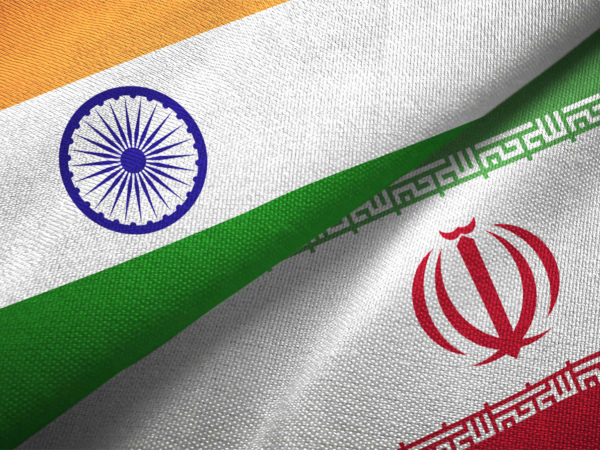
Prime Minister Narendra Modi held bilateral talks with Iranian President Dr Masoud Pezeshkian in Bishkek on 31 August 2026, using their meeting on the sidelines of the Shanghai Cooperation Organisation Summit to review India–Iran relations and discuss the rapidly evolving security situation in West Asia.
The talks came at a particularly sensitive moment for the region, with continuing conflict and geopolitical tensions affecting energy markets, commercial shipping and international supply chains. Modi expressed concern over the escalation of tensions and reiterated India’s longstanding position that disputes should be addressed through dialogue and diplomacy rather than military confrontation.
India Calls for Lasting Peace and Regional Stability
During the discussions, Modi stressed the need for sustained efforts towards restoring lasting peace and stability in West Asia. India’s position assumes particular importance because instability in the region can have direct consequences for energy-importing economies, international shipping and millions of people whose livelihoods depend on uninterrupted commercial links between Asia, the Gulf, Africa and Europe.
The Prime Minister also underscored the importance of protecting civilians and civilian infrastructure during conflicts. He specifically emphasised that commercial vessels and seafarers must not be harmed under any circumstances, placing maritime security alongside humanitarian concerns in India’s diplomatic messaging.
Freedom of Navigation Takes Centre Stage
One of the most strategically important elements of the meeting was India’s call for safeguarding the freedom of navigation and commerce. Maritime routes surrounding Iran and the wider Gulf are among the world’s most important arteries for oil, natural gas and containerised trade, making their uninterrupted operation essential not only for regional countries but for the wider global economy.
For India, secure shipping routes through West Asia have an additional strategic dimension. The country relies heavily on maritime trade for energy supplies and merchandise commerce, while Indian seafarers operate aboard ships across international waters. Any prolonged disruption to major sea lanes can therefore translate into higher freight costs, insurance premiums, energy prices and supply-chain pressures.
Modi’s emphasis on protecting commercial shipping reflects India’s broader approach of maintaining freedom of navigation while avoiding the widening of regional conflicts.
India and Iran Seek Stronger Bilateral Ties
Beyond the immediate security situation, Modi and Pezeshkian reviewed bilateral relations between India and Iran. Following the meeting, Modi said India wanted to strengthen its longstanding relationship with Iran and expand and diversify the bilateral trade basket, indicating that economic engagement remains an important element of New Delhi’s approach towards Tehran.
India and Iran share historical and civilisational links, but their contemporary relationship also carries considerable strategic significance because of Iran’s geographical position between the Persian Gulf, Central Asia, the Caucasus and Afghanistan.
Connectivity has consequently emerged as one of the most important areas of cooperation between the two countries.
Chabahar Remains Central to India–Iran Connectivity
The Shahid Beheshti Terminal at Chabahar Port represents the most visible strategic connectivity project between India and Iran. In May 2024, India Ports Global Limited and Iran’s Ports and Maritime Organization signed a long-term contract covering India’s operation and development of the terminal. India’s Ministry of External Affairs subsequently described the agreement as an important milestone in bilateral relations.
Chabahar gives India a potential maritime gateway towards Afghanistan and landlocked Central Asia while avoiding routes through Pakistan. India has also promoted greater use of the port by Central Asian countries as part of efforts to strengthen north-south trade connectivity. In June 2025, India and the Central Asian states again highlighted Chabahar’s potential for facilitating trade between India, Central Asia and markets beyond the region.
The port also complements the broader International North-South Transport Corridor, which seeks to develop multimodal links connecting India with Iran, the Caspian region, Russia and Europe. India has repeatedly described Iran’s geographical position as important for gaining improved access to Central Asian and Eurasian markets.
Cooperation Through BRICS and SCO
Modi and Pezeshkian also discussed cooperation through major multilateral institutions. The Prime Minister reiterated India’s willingness to work closely with Iran within both the BRICS and the Shanghai Cooperation Organisation, two groupings in which the countries increasingly interact on economic, strategic and regional issues.
India and Iran had already discussed stronger cooperation through these organisations during Modi and Pezeshkian’s meeting on the sidelines of the BRICS Summit in Kazan in October 2024. During that meeting, the two leaders reviewed bilateral cooperation, discussed West Asian developments and highlighted the strategic importance of Chabahar.
At Bishkek, Modi went a step further by conveying that he looked forward to welcoming President Pezeshkian to India for the BRICS Summit, potentially creating another opportunity for the two countries to deepen political and economic engagement.
India Maintains Its Diplomatic Balancing Strategy
The meeting also illustrates India’s broader diplomatic approach towards West Asia. New Delhi maintains extensive relationships with several countries whose strategic interests sometimes sharply diverge, while consistently arguing against the expansion of regional conflicts.
India’s engagement with Iran therefore combines several interests: preserving regional stability, protecting maritime commerce, developing connectivity towards Central Asia, maintaining bilateral economic links and safeguarding India’s wider energy and security interests.
Rather than framing its diplomacy around competing regional blocs, India has continued to emphasise strategic autonomy, dialogue and engagement with all sides. Modi’s meeting with Pezeshkian at the SCO Summit fits squarely within that approach.
A Strategically Important Meeting at a Difficult Moment
The Bishkek talks were therefore more consequential than a routine bilateral meeting on the margins of a multilateral summit. They brought together India’s interests in West Asian stability, maritime security, connectivity, trade and emerging multilateral institutions at a moment when renewed conflict is placing pressure on each of those areas.
By simultaneously calling for dialogue, protection of civilians, unhindered commercial navigation and deeper cooperation with Iran through BRICS and SCO, India signalled that it intends to remain actively engaged with Tehran while continuing to advocate de-escalation across the wider region.
The invitation for President Pezeshkian to attend the forthcoming BRICS Summit in India could now provide the next major opportunity to translate this political engagement into stronger cooperation in trade, connectivity and regional economic integration, with Chabahar likely to remain one of the central pillars of the relationship.
You may also like
-
US Double Standards in Foreign Policy: 16 Recent Cases Involving India, Russia, China and Global Trade
-
Indian Navy Vice Chief Inspects Japan’s Mogami-Class Stealth Frigate as India-Japan Shipbuilding Cooperation Expands
-
INS Trishul Arrives in UK for Exercise KONKAN 2026 as India and Royal Navy Expand Maritime Cooperation
-
INS Sahyadri Arrives in Russia for Exercise INDRA 2026 to Strengthen India-Russia Naval Cooperation
-
India and Qatar Deepen Strategic Partnership with Focus on Energy Security, Trade and West Asia
