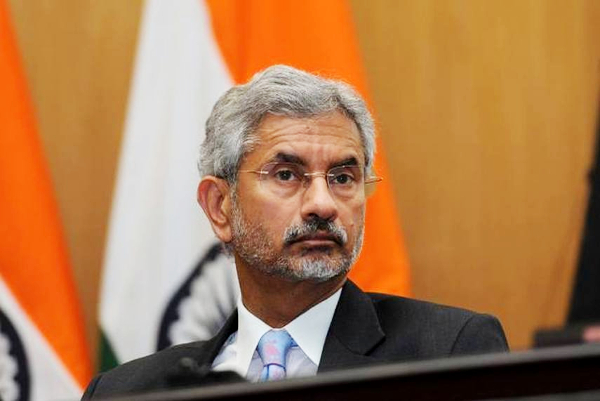
External Affairs Minister Dr S. Jaishankar placed counter-terrorism, maritime security and protection of international trade routes at the centre of India’s message during the ASEAN Regional Forum and East Asia Summit meetings held in Manila on July 23, 2026.
Addressing the 33rd ASEAN Regional Forum Ministerial Meeting, Jaishankar said the Indo-Pacific was facing an increasingly complex security environment and required stronger cooperation among regional countries. He reiterated India’s position that terrorism must receive zero tolerance and that those responsible for terrorist violence must face consequences.
A major part of India’s intervention focused on the financial networks that sustain terrorism. Jaishankar called for greater international coordination to identify and disrupt the flow of money, weapons and logistical support to terrorist organisations. India and Malaysia currently co-chair the counter-terrorism Experts’ Working Group under the ASEAN Defence Ministers’ Meeting-Plus framework. The two countries are also working on a compendium of best practices that could improve cooperation among participating states.
India’s message reflected its broader position that declarations against terrorism must be supported by financial intelligence, coordinated enforcement and accountability for organisations and states that provide assistance to violent groups. By placing terror financing prominently within the ASEAN security dialogue, New Delhi sought to strengthen the regional response to a threat that increasingly operates across borders and through sophisticated financial channels.
Maritime Security and Protection of Commerce
Jaishankar also highlighted India’s expanding contribution to maritime security across the Indo-Pacific. He referred to the Information Fusion Centre–Indian Ocean Region in Gurugram, the Indo-Pacific Maritime Domain Awareness initiative and the deployment of Indian maritime forces from the North Arabian Sea to the western Pacific.
These capabilities support the monitoring of shipping movements and cooperation against piracy, narcotics smuggling, trafficking and other unlawful activities at sea. India’s presence across this vast maritime space also reflects the importance it attaches to protecting commercial shipping and ensuring that vital sea lanes remain open.
The External Affairs Minister said attacks on merchant vessels and civilian infrastructure were unacceptable. With conflicts increasingly affecting commercial shipping and energy routes, India stressed that international waterways must remain safe, accessible and free from obstruction. The security of seafarers and civilian vessels, he indicated, must remain beyond the limits of military confrontation.
This position is particularly important for India and other Asian economies that depend heavily on maritime trade for energy, raw materials, manufactured goods and food supplies. Any prolonged disruption to shipping routes can raise freight costs, interrupt supply chains and place additional pressure on developing economies.
India’s Position on the South China Sea
On the South China Sea, Jaishankar supported the development of a substantive, effective and legally binding Code of Conduct that remains fully consistent with the 1982 United Nations Convention on the Law of the Sea.
India’s position is that such an agreement must preserve the lawful rights of all countries using the region’s waterways. It must also support freedom of navigation, peaceful settlement of disputes and unimpeded maritime commerce.
Although India is not a claimant in the South China Sea disputes, the region forms a crucial link between the Indian and Pacific Oceans. Developments there directly influence maritime stability, regional trade and India’s economic and strategic engagement with Southeast Asia.
Disaster Relief and Regional Resilience
Jaishankar welcomed the Manila Plan of Action and said its five pillars were closely aligned with India’s approach to the Indo-Pacific. He emphasised the need for countries to share disaster-response experience, create common operating procedures and conduct both real-time and tabletop exercises.
India has increasingly positioned itself as a first responder during regional emergencies by providing field hospitals, search-and-rescue teams, food, medicines and other relief supplies. It has also promoted the Coalition for Disaster Resilient Infrastructure as a platform for helping countries prepare infrastructure for natural disasters and climate-related risks.
India’s regional approach therefore combines conventional security with humanitarian assistance and disaster relief. This is especially relevant to Southeast Asia and the wider Indo-Pacific, where earthquakes, cyclones, tsunamis and extreme weather frequently affect large populations and critical infrastructure.
Artificial Intelligence, Cybercrime and Non-Proliferation
Emerging technologies formed another important part of India’s intervention. Jaishankar advocated a responsible and human-centred approach to artificial intelligence while supporting deeper cooperation against cybercrime.
He also called on the international community to remain alert to attempts to weaken global non-proliferation and disarmament arrangements. These concerns reflect the widening scope of regional security, which now includes cyberattacks, misuse of artificial intelligence, digital financial crime and the proliferation of advanced military technologies.
India’s Message at the East Asia Summit
At the 21st East Asia Summit, Jaishankar described the international order as uncertain and volatile, with economic interdependence existing alongside geopolitical rivalry. He warned that conflicts were affecting energy, food and health security, with developing countries facing some of the greatest consequences.
On the conflict in West Asia, India called for dialogue and diplomacy while reiterating that attacks on seafarers, civilian shipping and infrastructure could not be accepted. New Delhi continued to support a negotiated two-state solution as the basis for a durable peace between Israel and Palestine. India has also emerged as an important contributor to the United Nations agency supporting Palestinian refugees, including through assistance in health and capacity building.
India will further strengthen its engagement with the East Asia Summit by hosting the seventh EAS Conference on Maritime Security Cooperation in Kochi and an EAS Maritime Heritage Festival at Lothal. The two initiatives will connect contemporary maritime security with India’s long history as a centre of trade and cultural interaction across the Indian Ocean.
Jaishankar’s interventions in Manila presented India as a security partner committed to ASEAN centrality, regional stability and practical cooperation. Counter-terrorism, secure sea lanes, disaster relief, international law and responsible technology together formed the core of India’s Indo-Pacific vision—one that combines strategic resolve with development-oriented regional engagement.
Official References
REFERENCES 1. DD India. “EAM Jaishankar Calls for Zero Tolerance Against Terrorism at 33rd ASEAN Regional Forum Ministerial Meeting in Manila.” 23 July 2026. 2. Akashvani News, News Services Division, All India Radio. “EAM S. Jaishankar Calls for Safe and Unblocked International Waterways at East Asia Summit.” 23 July 2026. 3. Akashvani News, News Services Division, All India Radio. “EAM S. Jaishankar Conveys India’s Support for Successful Chairship of ASEAN to Philippines President.” 23 July 2026. 4. Ministry of External Affairs, Government of India. Official statements and updates concerning the External Affairs Minister’s participation in the ASEAN Regional Forum and East Asia Summit meetings in Manila, 22–23 July 2026. 5. Dr S. Jaishankar, External Affairs Minister of India. Official social-media statements on the
You may also like
-
ICGS Shaunak Sails for Perth With Quad Officers Under At-Sea Observer Mission
-
Krishna’s Private Meeting With Karna: Back-Channel Diplomacy Before the Kurukshetra War
-
India Emerges in Black Sea Shipping Diplomacy as Ukraine Seeks Maritime Truce With Russia
-
Drupada’s Priest at Hastinapura: The Mahabharata’s First Formal Diplomatic Attempt to Prevent the Kurukshetra War
-
India and Finland Expand Technology Dialogue as New Delhi Deepens European Partnerships
