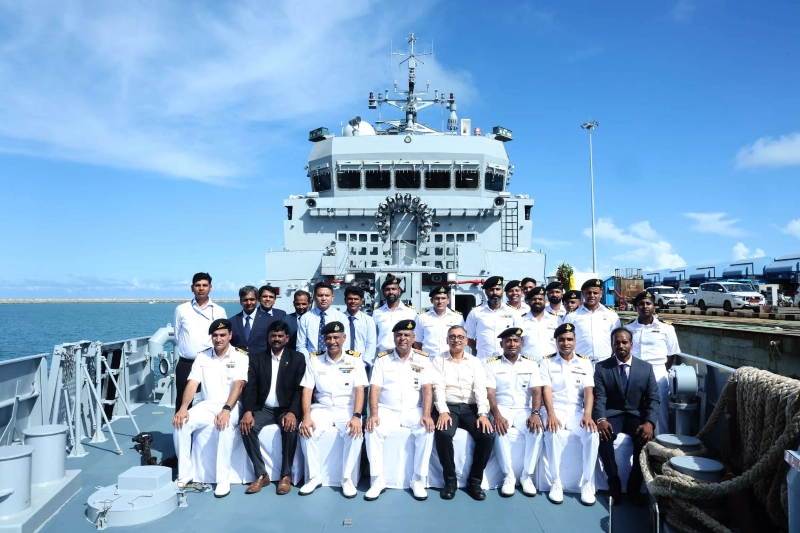
New Delhi, November 6, 2026: The Indian Navy has received Amini, an indigenously designed and constructed Anti-Submarine Warfare Shallow Water Craft (ASW SWC), from Garden Reach Shipbuilders and Engineers (GRSE), Kolkata. Delivered on November 5, 2026, the advanced naval vessel represents another significant milestone in India’s indigenous warship construction programme, strengthening the Navy’s capabilities in anti-submarine operations, coastal surveillance and maritime security.
With more than 80 percent indigenous content, Amini reflects the growing technological and manufacturing capabilities of India’s domestic defence industry. The vessel incorporates advanced underwater detection systems, anti-submarine weapons and waterjet propulsion technology, bringing together several specialised capabilities required for operations in shallow coastal waters.
Advanced Anti-Submarine Warfare Capabilities
Amini belongs to the Indian Navy’s Anti-Submarine Warfare Shallow Water Craft programme, which focuses on developing specialised naval platforms capable of detecting, tracking and engaging underwater threats in coastal and relatively shallow maritime environments. These waters present particular operational challenges because underwater acoustics, seabed conditions and maritime traffic can complicate submarine detection and surveillance.
The vessel is equipped with modern sonar systems, lightweight torpedoes and indigenous rocket launchers designed to support anti-submarine warfare operations. The integration of underwater detection equipment with onboard weapons provides the Navy with a dedicated platform for identifying and responding to submarine threats in strategically important coastal areas.
Sonar systems play a central role in underwater surveillance by detecting acoustic signals and helping naval personnel identify potential submarine activity. When integrated with appropriate weapons and combat systems, these sensors support the coordinated detection, classification and engagement of underwater targets.
Lightweight torpedoes provide a specialised weapon capability against submarines, while indigenous rocket launchers add to the vessel’s anti-submarine armament. Together, these systems strengthen the Indian Navy’s ability to conduct operations in maritime environments where larger warships may face operational limitations.
Waterjet Propulsion for Shallow-Water Operations
A notable feature of Amini is its waterjet propulsion system, making it part of a class of Indian naval warships distinguished by the use of this propulsion technology. Unlike conventional propulsion arrangements that rely on exposed propellers, waterjet systems generate thrust by drawing in water and expelling it through specially designed outlets.
Waterjet propulsion can provide operational advantages for vessels operating in coastal and shallow-water environments, including manoeuvrability and the ability to operate with reduced exposure of propulsion components beneath the hull. These characteristics are particularly relevant to specialised naval craft required to navigate confined maritime areas and respond to evolving operational requirements.
The combination of waterjet propulsion, underwater surveillance equipment and dedicated anti-submarine weapons makes the ASW Shallow Water Craft programme an important component of India’s coastal defence capabilities. Such vessels are intended to complement larger naval platforms by undertaking specialised missions in waters where compact, manoeuvrable warships can be particularly effective.
In addition to anti-submarine warfare, Amini is designed to support coastal surveillance and mine-laying operations. These capabilities expand its potential operational responsibilities and contribute to the Navy’s ability to monitor and secure India’s maritime approaches.
GRSE Strengthens India’s Indigenous Warship Construction
The delivery of Amini represents another achievement for Garden Reach Shipbuilders and Engineers, one of India’s leading defence public sector shipyards. Based in Kolkata, GRSE has played an important role in the development and construction of indigenous naval platforms, contributing to the expansion of India’s domestic shipbuilding expertise and defence industrial capabilities.
The ASW Shallow Water Craft vessels constructed under the GRSE programme have been designed and built in accordance with the classification rules of the Indian Register of Shipping. Compliance with these requirements forms part of the framework governing vessel design, construction and technical standards, supporting the development of reliable naval platforms.
The programme demonstrates the ability of Indian shipyards to integrate propulsion systems, specialised naval weapons, underwater sensors and associated equipment into operationally focused warship designs. Such integration requires coordination among shipbuilders, equipment manufacturers, engineering organisations and suppliers across the domestic defence industrial ecosystem.
The delivery also contributes to the development of specialised industrial skills in warship construction, systems engineering, marine propulsion and defence equipment integration. These capabilities support India’s wider naval modernisation efforts while strengthening the country’s ability to undertake increasingly sophisticated shipbuilding projects domestically.
More Than 80 Percent Indigenous Content
One of the most important aspects of Amini is its reported indigenous content exceeding 80 percent, reflecting India’s progress towards greater self-reliance in defence manufacturing. The vessel’s domestic content highlights the participation of Indian industry in supplying the equipment, materials and systems required for modern naval construction.
Indigenous shipbuilding offers several strategic advantages, including greater control over production schedules, maintenance arrangements, technological upgrades and long-term fleet support. Developing these capabilities within India also helps expand the domestic supply chain and creates opportunities for specialised manufacturers supporting naval construction programmes.
The integration of indigenous rocket launchers and other onboard systems illustrates the growing importance of domestic technology development in modern warship programmes. As naval platforms become increasingly dependent on sophisticated sensors, weapons, propulsion arrangements and electronic systems, developing the ability to manufacture and integrate these technologies domestically strengthens the foundations of national defence preparedness.
The delivery aligns with the Government of India’s Aatmanirbhar Bharat initiative, which places emphasis on indigenous design, development and manufacturing in strategically important sectors. For the Indian Navy, increasing domestic participation in shipbuilding supports efforts to reduce dependence on imported equipment while maintaining a sustainable and technologically capable naval fleet.
Continuing the Legacy of INS Amini
The vessel derives its name from Amini Island in the Union Territory of Lakshadweep, continuing the Indian Navy’s tradition of naming warships after islands and locations associated with India’s maritime geography. Located in the Arabian Sea, Lakshadweep occupies an important position in India’s western maritime approaches and forms part of the country’s extensive island territories.
The new Amini also carries forward the legacy of the former INS Amini, a Petya III-class anti-submarine warfare corvette that served in the Indian Navy before being decommissioned in 2002. By reviving this distinguished name, the Navy maintains a connection between its earlier anti-submarine warfare platforms and the contemporary generation of indigenously developed vessels.
The naming reflects the continuity of India’s naval traditions while highlighting the transformation of its defence manufacturing capabilities. Whereas earlier generations of naval vessels included substantial dependence on foreign designs and equipment, the modern Amini represents an indigenous approach to developing specialised maritime security platforms.
Strengthening Coastal Defence and Maritime Security
The induction of dedicated shallow-water anti-submarine platforms forms an important component of the Indian Navy’s efforts to strengthen maritime security around India’s extensive coastline and strategically significant island territories. Coastal waters require continuous surveillance and specialised operational capabilities to detect potential underwater threats and protect maritime infrastructure.
Anti-submarine warfare vessels such as Amini are intended to support this mission by providing dedicated platforms for operations in relatively shallow waters. Their specialised equipment and manoeuvrability complement the capabilities of larger surface combatants, contributing to a more comprehensive approach to maritime defence.
The vessel’s coastal surveillance and mine-laying capabilities further enhance its relevance to maritime security operations. By combining multiple mission capabilities within a domestically constructed platform, the ASW Shallow Water Craft programme supports the development of a more versatile and operationally responsive naval force.
The delivery of Amini is an important step in this process, expanding the Navy’s inventory of modern indigenous platforms while strengthening the domestic industrial capabilities required for future fleet development. The vessel will proceed through the necessary processes before operational commissioning and deployment.
Advancing India’s Naval Self-Reliance
The delivery of Amini demonstrates India’s progress in developing specialised warships through domestic shipbuilding and defence technology capabilities. Its advanced anti-submarine systems, waterjet propulsion and high indigenous content reflect the increasing sophistication of naval platforms being produced by Indian shipyards.
For Garden Reach Shipbuilders and Engineers, the achievement reinforces its contribution to India’s naval modernisation programme and highlights the growing capabilities of the country’s defence manufacturing ecosystem. The programme also supports the development of technical expertise and industrial infrastructure required for subsequent generations of indigenous naval vessels.
By combining modern underwater warfare capabilities with a predominantly domestic manufacturing base, Amini represents another step towards strengthening the Indian Navy’s operational preparedness and India’s long-term technological independence in maritime defence. Its delivery contributes to the broader objective of building a capable, self-reliant and technologically advanced naval force equipped to safeguard India’s maritime interests.
You may also like
-
India Hosts First BIMSTEC Maritime Security Exercise in Andaman and Nicobar Islands, Strengthening Bay of Bengal Cooperation
-
Indian Air Force Partners with IIT Madras to Develop Indigenous Secure Communication System for Aircraft
-
Indian Space Startup PierSight Advances Antenna Testing for Varuna 2.0 Maritime Surveillance Satellite
-
Chennai Deep-Tech Startup Torus Motion Develops Indigenous Axial-Flux Motors for Electric Vehicles and Industrial Automation
-
Rekise Marine Advances Indigenous MPAUV and Jalkapi Autonomous Submarine Programmes with Sea Trials in Goa
