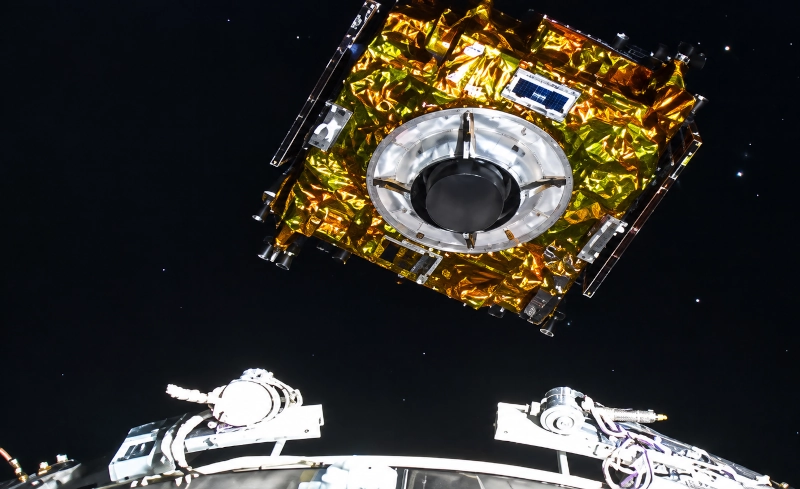
The Indian Space Research Organisation (ISRO) successfully launched its GSLV-F18 rocket carrying the NVS-03 navigation satellite from the Satish Dhawan Space Centre at Sriharikota in Andhra Pradesh on 30 October 2026. The launch vehicle lifted off from the Second Launch Pad at 11:51 PM IST, with the satellite subsequently reported to have been placed in its designated Geosynchronous Transfer Orbit (GTO), marking an important milestone in India’s next-generation satellite navigation programme.
The mission represents the 20th flight of India’s Geosynchronous Satellite Launch Vehicle and carries the third satellite in ISRO’s second-generation navigation satellite series. NVS-03 has been developed to strengthen the Navigation with Indian Constellation (NavIC) system, which provides indigenous positioning, navigation and timing services across India and the surrounding region. The successful launch phase is an important step towards augmenting the existing constellation and maintaining the continuity of India’s regional navigation services.
GSLV-F18 Completes Launch Phase from Sriharikota
The GSLV-F18 mission was undertaken using India’s three-stage Geosynchronous Satellite Launch Vehicle, which incorporates solid, liquid and cryogenic propulsion technologies. The approximately 50-metre-tall rocket, with a lift-off mass of around 420 tonnes, carried the 2,232-kilogram NVS-03 navigation satellite towards its planned transfer orbit.
Following liftoff, the launch vehicle executed its programmed flight sequence, involving the operation and separation of its propulsion stages. The indigenous cryogenic upper stage was responsible for providing the final propulsion required to inject the spacecraft into its planned Geosynchronous Transfer Orbit.
According to ISRO’s mission documentation, the targeted transfer orbit has a perigee of approximately 170 kilometres, an apogee of 37,023 kilometres and an inclination of 20.75 degrees. The transfer orbit provides the initial orbital path from which the spacecraft can undertake subsequent manoeuvres using its onboard propulsion system.
The launch marked another flight of India’s indigenous cryogenic launch vehicle technology, which forms an important part of ISRO’s capabilities for deploying communication, navigation and other satellites into high-energy orbits.
NVS-03 to Strengthen India’s NavIC Navigation System
NVS-03 is the third satellite in the second-generation navigation satellite series developed by ISRO to augment and maintain India’s regional navigation constellation. The programme is intended to provide continuity of services under the Indian Regional Navigation Satellite System, now known as Navigation with Indian Constellation.
NavIC was developed to provide India with an independent regional satellite navigation capability. The system is designed to deliver positioning, navigation and timing information across the Indian landmass and an area extending approximately 1,500 kilometres beyond India’s geopolitical boundaries.
The system provides a Standard Positioning Service for civilian applications and a Restricted Service intended for authorised users. Its applications include transportation, maritime navigation, location-based services, disaster management and activities requiring reliable positioning and accurate timing.
The addition of NVS-03 is particularly important because the operational NavIC constellation has experienced limitations following the ageing of earlier satellites and difficulties encountered during previous navigation satellite missions. The next-generation satellite programme has been developed to maintain service continuity while incorporating upgraded navigation technologies.
Satellite Carries Indigenous Atomic Clock
One of the significant technological features of NVS-03 is the incorporation of an indigenous atomic clock developed for India’s satellite navigation programme. The spacecraft also carries procured atomic clocks as part of its navigation payload.
Atomic clocks are essential for satellite navigation because accurate positioning depends on extremely precise timing measurements. Navigation satellites transmit signals containing timing information, enabling receivers to calculate their location by measuring the time taken for signals to travel from the satellites.
Even small timing errors can affect positioning accuracy, making reliable atomic clocks an important component of satellite navigation systems.
ISRO’s development of indigenous atomic-clock technology represents part of its efforts to strengthen domestic capabilities in precision timing and navigation payload engineering. The technology was first incorporated into the second-generation navigation satellite series with NVS-01, launched in May 2023.
The inclusion of an indigenous atomic clock aboard NVS-03 continues the use of domestically developed timing technologies in India’s navigation satellite programme.
L1 Navigation Signal Expands Satellite Capabilities
NVS-03 incorporates an L1 navigation signal in addition to the L5 and S-band signals already used by the NavIC system. The inclusion of the additional navigation frequency is intended to improve compatibility with a wider range of civilian navigation receivers.
The L1 frequency is widely used in satellite navigation systems and is supported by many modern navigation chipsets. Its incorporation into the next-generation NavIC satellites forms part of ISRO’s efforts to make India’s regional navigation services accessible through a broader range of compatible devices.
The combination of L1, L5 and S-band navigation signals is intended to support the continuing development of NavIC services for civilian and authorised strategic applications.
ISRO has identified the introduction of additional navigation signals and indigenous atomic clocks as important technological improvements in the second-generation satellite series.
Mission Follows Lessons from NVS-02
The GSLV-F18/NVS-03 mission follows the launch of NVS-02 aboard GSLV-F15 on 29 January 2025. Although the earlier launch vehicle successfully placed NVS-02 into its planned transfer orbit, the spacecraft could not complete the subsequent orbit-raising manoeuvres required to reach its designated operational position.
An investigation into the NVS-02 mission identified a problem involving the electrical signal required to operate a pyrotechnic valve associated with the satellite’s propulsion system. The problem prevented the Liquid Apogee Motor from functioning as intended during the orbit-raising phase.
Following the investigation, corrective measures were developed to address the identified issue. Reports concerning the preparations for NVS-03 indicated that ISRO incorporated modifications to the spacecraft’s propulsion-system configuration and related operational procedures.
The NVS-03 mission was therefore undertaken with particular attention to the systems responsible for conducting the orbital manoeuvres required after separation from the launch vehicle.
Further Orbit-Raising Operations Before Commissioning
Although the launch vehicle has completed its primary mission of carrying NVS-03 into space and reportedly placing it in Geosynchronous Transfer Orbit, the spacecraft must complete additional operations before it can begin providing navigation services.
The satellite’s onboard propulsion system will undertake orbit-raising manoeuvres to move the spacecraft from its initial elliptical transfer orbit towards its designated operational geosynchronous orbit.
These operations require the spacecraft to perform controlled propulsion manoeuvres and reach the orbital position assigned for its navigation mission. Once the required orbit is achieved, ISRO will undertake spacecraft health checks, payload testing and commissioning activities.
The successful completion of these subsequent stages will determine when NVS-03 can begin contributing to the NavIC constellation.
The distinction between successful launch-vehicle performance and satellite commissioning is particularly important for navigation missions, where the spacecraft must reach and maintain a precise orbital position to provide reliable services.
India’s Indigenous Navigation Programme
NavIC forms an important component of India’s space-based infrastructure and was developed to provide independent regional positioning, navigation and timing capabilities.
The original NavIC constellation was designed around seven satellites supported by a network of ground stations responsible for monitoring spacecraft, maintaining timing accuracy and providing navigation information.
The next-generation satellite programme seeks to replace or augment ageing spacecraft while introducing improvements in navigation payloads, timing systems and signal capabilities.
NVS-01, the first satellite in the new series, was successfully launched aboard GSLV-F12 on 29 May 2023. NVS-02 followed in January 2025, although it could not reach its designated operational orbit.
NVS-03 is the third satellite in the series, with further spacecraft planned to support the continuity and development of the regional navigation system.
ISRO has identified the NVS programme as an important element of its efforts to maintain India’s indigenous satellite navigation capabilities and support a growing range of applications requiring accurate positioning and timing information.
ISRO Advances India’s Indigenous Space Capabilities
The GSLV-F18/NVS-03 launch brings together several important technologies developed and operated through India’s space programme, including the Geosynchronous Satellite Launch Vehicle, indigenous cryogenic propulsion, advanced navigation payloads and domestically developed atomic-clock technology.
The mission is part of ISRO’s continuing programme to strengthen NavIC through second-generation navigation satellites incorporating improved capabilities and additional navigation signals.
The successful completion of the launch phase marks an important milestone, while the remaining orbital manoeuvres and commissioning activities will determine the spacecraft’s readiness to provide navigation services.
Through the NVS series, ISRO continues its stated objective of strengthening India’s independent positioning, navigation and timing infrastructure, supported by indigenous space technologies and the continuing development of the NavIC constellation.
You may also like
-
India Establishes ₹325 Crore Bharat Bovine Breeding and Research Centre in Gujarat to Advance Indigenous Cattle Genetics
-
ISRO Set to Launch NVS-03 Navigation Satellite with Indigenous Atomic Clock to Strengthen India’s NavIC System
-
IIT Guwahati Scientists Reveal How Plants Adapt Their Water Transport Systems During Drought
-
Indian Scientists Discover New Electric Ray Species in Arabian Sea, Revealing Hidden Deep-Ocean Biodiversity
-
ISRO Plans Four Operational Launch Pads by 2029 to Expand India’s Space Capabilities
