India’s clean-energy transformation is now moving beyond power generation and entering the heart of rural development. The country’s growing use of solar energy in agriculture is being seen as a practical model that can help developing regions, especially Africa, improve food security, raise farmer incomes and build climate-resilient farming systems.
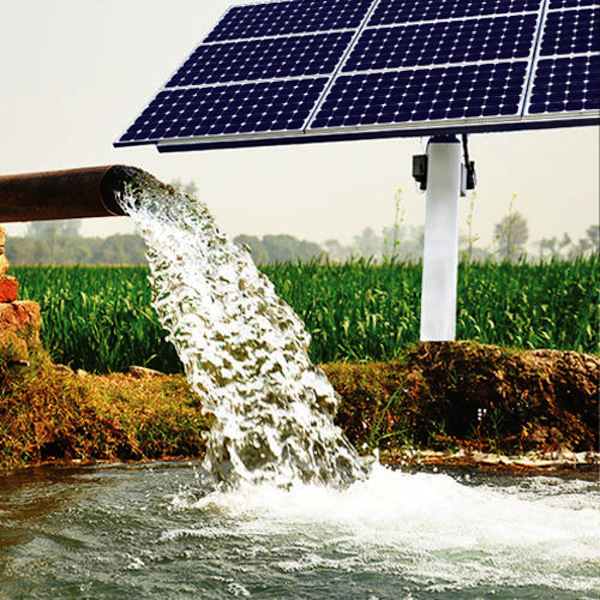
Solar-powered agriculture has become one of the most important links between India’s renewable energy mission and its rural economy. By using solar pumps, decentralised energy systems and clean-power solutions for irrigation, India has shown how farmers can reduce dependence on expensive diesel, unreliable electricity supply and high input costs. This approach gives farmers better control over irrigation, improves productivity and supports more stable agricultural incomes.
The model is especially relevant for Africa, where large farming communities continue to face challenges related to irrigation access, energy availability and climate stress. Many parts of the continent have strong solar potential but limited rural power infrastructure. In such regions, solar-powered irrigation can become a direct solution for farmers who need reliable water access without waiting for large grid expansion.
India’s experience shows that clean energy can serve as a development tool, not just an environmental goal. When solar pumps reach farms, they support timely irrigation, reduce operating expenses and help farmers cultivate more confidently. This can improve crop yields, encourage diversification and strengthen local food systems. For small and marginal farmers, the impact can be even greater because lower energy costs directly improve farm economics.
Programmes such as PM-KUSUM have played an important role in building this model in India. The scheme supports solar pumps, decentralised solar power plants and the use of renewable energy in the farm sector. Its larger value lies in showing how agriculture and renewable energy can be integrated at scale. Instead of treating farming and clean energy as separate sectors, India is creating a combined rural development pathway.
The International Solar Alliance has given this model a wider global platform. With many African nations being part of the solar-rich world, the alliance can help share technical knowledge, financing models and implementation experience. India’s solar agriculture journey can therefore support South-South cooperation, where developing countries exchange practical solutions suited to their own climate, economy and rural realities.
For Africa, the benefits of solar-powered agriculture can be wide-ranging. Reliable irrigation can help reduce crop failure. Lower fuel dependence can improve farmer margins. Clean energy can support food processing, cold storage and rural enterprises. Solar systems can also help women farmers and rural communities by reducing labour burdens and improving local economic activity.
The food security dimension is especially important. Africa has vast agricultural potential, but productivity often remains limited by water access and energy gaps. Solar irrigation can help unlock this potential by making farming more predictable and less dependent on erratic rainfall. In regions facing droughts and climate variability, this can become a major tool for resilience.
India’s example also shows that technology must be connected with policy, finance and local implementation. Solar pumps alone are not enough. Farmers need affordable access, maintenance support, training, water-use planning and market linkages. When these elements come together, clean energy can create a complete agricultural transformation.
The larger message is clear: the future of farming will depend on how effectively countries combine water, energy and food systems. India’s solar-powered agriculture model offers a practical route for that transition. It brings together renewable energy, rural livelihoods, climate action and food security in one framework.
As Africa works to strengthen its agricultural systems, India’s experience offers a tested and scalable direction. With abundant sunlight, strong farming communities and rising demand for food security, solar-powered agriculture can become a powerful development bridge between India and Africa. It can support farmers, strengthen rural economies and create a cleaner, more resilient foundation for global food security.
You may also like
-
Vietnam Expands Business and Investment Links Across India’s Major Economic Hubs
-
India’s GST Collections Rise 14.7% to ₹2.04 Lakh Crore in September
-
SberIndia Lending to Indian Companies Quadruples as India-Russia Trade Finance Expands
-
India Manufacturing PMI Rises to Seven-Month High of 55.1 in September
-
Nothing and Optiemus Announce $100 Million Joint Venture to Expand Smartphone Manufacturing in India
