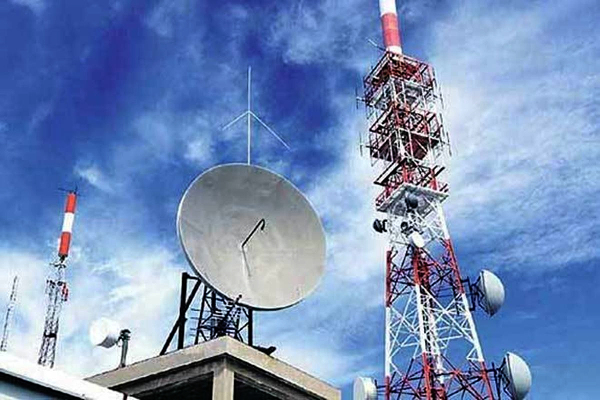
India is examining whether older telecommunications equipment supplied by Chinese companies such as Huawei and ZTE should be progressively removed from domestic mobile networks, as the government reviews the security and financial implications of replacing legacy infrastructure installed before the present trusted-source regime came into force.
The exercise is focused primarily on equipment that continues to operate in telecom networks despite having been deployed before India tightened its rules governing the procurement of network hardware. Government agencies are seeking to establish how much such equipment remains in use, which telecom operators continue to depend on it and what the cost of replacing it with approved alternatives could be.
According to officials familiar with the exercise, the Department of Telecommunications is gathering information from telecom service providers on behalf of the Ministry of Home Affairs. The assessment is intended to provide the government with a clearer picture of the scale of Chinese-origin legacy equipment still embedded in India’s cellular infrastructure.
Huawei and ZTE were once significant suppliers of telecom equipment to several Indian operators, particularly during earlier generations of mobile-network expansion. Their equipment was deployed across different parts of telecom networks, including radio-access infrastructure and other network systems. Much of this hardware predates the restrictions India subsequently introduced for procurement from vendors considered sensitive from a national-security perspective.
Focus on Equipment Installed Before Trusted-Source Rules
India introduced the National Security Directive on the Telecommunication Sector in 2021, creating a framework under which telecom operators are required to procure specified network equipment from vendors designated as trusted sources.
The framework significantly changed the way critical telecom hardware could be purchased and deployed in the country. However, the rules were primarily prospective, meaning equipment that had already been installed before the trusted-source system came into operation was not automatically required to be removed.
As a result, portions of India’s mobile-network infrastructure may still contain older equipment supplied by companies that are no longer generally considered preferred vendors for new deployments.
The current review is therefore aimed at identifying precisely how extensive that legacy footprint remains.
Government Studying Cost of Possible Replacement
Any large-scale removal programme could have significant financial consequences for telecom companies. Mobile networks consist of thousands of interconnected sites and systems, and replacing functioning equipment before the end of its normal operational life can impose substantial capital expenditure.
The government is consequently examining not only the national-security considerations surrounding older Chinese-origin equipment but also the economic consequences of replacing it.
Telecom operators may have to undertake extensive network planning if the government eventually mandates a phased replacement. Existing equipment would need to be substituted without disrupting services, while replacement systems would also have to remain compatible with other elements of the network.
The financial burden could vary considerably between operators depending on the amount of Huawei or ZTE equipment still present in their networks.
Similar to ‘Rip and Replace’ Programmes Overseas
The exercise resembles what has internationally become known as a “rip and replace” approach, under which telecom operators are required to remove equipment considered a security risk and substitute it with hardware supplied by approved vendors.
Several Western countries have adopted restrictions on Chinese telecom suppliers over concerns relating to critical communications infrastructure. The United States, in particular, introduced programmes designed to remove certain Chinese-made telecommunications equipment from networks serving sensitive or rural areas.
India has so far relied largely on restricting future procurement rather than ordering the immediate removal of all previously installed Chinese equipment.
The latest assessment suggests the government is now considering whether legacy infrastructure should also be brought within a stronger security framework.
Telecom Security Has Become Strategic Priority
Telecommunications infrastructure has increasingly been treated as a strategic national asset because modern mobile networks support financial transactions, government communications, defence-related connectivity, emergency services and an expanding range of digital platforms.
The security implications have become even more significant with the expansion of 5G networks, cloud-based telecommunications architecture, Internet of Things devices and machine-to-machine communications.
India has therefore gradually tightened controls on companies supplying critical network infrastructure while simultaneously encouraging greater domestic production of telecom equipment.
Government-backed initiatives such as the Production Linked Incentive programme for telecom and networking products, indigenous 4G and 5G development and the Trusted Telecom Portal are intended to reduce dependence on potentially sensitive foreign suppliers while strengthening India’s domestic manufacturing ecosystem.
Potential Opportunity for Indian Telecom Manufacturers
If India eventually decides to replace substantial quantities of legacy Chinese equipment, the programme could create a significant market for domestic telecom manufacturers as well as approved international suppliers.
Indian companies involved in radio equipment, routers, optical transmission systems, core-network infrastructure and other telecom products could potentially benefit from a gradual transition towards trusted domestic equipment.
The development of India’s indigenous 4G stack and efforts to build domestically designed 5G technologies have already strengthened the country’s ability to supply more components of its own communications infrastructure.
A replacement programme could therefore become part of a wider effort to improve both telecom security and technological self-reliance.
You may also like
-
India’s Economic Warfare Challenge: Strategic Autonomy, Energy Security and the Rise of a Global Power
-
India-US Trade Deal Stalemate: Why Washington’s Tariff Pressure Has Failed to Secure an Agreement
-
US Double Standards in Foreign Policy: 16 Recent Cases Involving India, Russia, China and Global Trade
-
India’s Arctic Energy Ambitions: Russian Oil, LNG and a New Sea Route to Indian Ports
-
India and Russia Explore Joint Icebreaker Construction as Maritime Industrial Cooperation Expands
