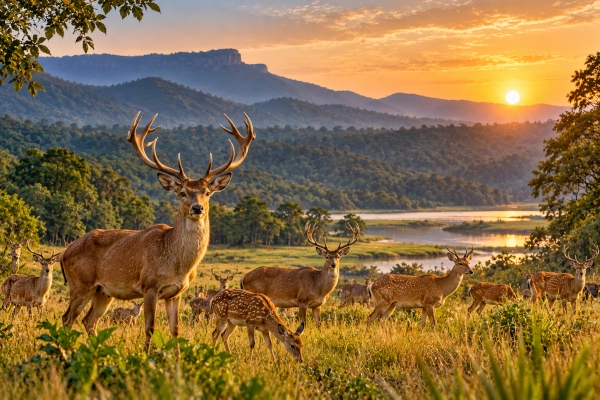
Madhya Pradesh has achieved an important wildlife conservation milestone as the population of endangered hard-ground barasingha in Satpura Tiger Reserve has reportedly crossed 300 animals, approximately a decade after the species was reintroduced into the landscape. The recovery marks significant progress in efforts to establish a sustainable population outside Kanha Tiger Reserve, which was once the species’ last remaining natural stronghold.
According to reports published on October 11, 2026, Satpura now supports approximately 303 hard-ground barasingha, distributed across three population units. The Madhya Pradesh Forest Department is preparing the next stage of conservation work, which will focus on connecting at least six grassland habitats to improve animal movement, breeding opportunities and long-term population stability.
The development highlights the importance of sustained habitat management and scientifically planned wildlife reintroductions. It also offers an encouraging example of how a species that disappeared from part of its historical range can gradually recover through coordinated conservation efforts.
Hard-Ground Barasingha Returns to Its Historical Habitat
The hard-ground barasingha (Rucervus duvaucelii branderi) is a distinctive subspecies of swamp deer adapted to the grasslands and woodland clearings of central India. Unlike its relatives inhabiting marshes and wetlands, this subspecies can thrive in relatively dry grassland habitats with suitable vegetation, water sources and protection from disturbance.
The species once occupied parts of the Satpura landscape but disappeared from the region during the early twentieth century. According to Satpura Tiger Reserve’s official conservation records, habitat loss and poaching contributed to its local extinction, leaving Kanha as the only remaining refuge for the subspecies in the wild.
This concentration in a single landscape created a significant conservation concern. Disease outbreaks, habitat deterioration or other environmental disturbances affecting Kanha could have threatened a substantial proportion of the remaining population.
Wildlife authorities consequently identified Satpura as a suitable location for establishing another population. The reserve’s historical association with the species, extensive protected forests and existing grassland habitats provided a foundation for reintroduction.
Reintroduction from Kanha Establishes a Second Conservation Stronghold
The Madhya Pradesh Forest Department began transferring hard-ground barasingha from Kanha to Satpura as part of a programme designed to restore the species to its former habitat. The initiative involved carefully managed translocations, habitat preparation and monitoring to help the animals adjust to their new surroundings.
According to the Wildlife Institute of India’s management evaluation records, 78 barasingha were translocated from Kanha to Satpura during the conservation programme. Forest authorities developed dedicated management areas at Bori, Dhain and Ratibandar to support the animals and facilitate population recovery.
The reintroduction programme required more than transporting deer between protected areas. Forest managers needed to establish suitable grazing conditions, maintain water availability, reduce disturbance and monitor the animals’ health and breeding success.
The reported increase to approximately 303 animals indicates substantial population growth since the initial translocations. It also demonstrates the importance of maintaining suitable habitats after reintroduction, allowing populations to reproduce and gradually establish themselves across the reserve.
Three Population Units Strengthen Barasingha Conservation
The establishment of three population units represents an important development in Satpura’s conservation programme. Distributing animals across different habitats can reduce the risks associated with concentrating an entire population in one location, particularly when disease, habitat disturbances or local environmental changes occur.
However, the long-term conservation value of multiple population units depends partly on whether animals can move between them. Isolated groups may eventually experience reduced opportunities for genetic exchange, especially when natural breeding movements become restricted by unsuitable terrain or fragmented grasslands.
Forest authorities are therefore focusing on improving the ecological connections between barasingha habitats. The planned corridors would help animals disperse naturally rather than remain confined to separated habitat patches.
This approach reflects a broader principle of wildlife management: successful population recovery requires sufficient living space and movement opportunities, not merely an increase in animal numbers.
New Wildlife Corridors to Connect Six Grassland Habitats
With the barasingha population reportedly exceeding 300, the Satpura Tiger Reserve administration is planning ecological corridors connecting at least six grassland habitats. The proposal aims to create suitable routes through which deer can move between feeding areas, breeding grounds and seasonal habitats without encountering major barriers.
Grassland connectivity is particularly important for a growing herbivore population. Barasingha depend on nutritious grasses, accessible water sources and relatively undisturbed areas for breeding and raising young. As their numbers increase, the animals require sufficient space to disperse and avoid excessive grazing pressure on individual habitat patches.
The proposed corridors could also strengthen genetic exchange between population units by allowing animals from different groups to breed naturally. Such movement can help maintain genetic diversity and reduce the risks associated with small, isolated populations. However, these benefits will depend on the effectiveness of the corridors and whether deer successfully use them.
According to reports published on October 11, Satpura Tiger Reserve Field Director Rakhi Nanda identified habitat connectivity as the next major conservation priority. The corridor proposal remains a planned intervention, rather than a completed network of wildlife passages.
Grassland Restoration Plays a Central Role in Species Recovery
Satpura’s conservation programme has benefited from efforts to improve and maintain grassland habitats. The reserve contains a mixture of natural grasslands, woodland clearings and open areas created through earlier settlement relocation and habitat restoration initiatives.
Grasslands require active management because invasive vegetation and expanding woody plants can gradually replace the open habitats preferred by grazing animals. Forest authorities consequently undertake measures to maintain suitable vegetation, manage invasive plants and protect important feeding areas from excessive disturbance.
Water availability also influences habitat suitability. Satpura forms part of the catchment of the Tawa and Denwa river systems, providing an important network of water sources across the landscape. Maintaining access to these resources supports wildlife during seasonal changes and periods of reduced rainfall.
The Wildlife Institute of India’s management evaluation records identify grassland maintenance as a significant conservation requirement within Satpura. The reserve’s long-term management objectives also recognise the need to expand and sustain the hard-ground barasingha population through scientific approaches.
Barasingha Recovery Strengthens Satpura’s Wildlife Ecosystem
Although Satpura is internationally recognised as a tiger reserve, its conservation responsibilities extend to the wider ecosystem. The protected landscape supports leopards, wild dogs, sloth bears, sambar, chital, gaur and numerous other wildlife species.
Restoring barasingha contributes to the diversity of large herbivores inhabiting its forests and grasslands. These animals influence vegetation through grazing and form part of the broader ecological relationships between plants, herbivores and carnivores.
The recovery programme also demonstrates how conservation efforts directed towards one endangered species can contribute to habitat improvements benefiting several others. Grassland management, water conservation and protection from poaching can strengthen the ecological conditions required by a wider range of wildlife.
Satpura’s experience is particularly valuable because successful reintroduction programmes require years of monitoring and habitat management. The reported population increase provides evidence of progress, while the proposed corridors represent an effort to support the animals as their numbers grow.
Madhya Pradesh’s Barasingha Conservation Programme Offers a Model for Species Restoration
The revival of hard-ground barasingha in Satpura demonstrates the value of coordinated conservation planning across protected areas. Kanha’s long-standing recovery programme made it possible to establish another population, reducing the species’ dependence on a single geographical location.
The initiative also highlights the contribution of forest personnel, wildlife researchers and local communities. Habitat restoration, sustained protection and the management of relocated settlements have helped create conditions in which barasingha can reproduce and expand their range.
The population figure of approximately 303 animals, reported on October 11, 2026, represents an encouraging conservation milestone. The latest number and six-grassland corridor proposal have been reported in the press, while Satpura’s official records independently confirm the reintroduction programme and its earlier population recovery.
The next phase of conservation will focus on maintaining healthy grasslands, improving habitat connectivity and supporting natural movement between barasingha populations. Satpura’s achievements demonstrate how sustained scientific management can restore endangered wildlife to landscapes where it had disappeared, strengthening India’s efforts to protect its natural heritage for future generations.
References
- Satpura Tiger Reserve, Madhya Pradesh Forest Department. Barasingha Reintroduction. Official account of the species’ historical disappearance, reintroduction from Kanha and population recovery.
https://www.satpuratigerreserve.org/barasingha-reintroduction - Wildlife Institute of India — Management Effectiveness Evaluation. Satpura Tiger Reserve. Official assessment of habitat management, grassland conservation and barasingha recovery.
https://mee-tr.wii.gov.in/Home/Geospatial/satpura-tiger-reserve - Satpura Tiger Reserve. Management Objectives. Official conservation objectives, including sustainable recovery of hard-ground barasingha.
https://www.satpuratigerreserve.org/management-objectives - The Times of India — October 11, 2026. Decade After Reintroduction, Satpura Reserve’s Barasingha Population Tops 300, Corridors Planned.
https://timesofindia.indiatimes.com/city/bhopal/decade-after-reintroduction-satpura-reserves-barasingha-population-tops-300-corridors-planned/articleshow/134847759.cms - Dainik Jagran — October 11, 2026. Satpura Tiger Reserve’s Barasingha Population Crosses 300 After a Decade of Conservation Efforts.
https://english.dainikjagranmpcg.com/states/madhya-pradesh/satpura-tiger-reserve%E2%80%99s-barasingha-population-crosses-300-after-a-decade/article-37635
You may also like
-
Karnataka’s Tiger Population Could Cross 700 as New Census Builds on Official Count of 563
-
Project Cheetah Expands as Veerangana Durgavati Tiger Reserve Becomes Madhya Pradesh’s Third Cheetah Habitat
-
Kashmir Markhor Population Rises to 227 as Kazinag Conservation Efforts Show Results
-
ICAR-CIFRI Pushes Conservation of Indigenous Himalayan Fish for Biodiversity and Livelihood Security
-
Indian-Born Cheetah KJP21 Gives Birth to Five Cubs at Kuno, India’s Cheetah Population Reaches 60
