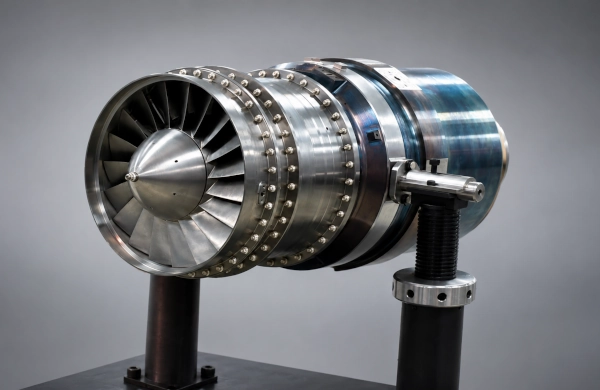
India has successfully developed its first indigenous expendable turbojet engine in the 350 kg-thrust class, marking a major achievement in the country’s aerospace and defence manufacturing sector. The engine was designed by the Gas Turbine Research Establishment, a laboratory of the Defence Research and Development Organisation, and manufactured and assembled by Hyderabad-based Azad Engineering.
The completed engine was delivered to GTRE on July 22, 2026, following years of research, precision engineering and cooperation between DRDO and Indian industry. Jet engines require advanced metallurgy, closely controlled manufacturing processes, high-precision machining and reliable performance under extreme temperatures and rotational speeds. Mastery of such technology is limited to a small group of nations.
An expendable turbojet is generally designed to power platforms intended for limited-duration or one-way missions. Such engines can potentially support unmanned aerial systems, aerial targets, decoys and stand-off platforms. The government has not disclosed the specific platform for which the new engine has been developed.
The achievement demonstrates India’s growing ability to convert indigenous engine designs into complete propulsion systems through domestic private-sector manufacturing. It also strengthens the national supply chain for critical aerospace components and reduces dependence on imported propulsion technologies.
The engine was handed over by Azad Engineering CEO Rakesh Chopdar to Director General of Aeronautical Systems Dr K. Rajalakshmi Menon and GTRE Director Dr S.V. Ramanamurty. Defence Secretary and DRDO Chairman Rajesh Kumar Singh praised the GTRE–industry partnership for transforming an indigenous design into a successfully realised engine.
The development represents an important step towards self-reliance in propulsion systems for India’s future unmanned, aerospace and defence platforms.
Source: PIB
You may also like
-
India Earmarks ₹1.39 Lakh Crore for Domestic Defence Procurement in 2026–27
-
India’s Defence Shipyards Build Common Indigenous Supply Chain for Specialised Naval Cables
-
Maruti Suzuki Commissions 300 kW Green Hydrogen Plant at Manesar to Cut Manufacturing Emissions
-
Nagpur Produces 28 Tonnes of CNG Daily from Waste as India Expands Waste-to-Fuel Projects
-
India Could Reach ₹50,000 Crore Defence Export Target by 2028 as Missile and Artillery Demand Rises
