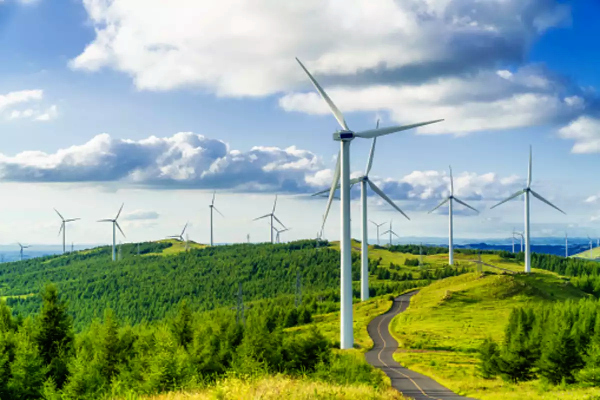
India’s installed non-fossil-fuel electricity generation capacity has reached 308.027 gigawatts (GW), marking substantial progress in the country’s transition towards cleaner energy sources and greater energy security. Vice President C. P. Radhakrishnan highlighted India’s achievements in renewable energy development while addressing the valedictory session of the Bharat Renewable Energy Summit and Expo 2026 in New Delhi on November 5, emphasising the importance of combining technological innovation, industrial development and environmental responsibility.
The Vice President noted that India’s non-fossil-fuel power capacity had crossed 300 GW, reflecting the country’s expanding investments in solar, wind, hydropower, nuclear energy and other clean electricity technologies. According to the Ministry of New and Renewable Energy, India first crossed the milestone on July 31, 2026, when installed non-fossil capacity reached 300.50 GW. By the end of September, this had increased to 308.027 GW, accounting for approximately 55 per cent of the country’s total installed electricity generation capacity.
India Advances Towards 500 GW Non-Fossil Power Capacity Target
India’s expansion of non-fossil electricity infrastructure represents an important component of its national energy strategy, which seeks to strengthen energy security, reduce dependence on imported fuels and support economic growth through sustainable power generation.
The country has established a target of achieving 500 GW of installed non-fossil-fuel electricity capacity by 2030. With capacity reaching 308.027 GW by September 2026, India has already installed more than 61 per cent of the capacity envisaged under this objective.
The Ministry of New and Renewable Energy reported that India’s installed non-fossil capacity had reached 300.50 GW by July 31, comprising 164.59 GW of solar power, 58.14 GW of wind power, 57.24 GW of large and small hydropower, 11.75 GW of bio-power and 8.78 GW of nuclear power.
Solar energy has emerged as the largest contributor to this expansion, supported by utility-scale solar parks, rooftop installations, distributed renewable energy systems and investments in domestic manufacturing. Wind energy, hydropower and nuclear power provide additional diversification within the country’s non-fossil electricity portfolio.
India also achieved its commitment to deriving 50 per cent of cumulative installed electricity generation capacity from non-fossil sources in June 2025, five years ahead of the original 2030 target under its Nationally Determined Contributions.
Vice President Highlights India’s Traditional Commitment to Sustainability
Addressing the summit, Vice President Radhakrishnan observed that respect for nature and the responsible utilisation of natural resources have long been integral to India’s civilisational traditions. He emphasised that these principles are increasingly being reinforced through modern scientific research, technological innovation and industrial development.
The Vice President highlighted India’s ability to pursue economic expansion while increasing the contribution of cleaner energy sources to its electricity infrastructure. He described environmental commitments as an important component of national development and noted that renewable energy is contributing to affordable electricity, industrial competitiveness, employment generation and reduced dependence on imported fuels.
His remarks reflected the growing relationship between renewable energy development and India’s broader economic objectives. The expansion of domestic electricity generation capacity provides opportunities for strengthening energy-intensive industries, improving power availability and supporting the development of advanced manufacturing ecosystems.
The Vice President also emphasised the importance of strengthening collaboration among industry, universities, research institutions, technical organisations and startups. Such partnerships are increasingly relevant as India develops new technologies for electricity generation, storage and efficient energy utilisation.
Floating Solar, Geothermal Energy and Storage Technologies Receive Attention
Emerging renewable energy technologies featured prominently in the Vice President’s address, including floating solar installations, geothermal energy and advanced electricity storage systems. These technologies offer opportunities to diversify India’s clean energy infrastructure while improving the flexibility and reliability of its electricity network.
Floating solar power systems involve installing photovoltaic modules on floating platforms over reservoirs and other suitable water bodies. This approach can enable solar electricity generation without requiring extensive additional land resources, making it particularly relevant to areas where land availability presents challenges for large-scale installations.
Geothermal energy represents another potential source of low-carbon electricity. By utilising heat from beneath the Earth’s surface, geothermal technologies can provide electricity and thermal energy for suitable applications, complementing more established renewable sources.
Energy storage is becoming increasingly important as solar and wind capacity expands. Battery energy storage systems and pumped-storage hydropower facilities can store electricity during periods of surplus generation and release it when demand increases or renewable output declines.
According to a government backgrounder released on November 2, 2026, pumped-storage hydropower is receiving renewed attention as part of India’s efforts to integrate larger quantities of renewable electricity into the national grid. These systems can support grid stability, improve flexibility and strengthen the reliability of power supply.
Renewable Energy Attracts More Than ₹15 Lakh Crore in Investment
Union Minister for New and Renewable Energy Pralhad Joshi, speaking at the summit, highlighted the substantial investment attracted by India’s renewable energy industry over the past decade.
According to the Minister, the sector has received investments exceeding ₹15 lakh crore during the last ten years, reflecting growing participation by domestic and international investors in renewable electricity infrastructure.
He further stated that nearly ₹6 lakh crore had flowed into the sector during the two years following the renewable energy summit held in Gandhinagar in 2024.
These investments have supported the development of solar and wind power facilities, transmission infrastructure, equipment manufacturing and associated industrial capabilities. The expansion of renewable electricity generation has also encouraged investment in power electronics, advanced materials, energy storage and grid management technologies.
The Minister stated that renewable energy had helped India avoid more than US$100 billion in fossil fuel imports, equivalent to over ₹9.46 lakh crore. The figure highlights the importance of renewable energy within the government’s broader strategy to reduce exposure to international fuel markets and strengthen domestic energy security.
Bharat Renewable Energy Summit Brings Together Global Industry Leaders
The Bharat Renewable Energy Summit and Expo 2026, held at Bharat Mandapam in New Delhi from November 2 to 5, provided an international platform for discussions on clean energy investment, technological development and industrial cooperation.
According to the Ministry of New and Renewable Energy, the summit attracted more than 75,000 visitors from over 130 countries. The event also witnessed participation by more than 800 international delegates, reflecting substantial interest in India’s expanding renewable energy sector.
The summit brought together government representatives, technology developers, financial institutions, equipment manufacturers, research organisations and businesses operating across the clean energy value chain.
Ten memoranda of understanding and framework agreements were signed during the event, providing additional opportunities for cooperation in renewable energy development and related technologies.
The participation of domestic and international stakeholders highlighted the opportunities emerging from India’s expanding clean energy market, including solar manufacturing, wind energy technologies, storage systems, transmission infrastructure and specialised engineering services.
Renewable Energy Expansion Strengthens India’s Industrial Capabilities
India’s clean energy transition is increasingly connected with the development of indigenous manufacturing capabilities. The expansion of renewable electricity infrastructure has created opportunities for Indian companies involved in solar modules, photovoltaic cells, wind turbines, power electronics, electrical equipment and energy storage technologies.
Domestic manufacturing is particularly important as India seeks to establish resilient supply chains for the equipment required to meet its long-term electricity capacity objectives. Investments in advanced materials, component production, industrial research and specialised engineering can strengthen the country’s technological capabilities while supporting employment generation.
Renewable energy development also contributes to India’s broader infrastructure expansion by creating demand for transmission systems, grid modernisation, industrial automation and digital technologies used to manage complex electricity networks.
The growing participation of startups, research institutions and technology companies provides additional opportunities to develop indigenous solutions in energy storage, smart grids, forecasting systems and renewable power integration.
India’s installed non-fossil electricity capacity of 308.027 GW as of September 2026 demonstrates the scale of the country’s progress towards its 2030 objectives. The discussions at the Bharat Renewable Energy Summit and Expo underline the increasingly important role of renewable energy in strengthening industrial competitiveness, encouraging technological innovation and advancing India’s long-term energy security.
You may also like
-
Indian Space Startup PierSight Advances Antenna Testing for Varuna 2.0 Maritime Surveillance Satellite
-
India and Italy Explore Expanded Textile Manufacturing, Technology and Investment Partnerships
-
Chennai Deep-Tech Startup Torus Motion Develops Indigenous Axial-Flux Motors for Electric Vehicles and Industrial Automation
-
Hyderabad Startup Perceptyne Develops Semi-Humanoid Robotic Platform for Precision Industrial Automation
-
India’s Steel Consumption Nears 100 Million Tonnes as Domestic Demand Grows 7.5% in April–October 2026
