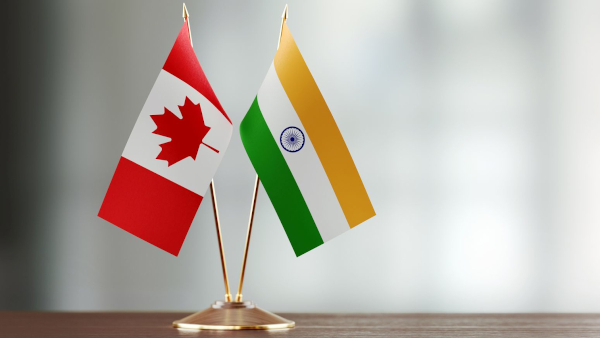
India and Canada have held their inaugural Defence Dialogue, establishing a dedicated bilateral mechanism to strengthen military cooperation, defence industrial partnerships, technological collaboration and strategic engagement. The virtual meeting, conducted on November 3, 2026, represents an important step in expanding defence relations between the two countries following commitments made by their political leadership earlier this year.
The dialogue was co-chaired by Dr. Amit Telang, Joint Secretary (International Cooperation) in India’s Ministry of Defence, and Scott Millar, Assistant Deputy Minister (Policy) in Canada’s Department of National Defence. According to the Indian Ministry of Defence, the discussions provided an opportunity to exchange perspectives on national defence policies, strategic priorities and emerging security challenges while identifying areas for practical bilateral cooperation.
Defence Industrial Cooperation Emerges as a Priority
Defence industrial collaboration featured prominently in the inaugural dialogue, reflecting the growing importance of technological partnerships and manufacturing cooperation in bilateral defence relations. Both countries identified opportunities for strengthening engagement between their respective defence industries, including cooperation involving military technologies, research capabilities and industrial development.
India’s expanding indigenous defence manufacturing ecosystem provides a foundation for exploring partnerships with international technology providers, research institutions and specialised defence manufacturers. The country’s defence industry has developed capabilities across military aviation, naval shipbuilding, missile systems, electronics, surveillance technologies, armoured platforms and advanced materials.
Canada possesses established capabilities in aerospace engineering, defence electronics, simulation technologies, specialised manufacturing and advanced research. Greater interaction between the two industrial ecosystems could create opportunities for technological exchanges, joint research initiatives and cooperation involving specialised military equipment and components.
The emphasis on defence industrial cooperation also aligns with India’s broader objective of strengthening domestic manufacturing under the Aatmanirbhar Bharat initiative. International partnerships involving technology development, industrial expertise and research collaboration can complement indigenous programmes while expanding opportunities for Indian defence enterprises to participate in international supply chains.
The two sides identified defence industrial cooperation as a priority for further engagement. The official announcement did not identify specific industrial contracts, joint manufacturing projects or technology-transfer agreements concluded during the meeting.
Military-Technical Exchanges and Defence Research Receive Attention
Military-technical cooperation and defence research and development were identified as additional priority areas during the discussions. These fields provide opportunities for cooperation between defence establishments, research organisations, technology developers and military institutions.
Military-technical engagement can involve the exchange of expertise concerning defence technologies, operational systems, specialised equipment and technical training. Such cooperation enables participating countries to better understand each other’s capabilities and identify areas where complementary technologies and expertise could support future collaboration.
Research and development cooperation is particularly relevant as modern defence systems increasingly depend on advanced electronics, artificial intelligence, autonomous technologies, secure communications, sophisticated sensors and specialised materials. India has invested in developing indigenous capabilities across these sectors through its defence research institutions, public sector enterprises, private companies and emerging technology startups.
The Defence Research and Development Organisation, together with India’s growing industrial research ecosystem, provides an institutional foundation for potential international cooperation in advanced defence technologies. Canadian research institutions and technology enterprises could contribute complementary expertise in specialised areas identified through subsequent bilateral consultations.
The inaugural dialogue establishes a channel through which both countries can examine such opportunities and develop proposals for cooperation involving technological innovation, research exchanges and defence capability development.
Dialogue Builds on March 2026 India–Canada Leadership Commitments
The establishment of the Defence Dialogue follows an agreement reached during the meeting between Prime Minister Narendra Modi and Canadian Prime Minister Mark Carney on March 2, 2026. The two leaders issued a joint statement outlining their intention to strengthen bilateral relations across several sectors, including defence and security.
The joint statement recognised the importance of expanding practical military cooperation through training activities, professional exchanges and closer institutional engagement between the armed forces. Both governments also welcomed opportunities to strengthen maritime security cooperation and develop a framework for discussing regional and global security developments.
A significant component of the March agreement involved establishing a Maritime Security Partnership covering defence materiel cooperation, supply chain resilience, training and exercises. The initiative reflects the importance both countries attach to maritime security and the maintenance of stable international sea routes.
The leaders also agreed to institutionalise the India–Canada Defence Dialogue as a mechanism for exchanging perspectives on defence policies, strategic developments and opportunities for cooperation. The inaugural meeting in November represents the implementation of that commitment and establishes a channel for continued engagement between the two defence ministries.
The March joint statement also welcomed Canada’s appointment of a Defence Attaché to India and India’s concurrent accreditation of its Defence Attaché in Washington, D.C., to Canada. These arrangements are intended to strengthen institutional communication and support more regular engagement between their defence establishments.
Maritime Security and Indo-Pacific Cooperation Provide Common Ground
Maritime security represents an important area of shared interest between India and Canada, particularly in the context of the Indo-Pacific region. Both countries maintain substantial economic connections with international maritime trade routes and have interests in maintaining stable, secure and predictable conditions for commercial navigation.
India’s geographical position in the Indian Ocean and its expanding naval capabilities make it an important maritime security partner in the region. The Indian Navy participates in bilateral and multilateral exercises, maritime surveillance activities, humanitarian assistance operations and initiatives aimed at strengthening cooperation with partner countries.
Canada’s engagement in the Indo-Pacific provides opportunities for dialogue on maritime security, operational coordination and professional exchanges. The Maritime Security Partnership announced in March 2026 establishes an additional framework for exploring cooperation in these areas.
During the inaugural Defence Dialogue, officials exchanged views on regional and global developments, reflecting the broader strategic dimension of the relationship. Such consultations provide opportunities to improve mutual understanding of security priorities and examine areas where cooperation could contribute to maritime stability and regional security.
The official announcement did not disclose specific operational arrangements or new joint military exercises arising from the November meeting. The discussions nevertheless provide an institutional basis for examining future cooperation under the framework established by the two governments.
Strengthening Institutional Engagement Between Defence Establishments
The establishment of a formal Defence Dialogue creates a structured mechanism for sustained communication between India’s Ministry of Defence and Canada’s Department of National Defence. Regular consultations can support the identification of practical cooperation opportunities while ensuring that proposed initiatives receive appropriate institutional attention.
During the inaugural meeting, both sides discussed specific deliverables intended to advance the partnership. The Indian Ministry of Defence stated that the discussions addressed ways to strengthen bilateral cooperation comprehensively, with officials agreeing to remain in contact regarding the proposals examined.
The framework can facilitate engagement across multiple areas, including defence policy, industrial cooperation, military-technical exchanges, research and development, training and professional interaction. It also provides an opportunity to connect political-level commitments with discussions among officials responsible for defence planning and international cooperation.
For India, expanding institutional relationships with international partners complements ongoing efforts to strengthen indigenous military capabilities, diversify technological cooperation and develop globally competitive defence industries. Canada’s participation adds another channel for engagement with a country possessing advanced aerospace, engineering and research capabilities.
The inaugural India–Canada Defence Dialogue marks the beginning of a more structured phase of bilateral defence cooperation. By identifying defence industrial collaboration, military-technical exchanges and research and development as priority areas, the two countries have established a foundation for advancing their strategic engagement through practical institutional cooperation.
You may also like
-
Russia Proposes Local Production of PD-8 Aircraft Engines in India as HAL–UAC Cooperation Advances
-
INS Sahyadri Arrives in Japan for MALABAR 2026 Naval Exercise with Quad Nations
-
Zen Technologies Plans Annual Production Capacity of 1.8 Lakh HyperStrike Interceptor Drones
-
India and Poland Explore Strategic Cooperation in Semiconductors, AI and Critical Minerals
-
Philippines Hails BrahMos Missile Technology, Signals Growing Interest in Advanced Indian Defence Equipment
