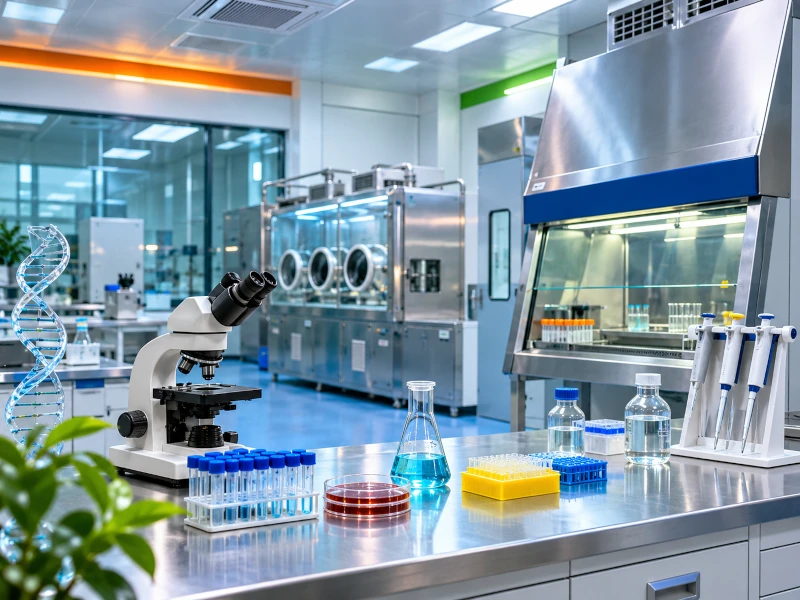
India has strengthened its infectious disease research infrastructure with the inauguration of a Biosafety Level-3 (BSL-3) and Animal Biosafety Level-3 (ABSL-3) facility at the CSIR–Central Drug Research Institute (CSIR-CDRI) in Lucknow, Uttar Pradesh. Inaugurated on 27 November 2026 by Union Minister of State for Science and Technology Dr Jitendra Singh, the facility will support advanced research into tuberculosis and other challenging infectious diseases. The development represents an important investment in India’s biomedical research capabilities and its efforts to develop innovative therapeutic solutions domestically.
Strengthening India’s Advanced Biosafety Research Infrastructure
The newly inaugurated facility provides specialised high-containment infrastructure for research involving infectious microorganisms. Biosafety Level-3 laboratories are designed to support scientific investigations involving biological agents that require stringent containment and occupational safety measures. Animal Biosafety Level-3 facilities complement these capabilities by supporting appropriately regulated preclinical research involving animal models.
The availability of such infrastructure within a leading pharmaceutical research institution can strengthen the relationship between fundamental biological research and therapeutic development. It also provides researchers with an institutional environment for conducting studies under established biosafety, ethical and regulatory requirements. These capabilities are particularly important in addressing infectious diseases for which existing treatment options remain inadequate.
Advancing Research into Tuberculosis and Mycobacterial Infections
The facility will support scientific investigations involving Mycobacterium tuberculosis, the bacterium responsible for tuberculosis, and non-tuberculous mycobacteria (NTM). Tuberculosis remains a significant public health challenge, particularly in countries with a substantial disease burden. The emergence of drug-resistant infections reinforces the importance of developing alternative treatment options and improving existing therapeutic approaches.
Non-tuberculous mycobacteria constitute a diverse group of microorganisms, some of which can cause serious pulmonary and other infections. Their management can present clinical challenges, particularly among individuals with underlying health conditions. Expanding research infrastructure in this field can contribute to a better understanding of these diseases and support the scientific evaluation of potential treatments.
New Institutional Partnerships to Accelerate Clinical Translation
Alongside the inauguration, CSIR-CDRI signed collaborative agreements with the ICMR–National Institute of Research in Tribal Health, Uttar Pradesh University of Medical Sciences and Medanta Hospital. These partnerships bring together pharmaceutical researchers, medical institutions and clinical expertise to strengthen collaborative biomedical research.
Cooperation between research laboratories and healthcare institutions is particularly important in translating scientific discoveries into potential medical applications. Such partnerships can help align research priorities with unmet clinical requirements while supporting the evaluation of new therapeutic and diagnostic technologies. Their effectiveness will depend on the implementation of collaborative programmes and the generation of scientifically validated outcomes.
CSIR-CDRI’s Contribution to Indigenous Pharmaceutical Innovation
The Central Drug Research Institute is a constituent laboratory of the Council of Scientific and Industrial Research, operating under the Ministry of Science and Technology. Its multidisciplinary research activities encompass pharmaceutical discovery, medicinal chemistry, biological sciences and the development of healthcare technologies. The institute plays an important role in India’s publicly funded pharmaceutical research ecosystem.
According to the Ministry of Science and Technology, CSIR-CDRI has developed 13 medicines that have reached the market, licensed more than 80 process technologies and filed over 1,000 patents. These achievements illustrate the institute’s experience in translating scientific research into pharmaceutical and healthcare applications. The new biosafety infrastructure adds another dimension to its established research capabilities.
Moving Beyond Generic Pharmaceutical Manufacturing
India has established a substantial international presence in generic pharmaceutical manufacturing and the supply of affordable medicines. Strengthening original drug discovery represents a complementary opportunity to expand domestic intellectual property, research expertise and pharmaceutical innovation. During the inauguration, Dr Jitendra Singh emphasised the importance of advancing India’s role as a developer of innovative medicines.
Research infrastructure constitutes an essential component of this transition, alongside investment in scientific expertise, clinical evaluation and pharmaceutical manufacturing. Collaboration between public research institutions and industry can help connect scientific discoveries with commercially viable healthcare technologies. The development of specialised research facilities therefore contributes to the broader institutional foundation required for original pharmaceutical innovation.
Artificial Intelligence and the Future of Pharmaceutical Research
The inauguration also highlighted the potential role of artificial intelligence in pharmaceutical research and development. Computational technologies can assist researchers in analysing complex biological information, identifying potential therapeutic candidates and prioritising research opportunities. Their integration with experimental and clinical research can complement conventional pharmaceutical development methods.
However, computational predictions require rigorous scientific and clinical validation before they can support therapeutic applications. The combination of advanced research infrastructure, digital technologies and multidisciplinary expertise offers opportunities to improve the efficiency of pharmaceutical research. Sustained institutional collaboration will remain essential to translating these capabilities into meaningful healthcare outcomes.
Strengthening India’s Public Health Research Capabilities
Investment in advanced infectious disease research infrastructure complements broader public health efforts involving disease prevention, diagnosis, treatment and surveillance. Scientific institutions can contribute to these objectives by investigating unmet medical requirements and supporting the development of evidence-based healthcare interventions. Research into tuberculosis and other mycobacterial infections is particularly relevant to the continuing need for effective and accessible treatments.
The newly inaugurated facility provides an additional institutional resource for pursuing these objectives within India’s pharmaceutical research ecosystem. Its contribution to public health will ultimately depend on the quality of research undertaken, adherence to biosafety requirements and successful translation of scientific findings into clinically validated applications.
Towards a Research-Driven and Self-Reliant Pharmaceutical Ecosystem
The inauguration of the BSL-3 and ABSL-3 facility at CSIR-CDRI represents another step towards strengthening India’s indigenous biomedical research infrastructure. By bringing together specialised scientific facilities, institutional partnerships and pharmaceutical development expertise, the initiative provides a foundation for addressing challenging infectious diseases through sustained research. Continued investment in scientific excellence, responsible innovation and clinical translation can help India expand its contribution to global healthcare while strengthening domestic pharmaceutical self-reliance.
References
- Ministry of Science and Technology, Press Information Bureau — Dr Jitendra Singh Inaugurates BSL-3 Facility at CSIR-CDRI Lucknow, 27 November 2026. PIB Release ID: 2342644.
- DD India — India Moving Towards Becoming Global Hub for Innovative Drug Discovery: Jitendra Singh, 27 November 2026.
- CSIR–Central Drug Research Institute, Lucknow — Official institutional website.
You may also like
-
Lupin Receives USFDA Approval for Generic Sitagliptin Tablets
-
India’s Plant-Based Liver Disease Drug Candidate Picroliv Completes Phase III Clinical Trials
-
Ayurveda and Immunity: Building Ojas Through Daily Living
-
NIT Rourkela Patents Technology to Convert Pharmaceutical Protein Waste into Biomedical Hydrogels
-
Ayurveda During Spring: Lightening the Diet and Clearing Kapha
