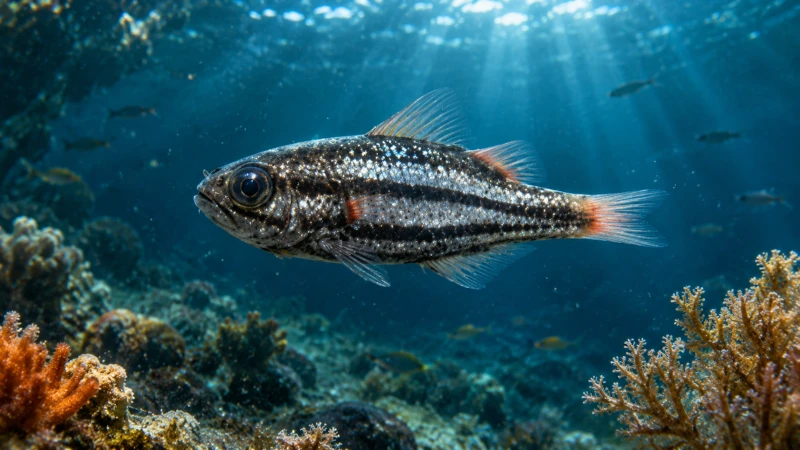
Researchers from the Marine Biology Regional Centre of the Zoological Survey of India (ZSI), Chennai, have identified a previously undocumented species of bioluminescent cardinalfish from the coastal waters of southeastern India. Scientifically named Siphamia bengalensis and commonly referred to as the Bengal cardinalfish, the miniature marine species measures less than five centimetres in length. The discovery, documented in the Records of the Zoological Survey of India in 2026, highlights the considerable marine biodiversity that remains unexplored along India’s coastline.
Discovery Through Marine Fisheries Surveys
Researchers S. Beura and K. K. Bineesh identified the new species after examining two specimens obtained during a routine fisheries survey at Chennai’s Kasimedu fish landing centre. The specimens had been incidentally captured by commercial fishing trawlers operating at depths of approximately 25 to 35 metres. Subsequent laboratory investigations revealed distinctive anatomical and morphological characteristics that differentiated the specimens from previously documented cardinalfish species.
The researchers named the species Siphamia bengalensis in recognition of the Bay of Bengal, where the specimens were collected. Its identification demonstrates the scientific importance of examining commercially insignificant marine organisms that might otherwise be overlooked during routine fishing activities.
Distinctive Physical Characteristics
The Bengal cardinalfish possesses a silvery-grey body marked by three prominent horizontal dark stripes, with the central stripe extending through its eye. Its fins exhibit pale orange coloration near their bases, while small dark markings are visible around the head. Detailed anatomical examinations identified differences in its sensory scales, body proportions and pelvic fins that distinguish it from related species.
These characteristics enabled researchers to establish its taxonomic identity within the cardinalfish family, Apogonidae. The discovery contributes to scientific understanding of the genus Siphamia and its diversity within Indian marine waters.
Bioluminescence Through Bacterial Symbiosis
One of the most remarkable characteristics of the Bengal cardinalfish is its association with light-producing bacteria housed within a specialised biological organ. This relationship enables members of the genus Siphamia to produce light through bacterial bioluminescence. Such associations illustrate the complex evolutionary relationships that exist between marine vertebrates and microorganisms.
Bioluminescence serves several ecological functions among marine organisms, including camouflage, communication and predator avoidance. Further research into the Bengal cardinalfish could help establish how its light-producing capabilities contribute to its behaviour and survival within its natural marine habitat.
Importance of Fisheries Bycatch in Biodiversity Research
The discovery demonstrates the scientific value of examining fisheries bycatch, which comprises marine organisms incidentally captured during commercial fishing operations. Many small marine species possess little commercial value and may consequently receive limited attention during conventional fisheries assessments. Scientific examination of these specimens can provide valuable insights into marine biodiversity and species distribution.
Collaboration between fishing communities and scientific institutions could therefore strengthen biodiversity documentation along India’s coastline. Systematic monitoring of fish landing centres offers researchers opportunities to examine marine organisms from different habitats and depths, complementing dedicated marine biodiversity surveys.
Strengthening India’s Marine Biodiversity Documentation
The identification of Siphamia bengalensis adds to India’s documented marine biological wealth and reinforces the importance of continued taxonomic research in the Bay of Bengal. Discoveries of previously undocumented species help establish scientific baselines necessary for understanding marine ecosystems and developing informed conservation strategies. Continued collaboration between researchers, fisheries stakeholders and conservation institutions will be instrumental in documenting and safeguarding India’s remarkable marine biodiversity.
Scientific reference: Beura, S. and Bineesh, K. K. (2026). Siphamia bengalensis sp. nov., a new species of cardinal fish (Teleostei: Apogonidae) from the south-western Bay of Bengal, India. Records of the Zoological Survey of India, 126 (i1S), 9–16.
DOI: 10.26515/rzsi/v126/i1S/2026/173263.
You may also like
-
Scientists Discover New Grasshopper Species in Nagaland
-
Three Uncommon Bird Sightings Highlight Tripura’s Sukhsagar Wetland Biodiversity
-
Wild Asian Elephants Reestablish Resident Population in Madhya Pradesh’s Bandhavgarh Forest Landscape
-
Indian Researchers Discover Two New Cave-Dwelling Gecko Species in Meghalaya
-
Endangered Ganges River Dolphin Sighted in Arunachal Pradesh’s Siang River System
