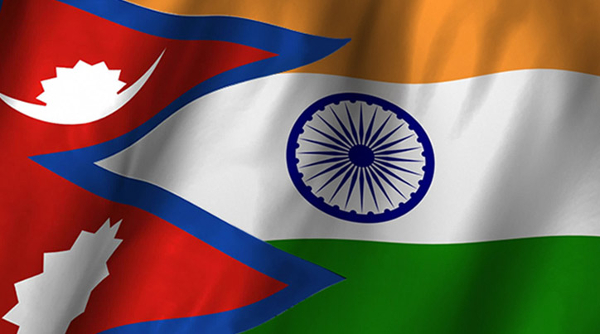
India is extending financial assistance of approximately NPR 8.9 crore (89 million Nepalese rupees) to develop educational infrastructure at Shree Janabal Secondary School in Nepal’s Mustang district. The initiative covers the construction of a new school building, teachers’ residential quarters and student hostel facilities in Gharapjhong Rural Municipality of Gandaki Province. The project forms part of India’s continuing development partnership with Nepal, focusing on strengthening essential public infrastructure and expanding access to education in remote Himalayan communities.
Foundation Stone Laid for New Educational Facilities
The foundation stone was laid on 26 November 2026 by Dr Rakesh Pandey, Chargé d’Affaires at the Embassy of India in Kathmandu, and Mohan Singh Lalchan, Chairman of Gharapjhong Rural Municipality. The project will be implemented by the local municipality under the Government of India’s High Impact Community Development Project (HICDP) programme. It represents the eighteenth initiative undertaken under the programme in Mustang district.
The construction of academic and residential facilities within the same educational institution addresses several interconnected infrastructure requirements. While additional classrooms can improve the learning environment, residential accommodation for students and teachers can help address the logistical challenges associated with delivering education in geographically remote communities.
India-Funded School Hostel Inaugurated in Lomanthang
In a separate development on 27 November 2026, a newly constructed hostel at Shree Dibya Deep Secondary School in Lomanthang Rural Municipality, Mustang, was inaugurated. The facility was developed with financial assistance from the Government of India under the HICDP programme and implemented through the local municipality.
Dr Rakesh Pandey and Tashi Nharbu Gurung, Chairman of Lomanthang Rural Municipality, jointly inaugurated the hostel. Local representatives expressed appreciation for India’s development assistance, highlighting the importance of improved residential infrastructure in supporting students and educators. The inauguration marks the completion of another educational infrastructure initiative under the bilateral development partnership.
Addressing Educational Challenges in the Himalayan Region
Mustang is situated in Nepal’s trans-Himalayan region, where mountainous terrain, dispersed settlements and challenging climatic conditions can affect access to essential public services. Students from remote villages may face considerable difficulties travelling to educational institutions, particularly during periods of adverse weather. Residential educational facilities can help reduce these geographical barriers and support continuity in schooling.
Teachers’ residential quarters can similarly contribute to the stability of educational services by providing accommodation closer to schools. The combination of academic buildings, student hostels and staff accommodation represents an integrated approach to educational infrastructure development, addressing both institutional requirements and the practical needs of local communities.
India’s High Impact Community Development Projects in Nepal
The High Impact Community Development Project programme is an important component of India’s development cooperation with Nepal. It supports locally implemented infrastructure initiatives in priority sectors, including education, healthcare and agriculture. By working through Nepalese municipalities and other local institutions, the programme enables development projects to address community-level requirements.
According to the Embassy of India in Kathmandu, India has undertaken 605 projects under the programme across all seven provinces of Nepal since its inception. These include 64 projects in Gandaki Province, of which 18 are located in Mustang district. The geographical distribution of these initiatives demonstrates the programme’s reach beyond major urban centres into rural and mountainous regions.
Supporting Education and Healthcare Across Gandaki Province
India’s development assistance in Gandaki Province extends beyond the construction of educational institutions. The Government of India has also provided 126 ambulances and 52 school buses to institutions operating in the province’s healthcare and education sectors. Mustang district has received 11 ambulances and six school buses as part of this assistance.
These initiatives complement the development of permanent educational and healthcare infrastructure by addressing transportation and accessibility requirements. In mountainous regions, reliable transport services can play an important role in connecting communities with schools, hospitals and other essential public facilities. Together, these projects contribute to strengthening the institutional capabilities of local communities.
Strengthening India–Nepal Development Cooperation
India and Nepal share longstanding geographical, historical, cultural and civilisational connections, supported by extensive cooperation across economic and developmental sectors. Educational assistance represents an important dimension of this relationship, contributing to human resource development and strengthening people-to-people engagement.
Community-level infrastructure projects provide a practical foundation for bilateral cooperation by directing development assistance towards locally identified requirements. The participation of Nepalese municipal authorities in project implementation also reinforces local institutional involvement and responsibility for the facilities being developed.
Investing in the Future of Himalayan Communities
The foundation stone ceremony at Shree Janabal Secondary School and the inauguration of the hostel at Shree Dibya Deep Secondary School represent complementary stages of India’s educational development assistance in Mustang. While one initiative advances towards construction, the other has delivered completed residential infrastructure for an educational institution.
Through sustained investment in schools, residential facilities, transportation and essential public services, India and Nepal continue to strengthen their development partnership at the community level. These initiatives can help expand educational opportunities in remote Himalayan regions, support human capital development and contribute to the long-term social and economic progress of local communities.
References
- Embassy of India, Kathmandu — Foundation Stone Laid for Construction of School Building, Teachers’ Quarters and Hostel in Mustang District, 26 November 2026.
- Embassy of India, Kathmandu — Inauguration of High Impact Community Development Project in Mustang, Gandaki Province, Nepal, 27 November 2026.
- DD India — India Extends NPR 8.9 Crore Assistance for School Infrastructure in Nepal’s Mustang, 27 November 2026.
- Akashvani News — India Supports Education Infrastructure in Nepal’s Mustang District, 27 November 2026.
You may also like
-
India Hosts 25th IORA Ministerial Meeting, Strengthens Indian Ocean Cooperation
-
Colombo Security Conclave Adopts 2026–2027 Regional Security Roadmap
-
Five International Russophile Movement Chapters Begin Operations in Kerala
-
Warcraft Purāṇas — The Bāṇa War: When Krishna and Shiva Confronted Each Other
-
India and Mauritius Review Bilateral Partnership Ahead of IORA Ministerial Meeting
