Intervention

India Creates Over 10.18 Crore Digital Farmer IDs to Streamline Agricultural Benefits

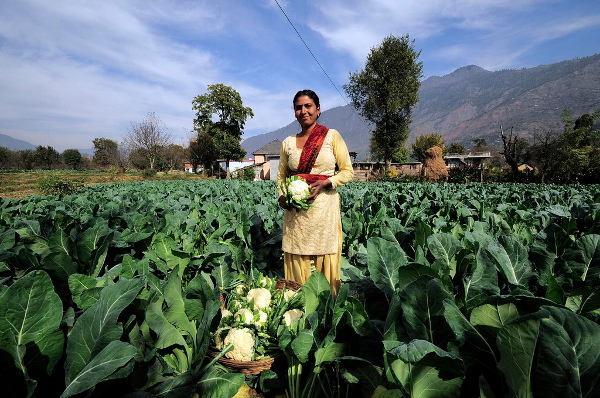
The digital identification system is designed to provide farmers with a unified identity that can be connected with government schemes, agricultural records and support services. States are using Farmer IDs to simplify registrations and benefit delivery under programmes such as the Pradhan Mantri Kisan Samman Nidhi, Pradhan Mantri Fasal Bima Yojana and Minimum Support Price-based procurement.

Why FCRA Is Vital for India—and Why It Draws Opposition from the United States

The law does not impose a general prohibition on foreign donations. During 2024–25, around 16,200 registered associations reportedly received approximately ₹22,963 crore under the FCRA framework. This demonstrates that India continues to permit substantial foreign-supported work in healthcare, education, disaster relief, scientific research, welfare and cultural activity, provided recipients follow the prescribed banking, auditing and reporting requirements.

India Strengthens Digital Safeguards as Cyber Awareness Drive Reaches 11.37 Lakh Citizens

The government’s approach is built around the Information Technology Act, 2000, and the Information Technology (Intermediary Guidelines and Digital Media Ethics Code) Rules, 2021. These provisions require social-media platforms and other intermediaries to exercise due diligence and inform users against publishing or transmitting content that harms children or violates Indian law.

India Builds Secure National Timing Network with White Rabbit Technology: Towards “One Nation, One Time”

Developed jointly by the Department of Consumer Affairs, the CSIR–National Physical Laboratory and the Indian Space Research Organisation, the network is designed to distribute Indian Standard Time securely and with extremely high precision. Institutions including the Securities and Exchange Board of India, the National Stock Exchange and Bharat Sanchar Nigam Limited are also participating in the wider project.

Over 3.4 Million Hectares of Degraded Land Rehabilitated Across India Since 2014

The restoration drive has delivered benefits that extend beyond environmental conservation. Large-scale projects have created substantial employment opportunities in rural areas, providing income support to communities while improving soil health, water availability, and agricultural productivity. Government programmes focused on watershed development, afforestation, and natural resource management have played a crucial role in achieving these outcomes.

Indian Army Revives Thar Desert Water Sources, Giving Wildlife a Lifeline in the Summer Heat

The Thar is a land of extremes. Temperatures rise sharply during summer, natural water points shrink, and animals move across long distances in search of moisture. Chinkara, desert foxes, birds, reptiles and other desert species depend on scattered water bodies for survival. When these sources dry up or get buried under sand, the entire local ecosystem comes under stress. The Army’s intervention has restored access to water in areas where wildlife faces severe seasonal pressure.

India’s Seventh Regional Meteorological Centre in Jammu: A New Weather Shield for the Himalayas

The Jammu centre represents more than an administrative expansion of the India Meteorological Department. It is a strategic weather hub for one of India’s most sensitive and geographically demanding zones. The Himalayan belt faces cloudbursts, flash floods, avalanches, heavy snowfall, thunderstorms, landslides and sudden temperature changes. These events affect pilgrims, farmers, transport networks, hydropower projects, security forces, tourists and disaster-response agencies. A dedicated regional centre in Jammu gives the area a closer, sharper and more specialised forecasting system.

Cabinet Clears ₹10,000 Crore ATF Stabilisation Support to Shield Indian Aviation from Fuel Price Shock

The aviation industry is highly sensitive to fuel costs because ATF forms one of the largest components of airline expenditure. Under normal conditions, ATF accounts for nearly 40 per cent of operating costs. During periods of extreme volatility, this share can rise to nearly 60 per cent, creating pressure on route planning, ticket pricing, cargo operations and overall financial stability. The new support mechanism is designed to bring predictability into fuel pricing and prevent sudden cost shocks from flowing directly to passengers.

Mizoram Opens North East’s First New-Age Tech Skills Centre, Marking a Digital Skilling Push for the Region

The launch is significant because the North East has long carried strong educational aspirations, high literacy levels and a young population eager for better professional opportunities. Mizoram, in particular, has the advantage of a literate and disciplined youth base. A technology skills centre can help convert that social strength into employability, innovation and entrepreneurship.