For much of the post-Cold War era, the infrastructure of global finance was treated as neutral plumbing. Banks used SWIFT to exchange payment instructions, international trade was heavily invoiced in dollars, and correspondent banks in the United States and Europe provided the channels through which money moved across borders. That arrangement worked efficiently as long as financial infrastructure remained separate from geopolitical conflict. The sanctions imposed on Iran and, later, Russia showed that this assumption could no longer be taken for granted.
SWIFT itself is not an American institution. It is a Belgian cooperative and operates under Belgian and European Union law. It does not independently decide which countries or banks should be sanctioned. Nevertheless, when governments impose sanctions that legally require certain institutions to be cut off, SWIFT must comply. Iranian banks experienced this in 2012, while several major Russian banks were disconnected after the invasion of Ukraine in 2022. The result was a powerful demonstration of how access to a supposedly technical component of global finance can become inseparable from geopolitical decisions.
SWIFT Is Only One Part of the Leverage
The more important point is that SWIFT is only one part of the broader financial architecture. The real leverage enjoyed by the United States and its allies comes from the combined weight of the dollar, correspondent banking, access to Western financial markets and the ability to impose secondary sanctions. A trade transaction between two non-Western countries can still become vulnerable to American sanctions if it is denominated in dollars and passes through a US-linked banking channel.
This gives Washington influence over international commerce that extends far beyond transactions taking place inside the United States itself. Western governments argue that financial sanctions are a legitimate and comparatively restrained way to punish aggression, terrorism, illicit finance or violations of international law without resorting to direct military force. From their perspective, the system works precisely because access to Western finance is valuable enough to create pressure. Yet from the perspective of many emerging economies, the same system also creates a strategic vulnerability.
Russia Changed the Debate
Russia brought this vulnerability into sharp focus. Unlike smaller sanctioned economies, Russia was a major G20 economy, one of the world’s largest energy exporters and a permanent member of the UN Security Council. Yet within weeks of the Ukraine war beginning, Western governments moved against Russian banks, froze a large part of the Russian central bank’s foreign reserves and sharply restricted Moscow’s access to the global financial system.
Whether one supports those sanctions or not, the strategic lesson for other countries was difficult to ignore. Financial access that appears permanent in normal times can become conditional during a geopolitical confrontation. For BRICS members, this raised a larger question: should legitimate trade between countries remain so dependent on infrastructure controlled by another geopolitical bloc?
Why BRICS Has a Strategic Problem
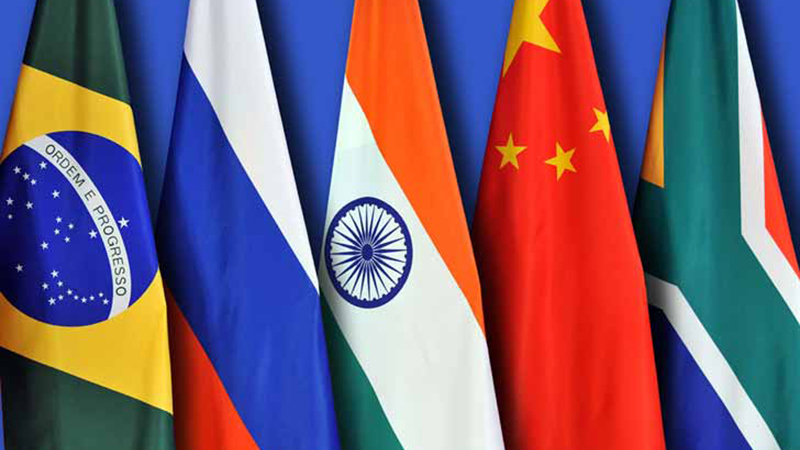
India, Brazil, China, South Africa, the UAE, Saudi Arabia and other BRICS members have very different relationships with Washington and Europe. Some are close strategic partners of the United States, while others are competitors or sanctioned states. What they increasingly share, however, is an interest in ensuring that their lawful trade cannot be paralysed simply because settlement depends on a financial system in which the most important chokepoints lie outside their own jurisdictions.
This does not mean BRICS should attempt to destroy SWIFT or abolish the dollar. Such rhetoric is politically dramatic but economically unrealistic. SWIFT remains one of the world’s most efficient and trusted financial-messaging networks, while the dollar continues to dominate global reserves, trade finance, commodity pricing and international borrowing. No BRICS currency currently offers the same combination of liquidity, convertibility and global acceptance.
The Real Goal Should Be Redundancy
The more practical objective is to reduce dependence on any single financial channel. If India and Brazil trade with each other, there is no economic law requiring every transaction to move through dollars. If Indian and Russian firms conduct lawful trade, there is no reason in principle why every payment must rely on a Western correspondent bank. The same applies to trade between China and the Gulf, Brazil and South Africa, or India and the UAE.
A more resilient system would allow companies to choose between several settlement routes rather than depend on one dominant pathway. The objective would not be to replace the dollar everywhere, but to ensure that countries have options when political tensions or sanctions disrupt conventional payment channels.
BRICS Is Already Moving in This Direction
BRICS has gradually moved away from grand political slogans about a common currency and towards more practical work on payments. The grouping has increasingly focused on linking national payment systems, expanding local-currency settlement and improving cross-border payment interoperability.
That approach is far more realistic than attempting to reproduce the euro across countries with very different monetary systems, capital controls and economic structures. A connected network of national systems would allow BRICS members to retain monetary sovereignty while gradually reducing their reliance on external financial intermediaries.
India Has Strong Reasons to Support Alternatives
India has particular reasons to support such an architecture. New Delhi has deep economic and strategic ties with the United States and Europe, but it also maintains major relationships with Russia, the Gulf, Africa, Southeast Asia and other BRICS economies. India therefore has little interest in turning BRICS into an anti-Western financial bloc.
At the same time, strategic autonomy becomes incomplete if India can independently choose its energy suppliers, defence partners and trading relationships but cannot easily settle legitimate transactions without passing through another country’s financial jurisdiction. The difficulties India faced in settling trade with Russia after 2022 illustrated the problem. Trade continued and even expanded, but payment arrangements became more complicated because many conventional banking channels were constrained.
A Real Alternative Requires More Than a Messaging Network
A credible BRICS system would have to go far beyond simply creating another messaging service. SWIFT itself does not actually move money; it transmits secure instructions between financial institutions. A genuine alternative would require compatible payment messaging, foreign-exchange markets, correspondent banking arrangements, clearing, settlement, liquidity support and reliable compliance mechanisms.
Without those layers, an alternative network would remain largely symbolic. The challenge is therefore not simply technological. It is institutional, financial and regulatory.
BRICS Already Has Many of the Building Blocks
BRICS already possesses many of the components needed to create a more diversified financial architecture. India has UPI and one of the world’s most sophisticated digital public-payment infrastructures. Brazil has Pix, another highly successful instant-payment system. China has built extensive renminbi settlement networks. The UAE has major international financial centres, while Saudi Arabia occupies a central position in global energy markets. South Africa provides sophisticated banking links into the African continent.
The challenge is not the absence of technology but the lack of interoperability between these national systems. If these systems can be connected in a secure and commercially viable way, BRICS could gradually build a network that reduces dependence on a single external financial route.
A Network of Networks May Be More Practical Than a BRICS Currency
The most practical model may therefore be a network of connected national systems rather than a single centralised BRICS platform. Payments could move through compatible domestic networks, while central banks and designated commercial institutions provide clearing and liquidity support.
Local-currency swap arrangements could reduce dependence on third-country currencies, while the New Development Bank could expand lending in member currencies. Over time, central-bank digital currencies may also provide another settlement option if questions of security, regulation and interoperability can be resolved.
Such a system would not eliminate the dollar. Nor should that be its purpose. The dollar would continue to be used whenever it offered the cheapest, most liquid and commercially convenient option. The difference would be that it would no longer be the only practical route for a large share of international trade.
Serious Obstacles Still Remain
There are, however, major challenges. BRICS members do not share a common monetary policy or political system. China’s capital account remains controlled, India manages the internationalisation of the rupee cautiously, and several members have volatile currencies. Exchange-rate risk, liquidity and convertibility would all need to be addressed before local-currency trade could expand significantly.
There is also the question of trust. India would not want a BRICS payments system dominated by China any more than smaller members would want one controlled by India or Russia. Any successful BRICS financial architecture would therefore need transparent governance and safeguards against domination by a single member.
Financial Sovereignty Cannot Mean Financial Lawlessness
A parallel financial system would also need strong anti-money-laundering controls, terrorism-financing safeguards and mechanisms to comply with United Nations sanctions. A system designed purely to evade every Western sanction would struggle to attract serious banks, investors and multinational companies.
The stronger argument is not that BRICS should help sanctioned entities escape legitimate restrictions. It is that no group of countries should remain entirely dependent on financial infrastructure that can be restricted by another geopolitical bloc. Diversification in payments should be viewed in the same way countries view diversification in energy supplies, telecommunications networks or semiconductor supply chains.
The Dollar Will Remain Powerful
The dollar is unlikely to disappear from the centre of global finance anytime soon. The United States benefits from the scale of its economy, deep capital markets, the liquidity of Treasury securities and the enormous network effects created by decades of dollar use. BRICS cannot reproduce those advantages through political declarations.
What BRICS can do is gradually reduce the number of situations in which a dollar transaction routed through a Western institution is the only viable option. That distinction is crucial. De-dollarisation does not have to mean the destruction of the dollar’s global role. Even a modest reduction in compulsory dependence would represent a significant shift.
The Real Issue Is the Geopolitical Chokepoint
The weaponisation debate therefore goes beyond SWIFT. The deeper issue is whether the infrastructure supporting global commerce should remain concentrated within jurisdictions that can use access to it as leverage during geopolitical disputes. Western governments have demonstrated that they are willing to use financial power when they believe their security or foreign-policy interests require it.
BRICS countries would be negligent if they failed to prepare for the possibility that the same tools could one day be used in disputes affecting their own economic interests. The sensible response is not confrontation but redundancy.
BRICS needs payment routes that remain open for lawful trade, deeper local-currency markets, stronger financial links between member states and systems capable of settling transactions without depending exclusively on Western intermediaries. Such infrastructure would not weaken global finance. It would make it more resilient by ensuring that international commerce is not forced through a single geopolitical chokepoint.
An Economic Insurance Policy
The debate should therefore not be about whether BRICS can replace SWIFT or overthrow the dollar. It should be about whether countries that account for a growing share of global output and trade should have the ability to conduct business with one another without being completely dependent on financial infrastructure controlled elsewhere.
After Iran and Russia, the strategic answer is becoming increasingly obvious. For BRICS, building alternative payment and settlement channels is no longer an ideological project. It is becoming an economic insurance policy.
You may also like
-
EON Space Labs and Dhruva Space Advance Indian Space Hardware on Transporter-18 Mission
-
SatLeo Labs’ TAPAS-1 Reaches Orbit, Advancing India’s Private Thermal-Imaging Capability
-
TakeMe2Space’s MOI-1A Reaches Space on Falcon 9 Transporter-18 Mission
-
Bank of Baroda Enters Pension Fund Management After PFRDA Appointment
-
SCI and India’s Push for a Larger Indigenous Maritime Fleet
