Heritage

News, articles and Essays on Sanatana Dharma, Hinduism and Indian way of life.

Command Under Dharma: Bhishma, Drona, Karna, Arjuna and Krishna as a Defence Study in Mahabharata Leadership

Krishna’s strategic brilliance begins before Kurukshetra. He reads personalities clearly: Duryodhana’s ambition, Yudhishthira’s moral hesitation, Arjuna’s sensitivity, Bhima’s force, Karna’s pride, Bhishma’s restraint and Drona’s emotional weakness. This is advanced strategic intelligence. Modern defence planning values the same ability through political assessment, adversary profiling, intelligence fusion and red-team analysis. A war is shaped by weapons, terrain and logistics, but also by temperament, ego, fear, legitimacy and morale.

Kanaikkal Irumporai: The Chera King Whose Defeat Became a Legend of Honour

The title “Irumporai” itself carried the weight of a Chera lineage known from Sangam poems. In that old Tamil world, dynastic legitimacy was expressed not only through ancestry but also through conduct. A king had to be brave in battle, generous to poets, fierce to enemies and dignified in hardship. Kanaikkal Irumporai’s story fits this ideal perfectly. He is remembered not for palaces, temples or inscriptions, but for war, captivity and a final act of royal self-respect.

From Akshauhini to Integrated Battle Groups: Army Organisation and Battlefield Structure in the Mahabharata

The Mahabharata repeatedly presents armies as mixed forces, and Adi Parva gives a precise mathematical structure for the Akshauhini, beginning with one chariot, one elephant, three horses and five foot soldiers as one Patti. This creates a battlefield system where mobility, shock power, speed and ground-holding capacity move together as one fighting organism.

Chengannur Mahadeva Temple: The Sacred Abode Where Shiva and Parvati Are Worshipped as One Living Presence

Thriputharattu is the temple’s defining ritual and one of the rarest Goddess festivals in India. During this observance, the Devi’s presence is treated with the tenderness and ritual seriousness given to a living mother. The temple’s special-festival page says that on the fourth day, the Devi’s idol is taken to the nearby river for Arattu, or ritual bathing, after which she is brought back to the temple in procession. When the procession returns to the nalambalam near the main entrance, Bhagavan Mahadeva is believed to be waiting there, and the divine pair together circumambulate the temple in procession.

Netherlands Returns Chola-Era Anaimangalam Copper Plates, Restoring a Priceless Chapter of Tamil Maritime History

The plates belong to the world of Rajaraja Chola I and Rajendra Chola I, two rulers who transformed the Chola kingdom into one of Asia’s most influential maritime powers. Rajaraja Chola I, who ruled from 985 CE to 1014 CE, is remembered not only for military expansion and monumental temple-building, but also for creating a disciplined administrative state that recorded land, revenue and religious grants with remarkable precision.

Aranmula Parthasarathy Temple: The Krishna Shrine Where Mahabharata, Pamba and Kerala’s Temple Culture Meet

Aranmula is associated with Arjuna. The legend says that Arjuna, burdened by the moral weight of the Kurukshetra war and especially by the killing of Karna, sought spiritual atonement. Though Karna was his enemy on the battlefield, the manner of his death — while he was struggling with his chariot wheel and was not in full fighting posture — created a dharmic unease in Arjuna’s mind. To purify himself and return to the higher path of devotion, Arjuna is believed to have installed the image of Krishna here.

Cheran Senguttuvan: The Chera King Who Turned Kannagi into a Goddess of Justice

As a ruler, Senguttuvan is said to have reigned for 55 years, a remarkably long reign in early South Indian political memory. A scholarly account in Chera Kings of the Sangam Period notes this 55-year reign and describes his consecration of a Pattini temple as an event of “international significance,” especially because the Sri Lankan king Gajabahu is traditionally said to have attended the ceremony.

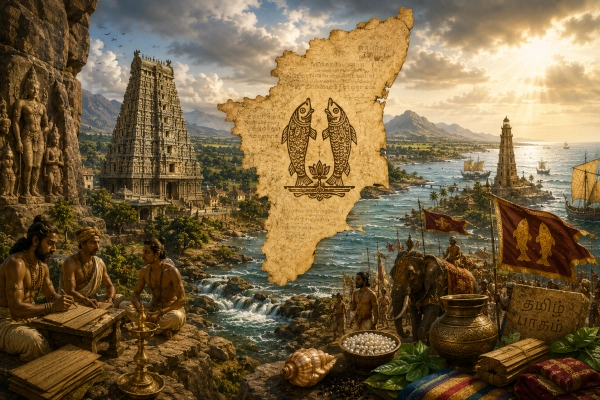
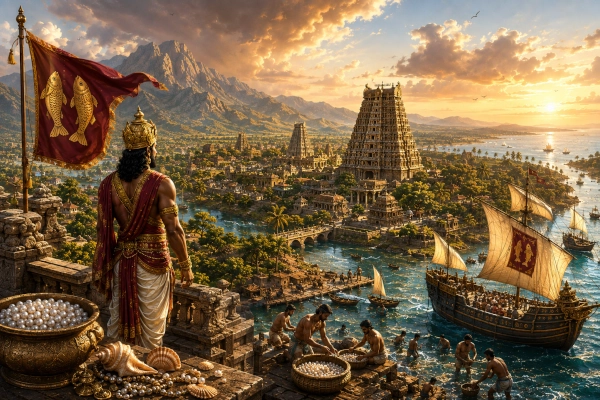
Nedum Cheralathan — The Sangam Age Emperor Who Challenged Kings Across Land and Sea

the ancient world’s most vibrant maritime trade networks.

Nedum Cheralathan is particularly remembered for expanding Chera prestige beyond Kerala’s western coast and projecting military influence deep into Tamilakam. Sangam poets describe him as a ruler whose authority extended up to the Himalayas, giving rise to the title “Imayavaramban,” meaning “the one whose boundary reached the Himalayas.”

Sabarimala Sree Ayyappa Temple — The Sacred Mountain Shrine of Dharma, Devotion and Ancient Tradition

Sabarimala is not merely a temple; it is a living civilisational tradition deeply intertwined with Kerala’s forest culture, ancient tribal customs, Tantric ritual systems, royal patronage, Shaiva-Vaishnava synthesis, and spiritual austerity. The pilgrimage is regarded as one of the world’s largest annual religious gatherings and is unique for its rigorous discipline, communal equality, and ancient customs that continue largely unchanged even in the modern era.