Heritage

News, articles and Essays on Sanatana Dharma, Hinduism and Indian way of life.

Rama Varma XV: The Rajarshi of Kochi Who Carried Reform Through Dharma and Governance

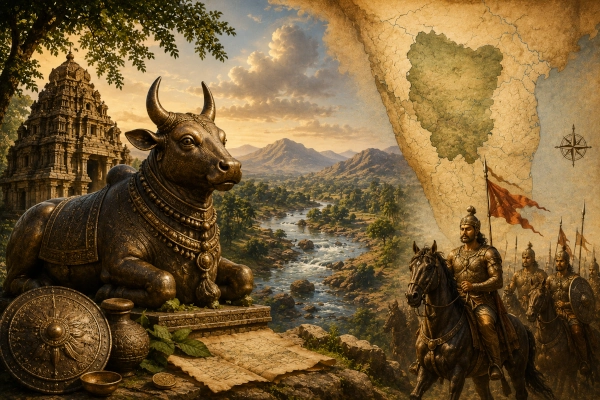
Rama Varma XV accepted this challenge with a reforming mind. He was not remembered as a warrior king like Sakthan Thampuran, but as an administrator who worked through institutions. His reign came at a time when modern governance was becoming more important than royal spectacle. Revenue records, education, public health, transport, local administration and legal reform were becoming the new instruments of statecraft. In this sense, Rama Varma XV belongs to the generation of Indian princes who tried to modernise their states while preserving cultural identity.

Illusion and Deception Warfare in the Ramayana: Indrajit’s Maya-Yuddha and the Battle for the Mind

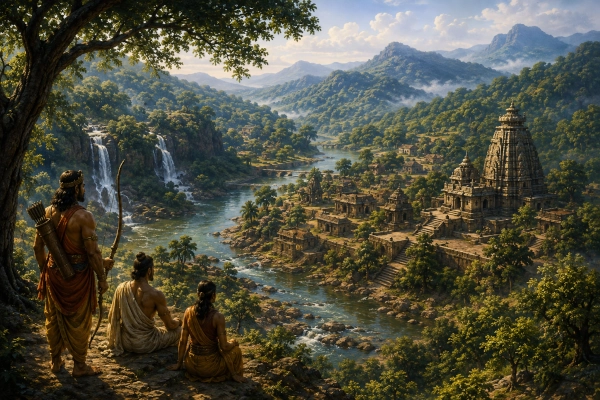
Indrajit is a warrior of intelligence, timing and deception. He enters battle with the skill of a master tactician who understands that fear can wound before a weapon lands. His attacks create uncertainty among the Vanaras because the source of danger remains hidden. Arrows arrive from unseen directions. Weapons strike before the enemy can locate him. The battlefield becomes a place of doubt, where courage must fight through confusion before it can reach the opponent.

Night Warfare in the Ramayana: Fighting Through Darkness, Fear and Confusion

Command and control become critical at night. A commander must know where his troops are, where the enemy is moving and where the objective lies. In darkness, a small error in direction can break formation. A delayed message can isolate a unit. A loud rumour can spread fear. Rama’s campaign shows the importance of leadership that keeps the army focused even when the battlefield becomes unclear. Night rewards armies that move with purpose and punish armies that fight as scattered individuals.

Targeting Enemy Commanders in the Ramayana: Breaking the Head of the War Machine

A battlefield commander acts as the nervous centre of a formation. He reads the ground, directs movement, commits reserves, controls retreat and inspires soldiers during pressure. When that figure disappears, the unit loses its voice. Orders become unclear. Local officers hesitate. Soldiers begin to think about survival instead of victory. The Ramayana captures this reality through Prahasta’s fall. His death turns an organised advance into disorder, because the army loses the man who holds its immediate purpose together.

Kerala Varma V of Kochi: The Quiet Administrator of a Changing Kingdom

Kerala Varma V was educated and proficient in English, which was significant in the political climate of nineteenth-century Kochi. A ruler under British influence needed more than traditional legitimacy. He needed the ability to understand colonial correspondence, communicate with officials, follow institutional procedure and work through a growing administrative machinery. English education gave Kerala Varma V a practical advantage in dealing with the British authorities and the modern departments of the state.

Chhatrapati Shivaji Maharaj in Israel: A New Symbol of India-Israel Friendship

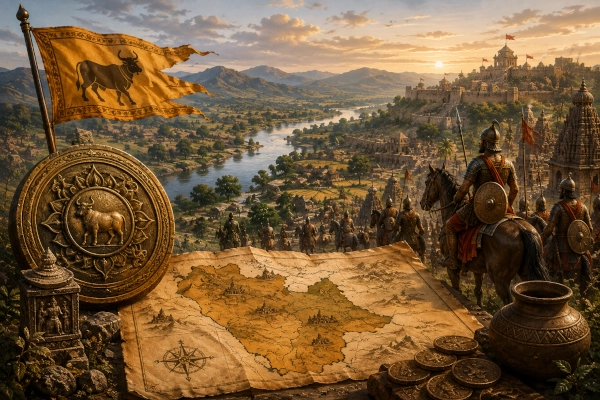
The proposal also reflects the growing warmth between India and Israel. Over the years, the relationship has expanded across defence, agriculture, technology, water management, innovation, homeland security and people-to-people engagement. A statue of Shivaji Maharaj in Israel adds a cultural and historical dimension to this partnership. It turns diplomacy into a visible public symbol that ordinary citizens can understand and remember.

Leadership Discipline in the Ramayana: Rama’s Rebuke to Sugriva and the Military Value of Command Control

Rama’s rebuke gives the episode its military meaning. He tells Sugriva that such rash conduct does not suit a king. This is a lesson in command responsibility. A ruler carries more than his own life into battle. He carries the morale of his soldiers, the stability of alliances, the rhythm of the campaign and the confidence of the command system. A commander’s personal bravery must serve the army’s mission. When a leader acts alone from impulse, the entire force may be forced to react to his decision.

Diplomatic Ultimatum Before Battle: Angada’s Mission and Rama’s Doctrine of Armed Restraint

This is the moment where diplomacy and war stand side by side. Rama has the strength to attack, yet he first gives Ravana a clear choice. The message carries moral authority, political clarity and military pressure in one frame. It offers a path to peace while displaying the certainty of force. In defence terms, this is a classic pre-war ultimatum. It places responsibility on the aggressor, fixes the terms of settlement and prepares the battlefield psychologically before the first full strike begins.

Chottanikkara Bhagavathy Temple: The Living Seat of Devi Worship in Ernakulam

The temple’s atmosphere carries the deep emotional force of Kerala’s Devi worship. The sanctum, lamps, chants, drums, offerings and disciplined temple rituals create a sacred world where the goddess is experienced as a living presence. Chottanikkara is deeply connected with the faith of ordinary people. Devotees come here with personal burdens, family prayers, health concerns, vows, gratitude and hope. The temple has become a spiritual refuge where people seek strength when life feels heavy.

Lucknow to Get ₹23.42-Crore Museum Celebrating India’s Rituals and Life Traditions

The proposed Uttar Pradesh Sanskriti Sangrahalay and Ritual Centre will focus on the idea that Indian culture is lived through ceremonies, family customs, seasonal practices, sacred duties and community traditions. From birth to the final rites, every stage of life in the Indian worldview carries meaning. The museum aims to present this civilisational journey in a way that is accessible to modern audiences, especially younger visitors, students, tourists and international guests.