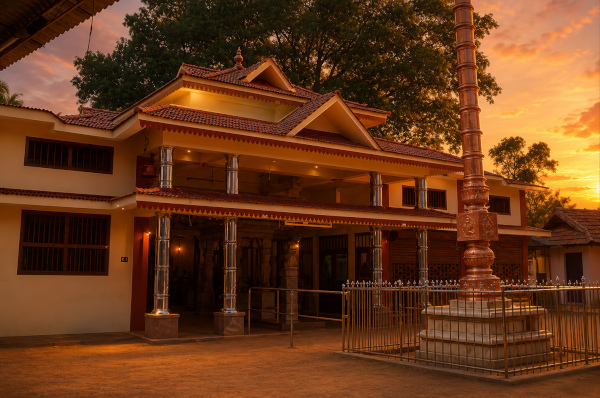
Kalpathy Viswanatha Swamy Temple, located in the historic Kalpathy village of Palakkad, is one of the most celebrated Shiva temples in Kerala. The temple is closely associated with the famous Kalpathy Ratholsavam, one of the grandest chariot festivals of the state, and stands as a sacred centre where Kerala’s temple culture, Tamil Brahmin agraharam tradition, Vedic learning and devotional music come together.
The presiding deity of the temple is Lord Viswanatha, a form of Lord Shiva, worshipped along with Goddess Visalakshi, a form of Parvati. This divine pairing immediately connects Kalpathy with the sacred memory of Kashi Viswanath and Visalakshi of Varanasi. Because of this spiritual resemblance, devotees lovingly refer to the temple as Dakshina Kashi, the Kashi of the South. Kerala Tourism describes the Kalpathy Ratholsavam as the annual chariot festival of Sree Viswanatha Swamy Temple, dedicated to Lord Viswanatha and Goddess Visalakshi.
The temple is believed to be more than 700 years old, making it one of the important ancient worship centres of Palakkad. Situated in the cultural landscape of Kalpathy agraharam, the shrine is not only a place of worship but also the spiritual heart of a heritage settlement. Kerala Tourism notes that the temple becomes the focal point of festivities every November during the Ratholsavam.
Kalpathy itself is one of Palakkad’s most distinctive heritage villages. The settlement is known for its traditional agraharam layout, with similar-looking houses lined along streets that lead towards temples. Kerala Tourism describes Kalpathy Agraharam as a traditional Brahmin street on the banks of the Kalpathy river, marked by houses built in a traditional architectural style.
The temple stands close to the Kalpathy river, giving the shrine a serene and sacred atmosphere. The riverine setting strengthens the temple’s symbolic link with Kashi, where Lord Shiva is worshipped on the banks of the Ganga. In Palakkad, Kalpathy became a southern sacred geography where the presence of Shiva, the river, the agraharam and the annual chariot festival created a powerful devotional world.
The architecture of the temple reflects the sacred simplicity and discipline of Kerala temple design, while the surrounding agraharam preserves the cultural style brought by Tamil Brahmin communities. This combination gives Kalpathy a unique identity within Kerala. It is at once Kerala in landscape and Tamil in ritual memory, making it a cultural bridge between Palakkad and Tamil Nadu.
Inside the temple, the presence of the kodimaram, Nandi and the sanctum of Lord Viswanatha form the central devotional axis. The District Tourism Promotion Council of Palakkad notes that the flagstaff stands before the temple, with Gnana Nandikeswarar facing Sri Viswanathaswamy, while Goddess Visalakshi is also worshipped within the temple complex.
The temple’s ritual atmosphere is deeply Shaiva. Devotees come here to seek blessings for prosperity, family welfare, spiritual clarity and removal of obstacles. Lord Viswanatha represents the cosmic Shiva who grants wisdom and inner strength, while Visalakshi represents divine compassion, grace and auspiciousness. Together, they make Kalpathy a powerful household and community shrine.
The greatest festival of the temple is the Kalpathy Ratholsavam, held annually in November. The festival is famous for its majestic temple chariots, which are pulled through the agraharam streets by devotees. Kerala Tourism records that the festival begins with the flag-hoisting ceremony at Sree Viswanathaswamy Temple and is organised in the Kalpathy agraharam area of Palakkad.
During Ratholsavam, the quiet heritage village transforms into a grand sacred theatre. Decorated chariots move through the traditional streets, accompanied by Vedic chanting, devotional music, drums, lamps and the collective participation of the community. The festival attracts thousands of devotees and visitors, making it one of Palakkad’s most recognised cultural events.
The chariot festival is not merely a procession. It represents the movement of the deity among the people. The sacred chariot passes through the streets, blessing the agraharam and all who gather in devotion. In this sense, Ratholsavam turns the entire village into an extended temple, where streets become sacred corridors and homes become part of the festival landscape.
Kalpathy is also associated with Vedic learning and Carnatic music. Incredible India describes Kalpathy as an ancient agraharam and a renowned centre of Vedic learning for centuries, preserving the traditions of Tamil Brahmin communities who settled there long ago. This gives the temple a special cultural depth. It is not only a ritual centre but also a guardian of learning, music, chanting and traditional knowledge.
The temple’s importance also lies in its role as a cultural meeting point. Palakkad has long been a gateway between Kerala and Tamil Nadu. Through Kalpathy, one can see this shared civilisational landscape clearly. The worship of Shiva as Viswanatha, the agraharam settlement pattern, the Vedic chanting, the Ratholsavam chariots and the Kerala setting together create a rare cultural harmony.
The festival has also helped preserve the architectural beauty of Kalpathy. The agraharam streets, traditional houses, temple routes and ritual pathways remain alive because they are used every year in the chariot procession. Kerala Tourism describes Kalpathy Street as a heritage lane with traditional-style buildings and an old-world charm.
For devotees, Kalpathy Viswanatha Swamy Temple is a place of deep spiritual peace. For historians, it is a living record of Palakkad’s cultural past. For artists and musicians, it is a sacred stage of tradition. For Kerala, it is one of the finest examples of how temple, village, river and festival can together preserve a complete way of life.
The temple also holds great importance in Palakkad’s identity. When people speak of Kalpathy, they immediately remember Viswanatha Swamy Temple and Ratholsavam. The temple has become inseparable from the district’s cultural image. It represents devotion, heritage, community participation and the continuity of ancient ritual practices.
Kalpathy Viswanatha Swamy Temple is therefore much more than a local shrine. It is Palakkad’s Dakshina Kashi, a sacred house of Shiva and Visalakshi, a centre of Vedic and agraharam culture, and the spiritual heart of one of Kerala’s most famous chariot festivals. Its Ratholsavam continues to draw people into the living rhythm of devotion, reminding us that Kerala’s temple traditions are not museum memories but vibrant, breathing cultural worlds.
Through its deity, river, agraharam, chariot festival and centuries-old worship, Kalpathy Viswanatha Swamy Temple stands as one of the shining sacred landmarks of Palakkad. It remains a place where ancient faith moves through village streets, where Shiva is worshipped as Viswanatha, and where the spirit of Kashi finds a beautiful southern expression in Kerala.
You may also like
-
Samatata — The Low-Lying Deltaic Realm of Southeastern Bengal
-
Tamralipta — The Maritime Gateway of the Lower Ganga
-
Suhma — The River-and-Forest Country of Southwestern Bengal
-
Gauda — The Western Bengal Country of the Bhagirathi and the Rise of Karnasuvarna
-
Pundra — The Northern Bengal Kingdom of the Karatoya and the Ancient City of Pundranagara
