Infrastructure

Indian Infrastructures and Capabilities

PM-wani Crosses 4 Lakh Public Wi-fi Hotspots As India Pushes Wider Broadband Access

The PM-WANI model is designed as a market-driven framework that allows local entrepreneurs to set up and operate Wi-Fi access points based on commercial viability, with the government acting primarily as an enabling policy platform. That structure is intended to widen last-mile internet access without relying solely on large-scale centralised infrastructure, particularly in areas where affordable broadband availability remains uneven.

CSIR Unveils Indigenous Bio-Bitumen Technology to Turn Farm Waste into Sustainable Road Material

The technology, titled “Bio-Bitumen from Lignocellulosic Biomass – From Farm Residue to Roads,” was showcased at a Technology Transfer Event in New Delhi on March 30, 2026, with the aim of enabling large-scale industry adoption. It was jointly developed by CSIR-Central Road Research Institute (CSIR-CRRI) and CSIR-Indian Institute of Petroleum (CSIR-IIP).

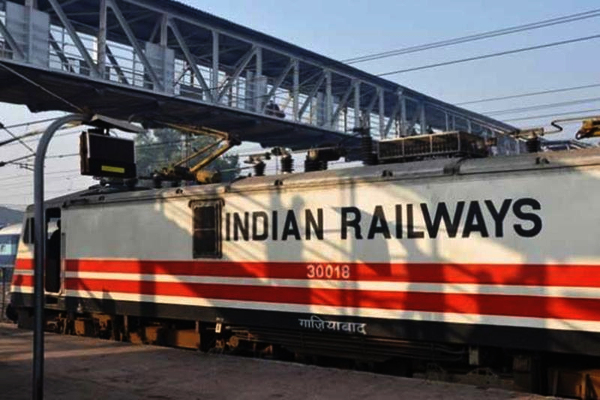
Holding Areas, Access Control and AI CCTV: Railways Rolls Out New Passenger Management Plan

New Delhi Railway Station has already become the first example of this model in operation. According to the government, the station’s holding area is now serving passengers with a range of amenities including additional ticket counters, automatic ticket vending machines, public announcement systems, electronic train information boards, CCTV surveillance, luggage scanners, door frame metal detectors, uninterrupted power supply, improved lighting, high-volume low-speed fans, fire-fighting and lightning protection systems, RO drinking water and separate toilets for men, women and Divyangjan passengers. Similar arrangements are planned for the remaining stations, though implementation timelines will depend on planning and execution at each location.

New Highway to Open Doors for Buddha’s Sacred Places in Shravasti

The new highway project, planned over a length of 101.51 km, is expected to address a long-standing infrastructure gap that has limited Shravasti’s tourism potential despite its global religious significance. According to the official release, the improved corridor will help cut travel time between Barabanki and Bahraich by nearly half, reducing the journey from around 150 minutes to 75 minutes, while also raising average travel speeds from 40 kmph to 80 kmph.

Centre Highlights Border Infrastructure Push Through BADP and Vibrant Villages Programmes

According to the government, the primary objective of BADP has been to support the well-being of border communities by creating essential infrastructure through convergence with central, state, Union Territory and local schemes. The programme has supported projects related to health, education, roads, agriculture, sports, drinking water, sanitation, the social sector and small-scale industries. The government noted that the scheme is currently in its sunset phase.

Cabinet Clears Modified UDAN Scheme with Rs. 28,840 Crore Outlay to Expand Regional Air Connectivity

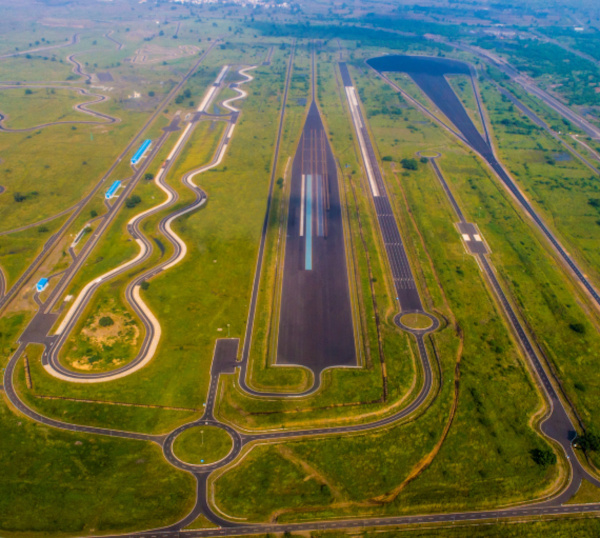
A major component of the scheme is the development of airport infrastructure. Under Modified UDAN, the government plans to develop 100 airports from existing unserved airstrips, with an estimated capital expenditure of Rs. 12,159 crore over the next eight years. This expansion is aimed at building a more competitive aviation ecosystem and ensuring that more regions are brought into the country’s air connectivity network.

Categories